


Wholesale Hair Vendors
Top 10 Wholesale Raw Hair Vendors Worldwide 2026 – Rankings by Origin
Jun
This guide gives wholesale buyers the full picture of the global raw hair market: how the industry developed over the last 20 years, where raw hair actually comes from by country, and the top 10 vendors — each evaluated on the same objective criteria for raw-hair compliance, sourcing transparency, MOQ, pricing, and best-fit use case. For Vietnam specifically, see our raw Vietnamese hair vendors guide.
Who Are the Best Raw Hair Vendors in 2026? (Quick Answer)
The best raw hair vendors for wholesale buyers in 2026 are Govihair, ApoHair, Macsara and YogHair for Vietnamese raw hair; KaBeiLu (KBL) and Rebecca for high-volume Chinese supply; APSARA for Cambodian hair; Temple Hair India for raw Indian temple hair; Kalugahair for luxury Russian hair; and Private Label Extensions for US-based private labeling. Vietnam supplies the most bleach-capable single-donor raw hair, while China leads on catalog size and production capacity.
Use the table to jump to each vendor’s full profile, or read on for how the raw hair market works and how we ranked each vendor.
| # | Raw hair vendor | Origin | Best for |
|---|---|---|---|
| 1 | Govihair | Vietnam | Premium single-donor raw hair, bleach-capable; raw and virgin lines |
| 2 | ApoHair | Vietnam | Large-volume distributors and OEM / private label |
| 3 | KaBeiLu (KBL) | China | Widest color and texture catalog |
| 4 | Macsara Hair | Vietnam | Wide catalog and competitive entry pricing |
| 5 | YogHair | Vietnam | High-volume buyers in the US, Africa and Australia |
| 6 | APSARA Hair | Cambodia | Cambodian-origin, thicker textured raw hair |
| 7 | Rebecca Hair Products | China | Large distributors, especially in Africa, needing a listed manufacturer |
| 8 | Temple Hair India | India | Raw Indian temple hair with natural wave and curl |
| 9 | Kalugahair | Russia | Luxury fine, cool-toned European-type hair |
| 10 | Private Label Extensions | USA | US-based private labeling and dropshipping |
How Did Raw Hair Manufacturers Build the Global Market? (2000–2026)
The modern hair industry — the bundles, wigs, and extensions sold worldwide today — is barely two decades old in its current form. It grew out of a simple raw-material trade and matured into a global supply chain with clear specialist roles for each producing country.
2000–2010: The raw-material era
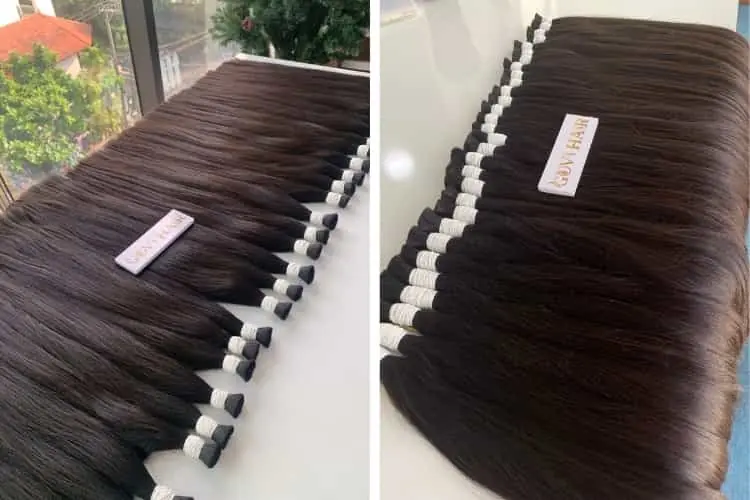
Before Vietnam became one of the world’s leading hair-producing nations, the business began with one thing: collecting 100% human donor hair. Vietnamese traders bought hair cut directly from donors across the country and exported it as unprocessed raw material to factories in China, which handled manufacturing and finishing. Vietnam supplied the raw input; China supplied the industrial capacity.
This was the founding generation of Vietnam’s hair trade. Many family businesses that started by collecting and trading raw ponytails in these years later grew into full-scale factories — including the family behind Govihair, alongside several other companies now established across the industry.
2010–2015: Vietnam builds its own factories
Recognizing that its real advantage was a superior raw-material base, Vietnam stopped being content to sell raw hair alone and began learning the manufacturing technology, production processes, and finishing techniques previously done in China. This was the period when Vietnam’s first serious hair factories were founded and properly invested in — building production lines, introducing quality control, and developing brands. Pioneering companies of this era laid the foundation for Vietnam to enter the international market directly rather than through intermediaries.
2015–2020: Moving up the value chain
With factories and QC in place, Vietnamese producers moved from selling material to selling finished, branded products — bundles, closures, frontals, wigs, and extensions — directly to wholesale buyers abroad. Direct B2B export to Africa, North America, and Europe expanded quickly, and Vietnamese “raw” and “virgin” hair became recognized categories in their own right.
2020–2026: Vietnam as a recognized global leader
Today Vietnam is widely regarded as a top source for genuine single-donor raw hair. Competition among factories has pushed the industry toward transparency and traceability — donor sourcing, tagged batches, and pre-shipment video confirmation of orders. In a market where nearly every vendor uses similar marketing language, concrete trust signals are what separate serious suppliers from resellers.

What Is Raw Hair, and What Do Raw Hair Vendors Actually Sell?
“Raw hair” is used loosely in the market, and many vendors selling “raw hair” are not actually selling raw hair by any rigorous definition. Genuine raw hair meets three criteria simultaneously:
Single-donor collection. The hair comes from one person’s head in a single ponytail, giving uniform texture, thickness, color, and behavior throughout the bundle because it literally grew from one scalp.
Zero chemical processing. No acid baths, no silicone coating, no bleaching, no dyeing, no perming. The hair is washed with mild shampoo and nothing else, so the cuticle layer stays completely intact.
Natural cuticle alignment. Collected as a single ponytail, all strands naturally run root-to-tip in one direction without artificial alignment.
The practical consequence: genuine raw hair lifts cleanly to #613 platinum blonde, lasts 2–5 years with proper care, and behaves consistently across reinstallations because there’s no prior chemical history. Non-genuine “raw hair” — floor hair, acid-washed mixed hair, or silicone-coated factory hair — degrades after 2–4 washes and cannot handle extreme color processing.
The test: raw human hair burns to grey-white ash that crumbles; synthetic blends or silicone-coated hair leave hard black plastic beads. Every vendor on this list should pass a burn test on samples before you commit to a bulk order.
The 3 Types of Raw Hair (by Donor)
Not all genuine raw hair is the same. All three tiers below are unprocessed with intact cuticles — what separates them is how many donors the hair comes from, which drives price, bleach evenness, and lifespan. Match the tier to your market instead of defaulting to the most expensive one.
- Single-donor (Type 1). Collected from one head — the rarest and most expensive tier. It lifts to the most even platinum of any raw hair and lasts longest (about 3–5 years), with naturally full ends. The choice for premium color work and maximum longevity.
- Two-to-three-donor (Type 2). Still fully unprocessed and bleachable, but with far deeper supply, so pricing is more competitive — the workhorse tier for most wholesale programs. Bleach evenness is a step below single-donor; lifespan runs about 2–3 years.
- Mixed-donor (Type 3). Never chemically processed, hand-selected and blended from several donors. It still bleaches (less evenly), offers the thickest ends, and carries the lowest raw price. Best where buyers want raw quality and thick ends at the lowest entry point.
Rule of thumb: single-donor for platinum and longevity, two-to-three-donor for the best price-to-quality at volume, mixed-donor for thick ends at the lowest raw price. Whichever tier you order, a real raw hair vendor will state the donor tier in writing.
What Are Hair Grades? Double vs Super vs Luxury Explained
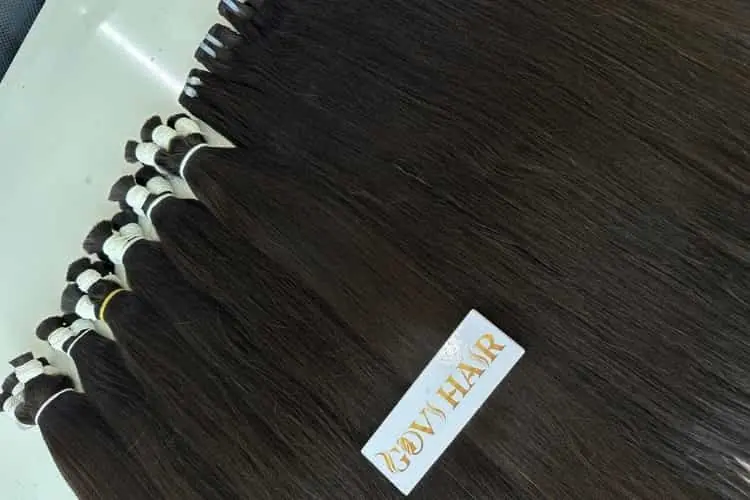
Grade — not just length — decides how full a bundle stays from root to tip, and it’s where vendors quietly cut corners. Grade is set by the same-length ratio (how much of the bundle actually reaches the stated length) and how short the shortest strands are:
- Double drawn — the standard full grade; short strands removed so the bundle stays reasonably thick to the tip.
- Super (super double drawn) — ~80% same length, nothing under 12″, ~90% of the hair at 18″+. Blunter, fuller ends.
- Luxury — ~90% same length, nothing under 14″, ~90% at 20″+. The fullest, most uniform ends.
Two bundles can both say “24-inch raw” and cost very differently because one is single drawn (thin, tapering) and the other is Luxury (blunt, full). Always get the grade and the same-length ratio in writing before comparing prices across raw hair vendors — a cheap “24-inch raw” with no grade stated is usually single drawn that thins toward the tip.
China’s “A” scale isn’t the same. Chinese vendors grade A++, A+, and A, which map roughly to Luxury, Super, and Double — but at the same grade, Chinese hair typically carries more short strands than Vietnamese, so it thins and tangles faster. Compare the same-length ratio, not the letter on the label.
Where Do Raw Hair Suppliers Source Their Hair?
Not every country plays the same role. Some are collection sources, some are processing hubs, and a few are premium niche origins. Understanding this helps buyers match the right source to their market.
| Origin | Hair characteristics | Raw availability | Price tier (per 100g) | Best market |
|---|---|---|---|---|
| Vietnam | Round, thick shaft; naturally straight; strong tensile strength | High — single-donor raw well established | $$ · ~$22–$90+ (entry from ~$10) | US premium, Europe, all global markets |
| Cambodia | Coarser, thicker than Vietnam; naturally wavy/curly tendency | Medium — less consistent than Vietnam | $$ · raw bulk from ~$40 | US, Europe, Cambodian-texture clients |
| India | Naturally wavy to curly; softer shaft; temple-sourced | Medium — genuine raw vs processed varies | $ · material cost ~$11–$90/100g (input, Double–Super by length) † | Mid-range, wavy/curly markets |
| Bangladesh | Similar to Indian hair | Low–Medium — donation-driven | $ · budget, quote-based | Budget wavy/curly, raw-material supply |
| Myanmar / SE Asia | Similar to Vietnam; growing supply | Lower — newer, less established | $ · material cost ~$11–$90/100g (input, Double–Super by length) † | Budget-conscious premium buyers |
| China | Good quality but rarely genuine single-donor raw; mostly imported & processed | Low — imports most raw material | $$ · natural $22–$77; #613 $42–$94 | Ready stock, #613/color, dropshipping |
| Russia | Fine, mostly brown, cool-toned | Very low — hard to scale | $$$$ · weft ~$310–$430 (~4–5× VN) | Luxury / price-insensitive clients |
† India and Myanmar figures are **raw-material (input) cost per 100g** — the price of the unprocessed material by length and grade, not a finished vendor selling price. Finished bundles from these origins are typically sold quote-to-quote and land above the input cost. All other rows show vendor selling prices.
Vietnam — raw material and production. Vietnam’s distinctive strength is being both a collection source and a manufacturer. Its hair has a round, thick shaft with strong tensile strength and lifts cleanly for coloring, ideal for premium single-donor raw grades. That twin advantage is what let it move from supplier to leader.
India — the temple-hair tradition. Much of India’s hair comes from temple donations, a long-standing cultural practice. This creates a large supply of unprocessed raw material collected and shipped worldwide — historically much of it to China. Indian hair is naturally darker and tends toward wave and curl, with a softer shaft than Vietnamese hair.
Bangladesh — a parallel source. Bangladesh supplies hair for much the same reason India does: a shared cultural context in which women commonly donate their hair. The material is broadly similar to Indian hair and feeds the same raw-material pipeline.
China — the processing powerhouse. China produces good hair too, but as a highly industrialized nation it lacks a strong domestic culture of hair donation, so its raw supply is limited. Large Chinese factories therefore import raw material from around the world — from Vietnam, India, and Southeast Asia — and specialize in chemical bleaching and dyeing, processed and pre-styled hair, large ready stock, and the industrial supplies behind the trade (wig-making materials, dye and bleach chemicals). Guangzhou-based KaBeiLu (KBL), one of the biggest, describes itself as the largest hair factory in China, holds huge same-day stock, and markets bundles under Brazilian, Peruvian, Indian, and Southeast Asian labels — a good illustration of how Chinese supply is built on imported material plus scale and finishing, rather than a domestic single-donor raw base. Notably, Chinese pricing is not lower than Vietnam’s for comparable hair; China’s real edge is stock depth, dyeing capability, and dropshipping — not cheaper genuine raw.
Russia — the luxury tier. Russian hair sits at the top of the market: fine, mostly brown, and cool-toned, with preserved cuticles and no silicone coating. A representative factory, Kalugahair, works only with single-source Russian donor hair, ships via DHL, and carries a $3,000 minimum order. Its pricing makes the luxury positioning concrete: genius wefts run roughly $310–$430 per 100g at 20″–28″ — about 4–5× Vietnamese pricing — with virgin/selected and curly grades adding another 30%. It is very hard to scale, suiting a narrow, high-end clientele for whom price is not the deciding factor.
Why Is Vietnam the Leading Source of Raw Hair?
Three factors compounded over 20 years: a superior raw-material base (thick, strong hair that takes color well), vertical integration (building its own factories captured the manufacturing margin that once flowed to China and put quality under one roof), and direct export with trust-building (selling straight to wholesale buyers abroad, with traceability and pre-shipment verification, turned a commodity trade into a branded, credibility-driven business). This is why Vietnamese factories dominate the rankings below.
How We Ranked the Best Raw Hair Vendors
Each vendor is assessed on: raw-hair definition compliance (single-donor, unprocessed — or “raw” as a marketing term?), sourcing transparency (can they explain where and how the hair is collected?), factory verification (can they show a live factory floor on a video call?), MOQ accessibility (is the minimum reasonable for testing quality?), pricing vs market rate (consistent with the real cost of genuine raw hair?), and specialization (what do they do better than anyone else here?).
Top 10 Wholesale Raw Hair Vendors Worldwide 2026
1. Govihair (Vietnam)
Best for: Premium wholesale buyers across all markets; salon colorists needing bleach-capable hair; wig brand founders; buyers wanting raw and virgin from one supplier.
Raw hair compliance: Full. Single-donor collection from Northern Vietnam, acid-free washing, natural cuticle alignment verified through live factory video calls before every order.
Govihair sources from women in high-altitude rural communities in Northern Vietnam who maintain uncolored hair using traditional herbal practices. Traceability runs from identified donors through tagged ponytail batches to finished bundles. Every order is confirmed via pre-shipment video call showing specific bundles on a calibrated scale.
What sets them apart: The pre-shipment video confirmation process — buyers see their exact order weighed in real time before releasing final payment. Most factories don’t do this. For new wholesale buyers, it’s the most concrete trust signal available.
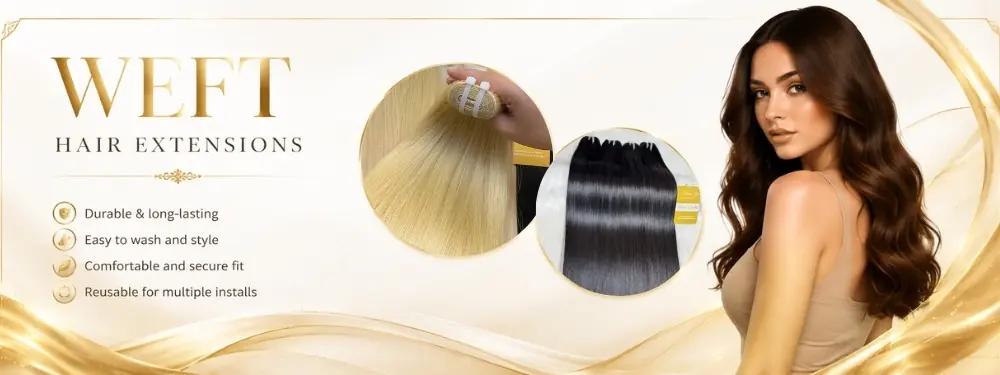
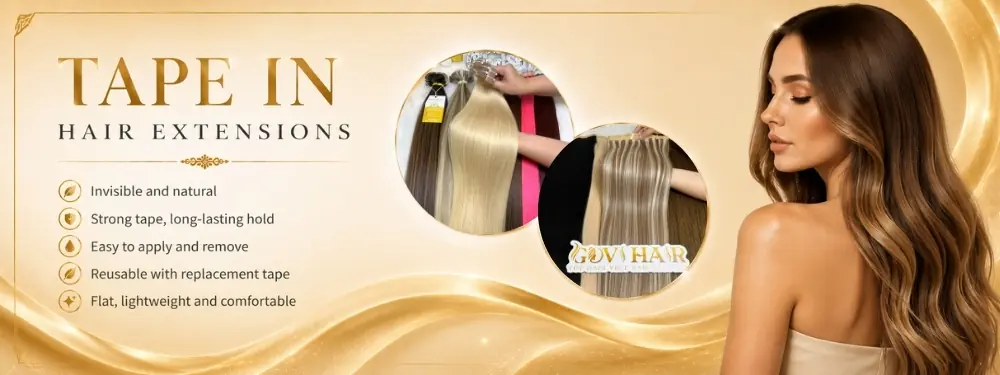
Product range: Machine weft, hand-tied weft, flat weft, genius weft, bulk braiding hair, closure wigs, frontal wigs, full lace wigs, keratin tips, tape-ins, clip-ins, nano rings. Lengths 6″–32″ depending on product (bulk 16″–32″, raw weft 6″–30″). Natural and pre-colored options.
MOQ: Wholesale pricing from 1kg; 500g trial orders (~5 bundles) accepted with a small-order surcharge; combo pricing on wigs from 3 units.
Pricing: Reference prices: raw weft (Double Drawn straight) $41.58–$124.08 per 100g for 8″–30″; bulk hair $58.08–$181.28 per 100g for 16″–32″. For wholesale pricing, chat with Tommy on WhatsApp (+84 795 746 986).
Shipping: DHL/FedEx/UPS to US and Europe in 5–7 days; Africa 7–9 days via cargo agents.
Contact: WhatsApp +84 79 574 6986 | govihair.com
2. ApoHair (Vietnam)
Best for: Large-volume distributors, private label brands, buyers needing OEM at industrial scale.
Raw hair compliance: Full. Nam Dinh province factory, ISO 9001:2015 and SA 8000:2014 certified. 33,000m² facility, 20 tons monthly capacity.
Strong on breadth — keratin tips, seamless tape-ins, hand-tied wefts, HD lace wigs alongside raw bundles. Full OEM/ODM with free logo and tag design. MOQ starts at 200g, unusually low for this facility size. Shipping US/Canada 3–4 days, Europe 4–5 days, Africa 6–7 days.
Best use case: Buyers who need to scale from 5kg/month to 50kg/month without switching suppliers.
3. KaBeiLu – KBL (China)
Best for: Buyers who want China’s widest color and texture catalog — #613, fashion shades, loose, body, deep and natural wave, curly — from one large factory brand.
Raw hair compliance: Partial. KBL sells raw, virgin and processed lines side by side, so confirm in writing which SKU is genuine single-donor raw before ordering.
KBL is one of the most visible Chinese hair factory brands, with a large official account network across Instagram, YouTube and TikTok. Its natural-color wholesale pricing sits in the same band as Vietnamese factories rather than below it, so the old assumption that Chinese hair is always cheaper does not hold at 18″ and longer. Its real strength is processing: dyeing, #613 and pattern work.
Limitation: Like most Chinese factories, KBL processes a large share of imported raw material, so donor traceability is weaker than with Vietnamese or Cambodian collection. Lift-to-blonde performance depends on the specific line.
4. Macsara Hair (Vietnam)
Best for: Buyers wanting the widest product catalog and competitive entry pricing.
Raw hair compliance: Full. Vietnam’s largest hair factory at 50,000m², 1,000+ craftsmen, 5 million pieces annually, 100+ countries served.
40+ colors, 25+ textures, 8–30 inch lengths. Entry price: $9.80/100g for 8″ natural straight. Notable products: Genius Weft (cut-proof), Silk Flat Weft, Slim Tape, Invisible Seamless Clip-In. Factory tours available.
Best use case: Buyers building large catalogs who need variety and competitive pricing in one supplier.
5. YogHair (Vietnam)
Best for: High-volume buyers across US, Africa, and Australia needing both raw and custom color options.
Raw hair compliance: Full. Bac Ninh province, ~100 workers, 10+ years, 1,500+ wholesale clients.
45+ colors including piano, balayage, and ombre alongside natural tones. Full product range: bundles, closures, frontals, full lace wigs, 360 wigs, ponytails, keratin hair, tape extensions. Claims 5–7 year hair lifespan with proper care.
6. APSARA Hair (Cambodia)
Best for: Buyers whose markets specifically want Cambodian-origin hair or thicker, naturally textured raw material.
Raw hair compliance: Full. Phnom Penh-based, 100% natural Cambodian hair, untreated and unmixed. Specializes in double-drawn raw Cambodian bundles.
Cambodian hair has a naturally coarser, thicker shaft than Vietnamese hair with more natural wave tendency. For clients who specifically want Cambodian texture, or who sell to markets that premium Cambodian over Vietnamese, APSARA is a direct factory source.
Limitation: Supply chain is less stable and scalable than Vietnamese factories. Not suitable as a primary high-volume supplier.
7. Rebecca Hair Products (China)
Best for: Large distributors, especially in Africa, that need a listed, very high-capacity manufacturer across wigs, braiding and hair pieces.
Raw hair compliance: Low for raw-hair buyers. Rebecca’s core volume is synthetic and processed hair; its human-hair lines are not positioned as single-donor raw.
Founded in 1995 in Xuchang, Henan — China’s main wig cluster — Rebecca became the first hair products company listed on the Shanghai Stock Exchange (600439) in 2003. It sells almost entirely for export, with factories in China, Nigeria and Ghana and subsidiaries across West and East Africa. Pricing is brand-led and sits above typical B2B platform factories.
Limitation: Built for scale and branded retail, not for raw single-donor bundles. Not the right pick if bleach-to-blonde raw hair is the requirement.
8. Temple Hair India (India)
Best for: Buyers needing genuine raw Indian temple hair for markets where Indian origin is specifically requested or natural wavy/curly texture is the priority.
Raw hair compliance: Full for temple-collected hair. Chennai-based, sourced directly from South Indian temples where voluntary donations create a large supply of unprocessed hair.
Indian temple hair is naturally darker with a more varied wave pattern than Vietnamese. The shaft is softer, which makes bleaching to extreme lights riskier than Vietnamese raw. Ideal for markets wanting natural wavy and curly textures at a lower price point than Vietnamese equivalents.
Limitation: Less consistent than Vietnamese suppliers due to mixed donor characteristics in temple collection. Quality varies more between batches than single-donor Vietnamese collection.
9. Kalugahair (Russia)
Best for: Luxury salons and extension artists who want genuine Russian donor hair in fine, cool-toned natural European shades.
Raw hair compliance: Full for its Russian-donor lines: 100% Russian donor hair, no silicone coating, cuticle intact. Virgin/selected and curly grades carry a premium.
Russian hair is the finest and naturally lightest origin in this guide, which is why it suits fine European hair types. The palette is deliberately narrow — natural European tones and subtle blends, no vivid fashion shades. Its range covers genius/micro flat weft, invisible tapes, injector tapes and keratin tips. Pricing sits at roughly four to five times Vietnamese raw, and first orders are filled from stock against a high minimum, so this is a luxury line rather than a volume supplier. Ships by DHL.
Limitation: Hard to scale: limited donor supply, a high entry minimum and premium pricing. Not suited to buyers who need fashion colors.
10. Private Label Extensions (USA)
Best for: US-based buyers who want domestic supplier support, private labeling, and dropshipping without managing international logistics directly.
Raw hair compliance: Partial. They source from Asian factories and resell/private label in the US. Not a primary producer. Hair quality depends on their sourcing choices, which can vary.
Based in Atlanta, Georgia. Specializes in helping entrepreneurs launch and scale hair brands with private labeling, dropshipping, and business education support. Useful for buyers who want a US-based point of contact and domestic customer service, at the trade-off of higher prices than direct factory sourcing.
Limitation: As a reseller/private label operation rather than a producing factory, prices sit significantly above factory-direct. For buyers at scale, direct Vietnamese factory sourcing offers meaningfully better margin.
Retail hair brands buyers often compare (not raw vendors)
Two well-known brands come up in almost every US buyer’s research. Neither is a raw hair vendor, but both are useful benchmarks for retail pricing, speed and branding.
Nadula (China, US warehouse): A direct-to-consumer brand that ships from US warehouse stock in about 3–5 days. Bundles run 10″–26″ with matching closures, and hair is labelled by origin — Brazilian, Indian, Peruvian, Malaysian — rather than as single-donor raw. A good reference for retail speed, not a raw supplier.
Bellami Hair (USA): A Chatsworth, California brand co-founded by Nikki Eslami and part of Beauty Industry Group since 2022. It focuses on Remy clip-ins, ponytails and wigs, including the Kristen Hancher collection. Branded retail with no bulk or raw lines.
China Spotlight: KaBeiLu (KBL)
No global overview is complete without China, and KaBeiLu (KBL) — Guangzhou Kabeilu Trading Co., Ltd., founded in 2007 — is one of the country’s largest hair factories. It’s the clearest example of how the Chinese model differs from Vietnam’s.
Raw hair compliance: Partial / mixed. KBL markets single-donor “raw” and “virgin” bundles, but as with most large Chinese factories, its supply is built on raw material imported from around the world (sold under Brazilian, Peruvian, Indian, and Southeast Asian labels) rather than a domestic single-donor base. Its core strength is processing, not origin collection.
What sets them apart: Scale and stock. KBL reports a ~15,000m² factory with 600+ workers and monthly capacity in the tens of tonnes, huge same-day-ship inventory, and a large dropshipping and OEM operation serving tens of thousands of customers. It is particularly strong in color — especially reliable #613 platinum bleaching — and pre-styled textures.
Pricing (published Dec 2025 quote): Natural-color bundles run roughly $22–$77/100g for 12″–26″ across straight and wave textures; #613 bleached bundles run roughly $42–$94/100g for 12″–24″. In other words, Chinese factory pricing sits in the same band as Vietnamese raw — China is not the cheap option many buyers assume.
Best use case: Buyers who prioritize deep ready stock, fast dropshipping, and dyed/processed color (especially #613) over genuine single-donor raw origin. Buyers who specifically need traceable single-donor raw with intact cuticle history are better served by the Vietnamese factories above.
Beyond hair — China’s real dominance is in supplies. China’s clearest edge in this industry isn’t raw hair at all; it’s the materials and tools that go into making wigs. Qingdao (Shandong), often called the birthplace of wigs, is home to specialist accessory manufacturers such as Qingdao Xiandou Tongshang Wig Products Co., Ltd (founded 2005), which produce wig caps and net caps (elastic, hand-hook, antibacterial cotton; 2×6, 4×4, 5×5, 6×7), scalp material, adhesives, resins and glue removers, silicone beads, crochet hooks, keratin-fusion tools, sewing-machine parts, mannequin and foam display heads, and packaging nets. For a buyer assembling a wig line, this is where China genuinely leads — the supply chain behind the hair, not the hair itself.
Russia Spotlight: Kalugahair
At the opposite end of the price spectrum from China sits Russia — and Kalugahair is a representative Russian factory. It shows what the luxury tier actually costs.
Raw hair compliance: High for its category. Kalugahair uses single-source Russian donor hair with no silicone or chemical coating — just washing and gentle steaming — with preserved cuticles running root-to-tip in one direction. This is genuine, minimally processed hair, prized for fine, cool European tones.
What sets them apart: Color and fineness. Russian hair is naturally fine and mostly cool-toned, and Kalugahair’s range spans natural levels (1–24), designer shades (DB2–DB4, D.Olive), and multi-tonal blends (e.g., 3/4+8, 8/10+20). It ships via DHL and works to order from stock, with a $3,000 minimum on standard orders (first orders can be any amount from existing stock).
Pricing (published 2025 quote, trade USD). This is the premium tier, priced per pack or per piece rather than per 100g:
| Product | 12″ | 20″ | 28″ |
|---|---|---|---|
| Micro flat / genius weft (per pack, 75–100g) | $155 | $310 | $430 |
| Invisible tape 4cm (per 20-tape pack) | $80 | $155 | $235 |
| Invisible mini tape 2.8cm (per 20-tape pack) | $45* | $95 | $155 |
| Injector long tape (per pack) | $120 | $230 | $345 |
| Keratin i-tip / u-tip (per piece) | $1.20 | $3.20 | $3.90 |
*mini-tape entry length is 14″. Virgin/selected grades and curly textures add +30%.
Put in per-100g terms, the genius weft works out to roughly $310–$430 per 100g at 20″–28″ — about 4–5× Vietnamese pricing, which is exactly why Russian hair stays a luxury niche.
Best use case: High-end salons and luxury clients who want fine, cool-toned European hair and don’t buy on price. For volume markets or buyers who need scale, Russian hair is prohibitively expensive and hard to source in quantity.
Vietnam vs China vs Russia: Which Origin Should You Buy From?
The three origins that define the premium end of the market work in completely different ways. This table puts them side by side on the dimensions importers actually weigh.
| Dimension | Vietnam (e.g. Govihair) | China (e.g. KBL) | Russia (e.g. Kalugahair) |
|---|---|---|---|
| Sourcing model | Domestic single-donor raw + own factory | Imports raw worldwide, then processes | Domestic Russian donor hair |
| Genuine raw? | Yes — single-donor, intact cuticle | Rarely — mostly imported/processed | Yes — single-source, no silicone |
| Signature hair | Round, thick, strong; bleaches cleanly | Processed, dyed, pre-styled stock | Fine, cool-toned, mostly brown |
| Grades | Remy & Raw: Single → Double → Super → Luxury | Stock grades under various origin labels | Virgin / selected (+30%) |
| Price / 100g | ~$22–$90 (raw, by length/grade) | natural $22–$77; #613 $42–$94 | weft ~$310–$430 (~4–5× VN) |
| Color range | European designer tones + raw bleaches to any color, incl. #613 | Widest — vivid, #613, piano/ombre | Natural cool + blends; no vivid |
| #613 / bleach | Yes (raw lifts to #613 / #12.0) | Yes (dyeing is the specialty) | Limited (no true #613) |
| MOQ | ~500g (≈5 bundles) | Low; strong dropshipping | $3,000 (first order flexible from stock) |
| Wig-making supplies | Finished-hair focus | Dominant — caps, glue, tools, mannequins | Not a supply hub |
| Trust signal | Pre-shipment video weigh-in + donor traceability | Factory video calls, deep stock | Works to order from stock |
| Social presence | Distributed sales-rep accounts | Large multi-account networks (up to ~117K) | Direct / agent |
| Best for | Premium raw + custom color, all markets | Ready stock, color/#613, dropshipping | Luxury, cool-toned, price-insensitive |
| Key limitation | — (best all-round quality-per-dollar) | Not genuine single-donor raw | Very expensive; hard to scale |
The one-line read for importers: China wins on stock, color breadth, and wig-making supplies but sells imported/processed hair at Vietnam-level prices; Russia wins on fine cool-toned luxury hair but at 4–5× the cost and impossible to scale; Vietnam is the only origin that pairs genuine single-donor raw with in-house manufacturing, full bleach capability, and accessible pricing — which is why it’s the default for most premium buyers.
Where Do Southeast Asian Raw Hair Vendors Source Their Hair?
Beyond Vietnam, three Southeast Asian countries supply raw hair to the wholesale market. Their volumes are smaller, so it pays to know how each one usually reaches buyers.
Cambodia. Cambodian raw hair is naturally thick with a slight wave and is valued for wavy and curly textures. Supply is collected mainly in rural provinces and is smaller than Vietnam’s; part of it is exported to Vietnamese and Chinese factories for processing. APSARA Hair (#6) is one Cambodian option.
Myanmar (Burmese hair). Burmese hair is usually fine to medium with a natural wave. A large share is exported to China for processing, so “Burmese” bundles sold by resellers are often processed rather than raw. See our guide to Burmese raw hair vendors.
Laos. Laos supplies small volumes, mostly sold through Vietnamese and Thai factories rather than direct Lao exporters. Treat large volumes labelled “Laotian raw hair” with caution and ask where the hair was collected.
How to buy Southeast Asian raw hair: ask each vendor for the collection origin, the number of donors per bundle and a sample before you order. For steady monthly volume, a Vietnamese factory that also sources regionally usually gives more consistent supply than a single small collector.
Color Range by Origin
Palette is a real buying decision, and each origin’s color offering reflects what it does best. The three systems don’t even use the same numbering: Vietnam’s European chart uses level-and-tone codes plus designer names, Russia uses simple numerics plus tonal blends, and China uses the standard Asian numbering plus extensive piano and ombre codes.
| Tone family | Govihair (Vietnam — Europe chart) | Kalugahair (Russia) | HUIRU / KBL (China) |
|---|---|---|---|
| Numbering system | European level.tone (#7.0, #7.1, #4.0) + designer names | Simple numeric + blends (1–140, DB2–DB4) | Standard Asian (#1–#613) + piano/ombre (T#, M#, P#) |
| Natural dark (black–brown) | #2, #3.0, #4.0 | 1, 2, 4 | #1, #1B, #2, #4 |
| Ash & cool browns/blondes | #7.0, #7.1, #7.7, #8C, Norwegian Blonde, Viking Blonde | 6, 8, 10, 14, DB2–DB4, D.Olive | #8, #10, #14, #16, #18, #22, #24 |
| Platinum / #613 | #1001, plus raw hair that bleaches to #613 | up to ~140 / DB2 (no true #613) | #60, #613, #1001 (a core strength) |
| Silver / grey / designer | Silver, Grey, Mint, Dubai | D.Olive, D.D.Olive | Grey, Light grey |
| Multi-tonal / ombre / piano | Brond Ombre, Dubai | Blends: 3/4+8, 6/8+24, 8/10+20 | Extensive: T#2/613, M#4/613, P#4/613 |
| Fashion / vivid | via dye (raw takes any color) | none | #red, #Pink, #BLUE, #99J, #350 |
Shades are grouped by tone family for comparison; codes don’t map one-to-one across systems.
What the palette tells you. China’s range is the widest — especially vivid fashion shades, #613, and piano/ombre codes — because dyeing and processing are its specialty. Russia stays in a narrow band of fine, cool, natural European tones plus subtle blends, with no vivid colors. Vietnam’s European chart covers the salon-standard designer tones Europe expects (Norwegian and Viking Blonde, Silver, Grey, Mint, level.tone numbering) and, because it’s genuine raw, can still be bleached and dyed to any color — including #613. In short, Vietnam bridges Russia’s natural-European strength and China’s color breadth, at raw quality.
How Much Do Raw Hair Bundles Vendors Charge per 100g?
Wholesale raw hair is almost always quote-based — the per-100g price moves with length, grade (raw vs virgin vs remy), texture, and color. Longer lengths, double-drawn and super-double grades, and fashion colors all carry surcharges. The figures below are published entry prices where a vendor lists them; the rest quote per order.
| Supplier | Origin | Published entry price | Pricing model | What drives the price |
|---|---|---|---|---|
| Macsara | Vietnam | from $9.80/100g (8″ straight) | Catalog / volume | Length, texture, color |
| Govihair | Vietnam | $41.58–$124.08/100g (reference); wholesale on request | Per-order quote | Length, grade (raw/virgin/remy), color |
| ApoHair | Vietnam | Quote-based (MOQ 200g) | OEM / wholesale quote | Volume, OEM/private-label |
| YogHair | Vietnam | Quote-based | Wholesale quote | Color complexity, volume |
| APSARA | Cambodia | Quote-based | Wholesale quote | Cambodian-origin premium |
| Temple Hair | India | Quote-based | Wholesale quote | Temple-collected, wavy/curly |
| KaBeiLu (KBL) | China | Natural $22–$77/100g (12″–26″); #613 $42–$94/100g (12″–24″) | Published pricelist | Length, texture, color (#613 premium) |
| Rebecca | China | Brand-led; not published per 100g | Listed manufacturer | Product line, channel, volume |
| Kalugahair | Russia | Genius weft ~$310–$430/100g (20″–28″); tapes $45–$345/pack; tips $1.20–$3.90/pc | Published pricelist | Fine cool-toned donor hair; +30% virgin/curly |
| Private Label Extensions | USA (reseller) | Quote-based; above factory-direct | Reseller markup | US-based support, private label |
How to read this table. Vietnamese factories span the widest range — from Macsara’s catalog entry pricing to Govihair’s single-donor premium tier — because Vietnam is both raw source and manufacturer. Cambodian (APSARA) and Indian (Temple Hair) raw sit in different tiers driven by supply and texture. US-based Private Label Extensions prices above factory-direct because it resells rather than produces.
Relative price by origin. Because absolute per-100g prices vary by length, grade, and color, the clearest comparison is relative to Vietnamese pricing, using Vietnam’s published raw range as the baseline:
| Origin | Relative price | Typical raw price guide | Why the price sits here |
|---|---|---|---|
| Vietnam | Baseline ($$) | $22–$90+/100g (by length & grade) | Both raw source and manufacturer; strong, color-ready hair |
| Cambodia | ~ On par with Vietnam ($$) | Similar band to Vietnam | Coarser, thicker texture; supply less consistent |
| India | Below Vietnam ($) | Lower than Vietnamese equivalents | Temple-collected; wavy/curly; more batch-to-batch variation |
| China | On par with Vietnam ($$) | KBL example: natural $22–$77/100g; #613 $42–$94/100g | Imports raw material; edge is stock, dyeing & dropshipping — not lower price |
| Russia | Luxury ($$$$) | Kalugahair example: genius weft ~$310–$430/100g (20″–28″) — ~4–5× Vietnam | Fine, cool-toned donor hair; top-tier color; very hard to scale |
Read simply: China is priced like Vietnam but sells mostly imported/processed hair (its edge is stock and color, not a lower price); Vietnam and Cambodia sit in the accessible premium band for true single-donor raw; India runs below Vietnam for wavy/curly grades; and Russia is the luxury outlier — several times Vietnamese pricing, for a narrow clientele that doesn’t buy on cost.
A published entry price is the starting point for the shortest length and base grade. Expect higher for 20″+ lengths, double-drawn/super-double grades, and custom or fashion colors. Always confirm the current per-order quote before committing.
Vietnamese factory price benchmarks (USD per 100 g)
Buyers often ask how Vietnamese factories compare on price. The table below puts several factories on the same basis: Double Drawn, straight, natural color, price per 100 g at 1 kg volume. Govihair figures come from our 2026 reference price list. Figures for other vendors are Govihair estimates, not current quotes: we took each vendor’s 2021 price list and added 40% to reflect market price increases since then.
| Vendor | Product | 16″ | 20″ | 24″ | Basis |
|---|---|---|---|---|---|
| Govihair (Vietnam) | Bulk, DD natural black | $58.08 | $71.28 | $83.38 | Govihair 2026 reference price list |
| Govihair (Vietnam) | Raw weft, DD straight #1B | $60.28 | $91.08 | $105.38 | Govihair 2026 reference price list |
| ApoHair (Vietnam) | Bulk, DD natural (A++) | $53.20 | $85.82 | $109.34 | Govihair estimate: vendor’s 2021 list + 40% |
| ApoHair (Vietnam) | Weft, DD natural (A++) | $65.38 | $99.40 | $128.66 | Govihair estimate: vendor’s 2021 list + 40% |
| Layla Hair (Vietnam) | Bulk, Double Drawn | $40.46 | $55.86 | $78.26 | Govihair estimate: vendor’s 2021 list + 40% |
| Layla Hair (Vietnam) | Machine weft, Double Drawn | $50.96 | $71.96 | $91.56 | Govihair estimate: vendor’s 2021 list + 40% |
| Jenhair (Vietnam) | Bulk, Double Drawn straight | $37.80 | $48.44 | $64.26 | Govihair estimate: vendor’s 2021 list + 40% |
Govihair estimate: vendor’s 2021 list + 40%; not a current quote — confirm with the vendor. Prices exclude shipping. Grades are not identical across factories: “Double Drawn” at one vendor may contain more short hairs than at another, and only some vendors use single-donor raw hair. Compare samples, not just numbers.
Govihair prices above are reference prices. For wholesale pricing on your volume, chat with Tommy on WhatsApp at +84 795 746 986.
Social Presence & Buyer Credibility
A vendor’s online footprint is a rough proxy for reach and social proof — useful context, though never a substitute for the verification checklist below. Here’s how the major players show up (public follower snapshots, mid-2026):
| Vendor | Main channels | Instagram (snapshot) | Content focus |
|---|---|---|---|
| KBL (China) | IG network, YouTube, TikTok | up to ~117K (largest account) | Celebrity/big-brand framing, #613, blue-band hair |
| Macsara (Vietnam) | IG, TikTok | ~8.6K | Factory scale, OEM/ODM, bulk |
| Yoghair (Vietnam) | Per-rep IG accounts | ~3.9K per rep | Product showcases |
| Govihair (Vietnam) | FB, IG, TikTok, X, Pinterest, YouTube | per-rep accounts | Factory showcase + pre-shipment video verification |
| Apohair (Vietnam) | TikTok-first, IG, FB | multi-account + local resellers | Influencer vendor-testing, wholesale |
Two patterns matter to buyers: some vendors run one large official account (KBL) that concentrates social proof, while others distribute across individual sales reps. A high follower count signals reach, not raw-hair authenticity — a big account can still belong to a reseller. The credibility signal that actually protects your order is what you can verify directly: a live factory video call and a pre-shipment weigh-in, covered next.
How Do You Choose the Top Raw Hair Vendors for Your Market?
US premium salon market (raw grades, custom color): Govihair. Verified raw single-donor hair with strong bleaching capability, a US office in Garland, Texas, and video confirmation of your exact bundles before the balance is paid.
African market (volume, virgin/raw): Govihair, YogHair, or Rebecca. Govihair and YogHair supply raw and virgin Vietnamese hair at volume price points; Rebecca adds local factories in Nigeria and Ghana for synthetic and processed lines.
European premium market (raw + color precision): Govihair or ApoHair. Both handle European expectations for consistency and color processing.
OEM/private label at scale: ApoHair or Macsara. Both have dedicated OEM infrastructure and capacity for branded product lines.
Cambodian-specific texture: APSARA Hair — no comparable option for verified Cambodian origin.
Luxury fine European hair: Kalugahair (Russia) — the finest natural texture here, at the highest price and with the narrowest color palette.
Widest color and pattern catalog: KBL (China) — strongest on #613, fashion shades and wave patterns; confirm raw versus processed per SKU.
Natural wavy/curly at lower price points: Temple Hair India. Vietnamese raw handles these textures too, but Indian temple hair costs less for wavy and curly grades.
US-based first-time buyers wanting domestic support: Private Label Extensions — higher cost, but removes international logistics complexity.
>> Read more: buying for the UK market? See hair vendors in UK: 10 wholesale suppliers compared, with trade accounts, MOQ, import VAT and shipping costs.
How Do You Verify a Raw Hair Vendor Before You Pay?
Before sending any deposit to any vendor on this list (or any other):
- Live video call showing the factory floor with workers, current raw stock, and a paper with your business name held next to the hair.
- Business Registration Certificate with company name, address, and registration number verified against website and bank account information.
- Sample order (500g minimum) with self-run quality tests: cuticle slide test, elasticity test, burn test, and the scrape test — lay a strand flat and scrape it lengthwise with a blade: pure-white residue means genuine raw (cuticle intact), white-tinged-yellow means bleached/dyed (virgin, not raw), and black residue means synthetic fiber. It’s the fastest way to separate real raw from a “raw” label.
- 50% deposit structure confirmed — never full payment upfront on a first order.
- Pre-shipment video confirmation of your specific order on a scale before releasing final payment.
Raw Hair Vendors Wholesale: How Do You Place Your First Order?
Once you’ve verified a raw hair vendor (see the checklist above), a disciplined ordering process is what protects your first shipment. Here’s the sequence experienced wholesale buyers follow.
Step 1 — Define exactly what you need. Hair type (bundles, weft, closures, frontals, wigs, bulk), texture, color, length, density grade (single / double / super double / luxury drawn), and quantity. Vague inquiries get vague quotes.
Step 2 — Contact the vendor with your full spec. Reach out (WhatsApp is the trade standard) with the spec above; for colored or textured orders, attach reference photos so the quote matches what you’ll actually receive.
Step 3 — Request the full price list, not a single number. A genuine raw hair vendor prices by length × texture × density × color. Order a 500g sample and check the grid against the price tables in this article before you negotiate — a vendor who gives one number and won’t share the full list is usually a middleman.
Step 4 — Confirm the density grade in writing. Single, double, super double, or luxury drawn. Grade can swing cost by 30%+ at the same length, so it must appear on the invoice — not just in chat.
Step 5 — Review the invoice line by line. Match every line to your spec: length, grade, texture, color, weight per bundle, quantity, shipping method, and lead time.
Step 6 — Pay a 30–50% production deposit. Never pay 100% upfront on a first order. Wire by bank transfer (T/T) to a business account whose name matches the Business Registration Certificate — a mismatch is the clearest fraud signal there is.
Step 7 — Track production with video updates. Good raw hair vendors send progress videos unprompted. For raw grades, a donor-shave (collection) clip and a fanned bundle-tail video confirm you’re getting genuine single-donor raw, not blended stock.
Step 8 — Get a pre-shipment weigh-in video before the balance. Ask to see your exact order on a calibrated scale before releasing final payment. This is the strongest protection against short weight or a swapped grade.
Step 9 — Approve shipping and track delivery. DHL, FedEx, or UPS for the US and Europe (~5–7 days) and Africa (~7–9 days, often via cargo agents). A 0.5kg express parcel to the US runs about $40+ before peak-season surcharges and duties. Get the tracking number and confirm who covers import duties before the vendor closes the shipment.
What Makes Ordering from Govihair Different?
The steps above apply to any vendor. Here’s what an order specifically through Govihair looks like — and the parts most factories don’t offer:
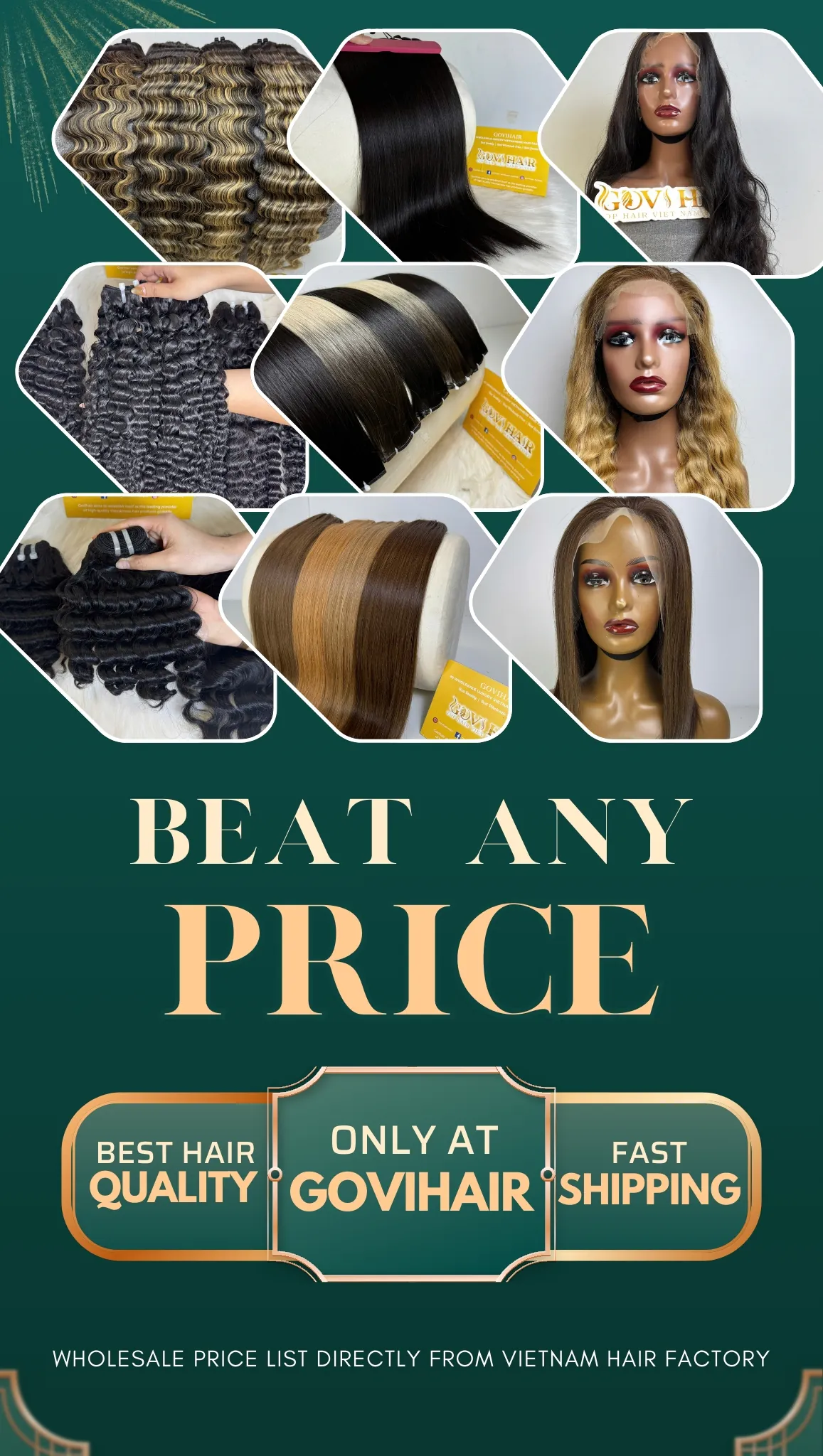
- Fast reply + a “Beat Any Price” wholesale quote. A dedicated rep responds within minutes and will match or beat a genuine competitor quote on comparable grade and length, so you’re not paying a premium for the same hair.
- Start small, scale on tiers. Begin with a 500g sample; wholesale pricing starts at 1kg, with VIP pricing on bulk hair from 5kg. Low risk to test, real savings at volume.
- One supplier for the whole range. Machine, flat, genius, and hand-tied weft; closures (2×4 through 7×7) and frontals (13×4 / 13×6); closure, frontal, and full-lace wigs; plus tape-ins, keratin tips, clip-ins, nano/micro rings, ponytails, feather wefts, toupees and toppers — natural tones through #613.
- The signature 2-in-1 wig set. A Govihair exclusive: one wig built to be worn two different ways, so a single unit gives your client two looks — a genuine point of difference no other vendor on this list offers.
- Raw Type 1 that lifts to any color. Genuine single-donor raw that bleaches cleanly to #613 / #12.0, backed by a European designer color chart — Norwegian Blonde, Viking Blonde, Silver, Grey, Mint, Dubai, Brond Ombre — that processed-hair factories can’t reliably match.
- Grades chosen upfront. Raw and Remy in Single, Double, Super, and Luxury draws, so you order exactly the density and end-fullness your market expects.
- Pre-shipment video weigh-in on every order. You watch your exact bundles weighed on a calibrated scale before releasing the balance. This is the strongest protection a buyer can get — and most factories simply won’t do it.
- A video call to finalize custom color and wig orders. Approve the look before it goes into production, so there are no surprises on arrival.
- From a 30% deposit, paid in stages. Start production with a 30% deposit and pay the balance in stages as you receive and verify the goods — never 100% upfront. Payment runs on 11 rails: SWIFT bank transfer, Wise, Revolut, Western Union, MoneyGram, Ria, Remitly, TapTap, Lemfi, SendWave, and USDT/Bitcoin — including the African corridors most factories can’t accept money from.
- Transparent, all-in shipping. DHL, FedEx, or UPS with a clear quote before you pay (for example, a 0.5kg express parcel to the US is quoted all-in, around $42 before peak-season surcharges and duties). US and Europe in ~5–7 days, Africa in ~7–9.
- After-sale care, not a one-off sale. Ongoing support and reorder help so batches stay consistent as you grow.
Request a quote or a sample from Govihair →

Raw Hair Vendors: Frequently Asked Questions
Where does most of the world’s human hair come from? The bulk of raw human hair originates in Asia — chiefly Vietnam and India, with Bangladesh as a secondary source. China imports much of this raw material and processes it. Russia supplies a small, premium share.
Which country produces the best raw human hair? For genuine single-donor raw hair with strong coloring capability, Vietnam is generally considered the leader. India is preferred for naturally wavy and curly temple hair, and Russia sits at the luxury end for fine, cool-toned material.
What’s the difference between raw hair and virgin hair vendors? Raw hair = single-donor, zero chemical processing, naturally aligned cuticles. Virgin hair = multi-donor, cuticle-aligned, chemically untreated but may be steam-styled. Raw lasts 2–5 years; virgin 1–2 years. Raw bleaches to #613 reliably; virgin handles moderate lifts. Raw costs more. Choose based on your market’s price point and needs.
Why is Vietnamese raw hair more widely available and higher quality than other origins? Vietnam has a larger, more formalized single-donor collection system than Cambodia or India’s non-temple market, which allows consistent supply and quality control at scale. Vietnamese hair also has a thick, strong shaft that lifts cleanly for coloring, and Vietnam is both a raw source and a manufacturer — keeping quality under one roof.
Does China produce its own raw human hair? Only in limited quantities. Because hair donation is uncommon there, China imports most of its raw material from Vietnam and India and focuses on processing, coloring, and industrial supply.
Is Russian hair worth the premium? For clients at the luxury tier who prioritize a specific fine, cool-toned look over cost, yes — but it is expensive and hard to source at volume, which is why it remains niche rather than mainstream.
How do I verify that what I’m buying is actually raw hair? Burn test on a sample — genuine raw human hair burns to crumbling grey-white ash. Cuticle slide test — feel slight resistance sliding fingers from tip to root. Elasticity test — a wet strand stretches slightly and snaps back. And ask directly: “Is this single-donor? What is your washing process? Have any chemical treatments been applied at any stage?”
Is raw hair always better than virgin for wholesale? Not always. Raw single-donor hair is better for premium positioning, color-transformation services, and clients who reinstall over 2+ years. For volume distribution at accessible price points, and for clients who don’t need extreme bleaching, virgin multi-donor performs well at lower cost. Match the grade to your market.
Where can I find a raw hair vendors list? This page is a maintained raw hair vendors list: 10 wholesale vendors across Vietnam, China, Cambodia, India, Russia and the USA, each scored on raw-hair compliance, sourcing transparency, MOQ and pricing. Marketplace and social media lists are longer but mix raw, virgin and processed hair, so verify each vendor with the checks above before you pay.
How do I find a reliable raw hair vendor? Ask for a live video of the factory and of the exact hair you will receive, a burn or bleach test on a sample, and written specs for grade (Double Drawn or Super Double Drawn), length and weight. Start with a trial order of 500 g to 1 kg, pay by a traceable method such as bank transfer, and compare the sample with the bulk shipment before you scale up.
Are there raw hair vendors in the USA? Very little raw hair is collected in the USA, so most US-based vendors import from Vietnam, India or China and resell it. Private Label Extensions is one US-based option for private labeling. Govihair is a raw hair factory in Da Nang, Vietnam, with a US office in Garland, Texas for shipment receiving, customer care and warranty, so US buyers get factory pricing with local support. See our guide to wholesale hair vendors in the USA.
Which Raw Hair Vendor Should You Choose?
For most wholesale buyers, the decision comes down to matching origin and grade to your market. Vietnam offers the best quality-per-dollar on genuine single-donor raw and serves every market; China wins on ready stock, color, and wig-making supplies but prices imported/processed hair at Vietnam levels; Russia is a luxury niche at 4–5× the cost. Whichever vendor you choose, protect the first order the same way — a live factory video call, a sample you burn-test yourself, a 30–50% deposit, and a pre-shipment weigh-in video.
If you want a Vietnamese factory that supplies genuine single-donor raw hair with pre-shipment video confirmation on every order, Govihair ships to the US, Europe, and Africa with sample-friendly MOQs. Request a quote or a sample →
Related reading: Best Wholesale Raw Vietnamese Hair Vendors · Top 10 Vietnamese Hair Vendors 2026 · Vietnamese Hair Price List 2026
 Ms. Jessica