





Vietnamese Human Hair
Vietnamese Hair Price 2026: Wholesale Price List & Buying Guide
Jun
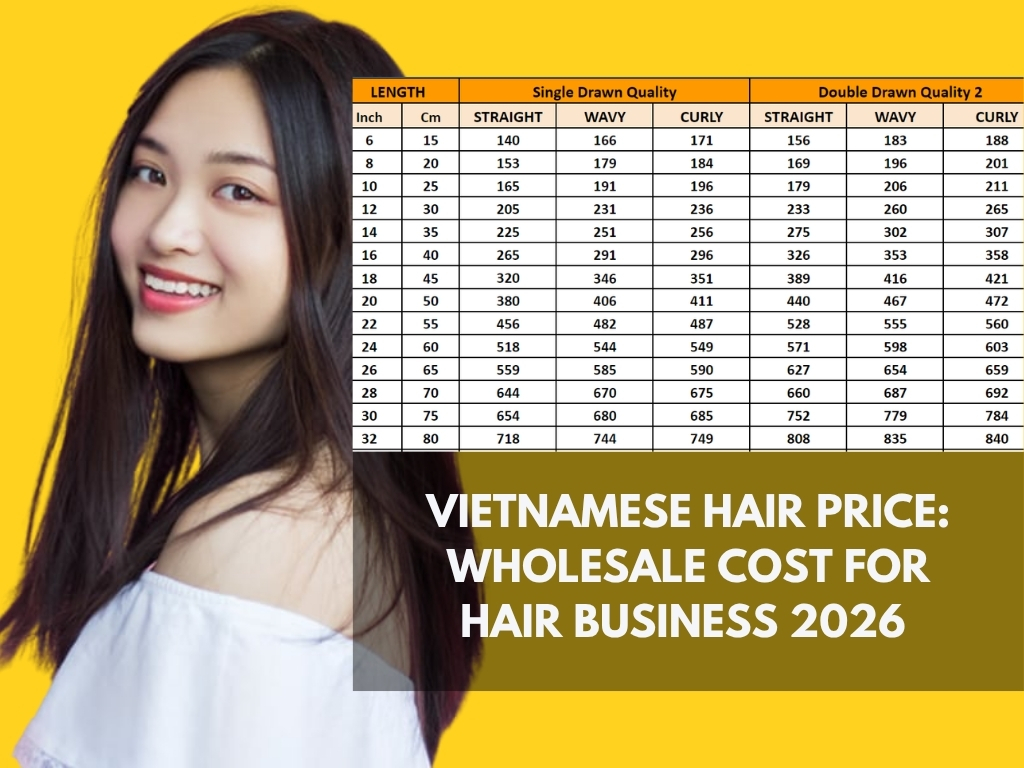
If you’re a salon owner, hair vendor, or wig shop sourcing at wholesale, you need a straight answer on the Vietnamese hair price — not another sales pitch. In 2026 it runs about $18–$100+ per 100g bundle, $160–$800+ per kilogram, and $150–$690 per wig, depending on type, grade, length, texture and color. And if you’ve been quoted wildly different numbers for the same “Vietnamese hair,” you’re not imagining it — a 20″ bundle can run from $15 to $80 depending on what’s actually in the package. This guide breaks the price down by every variable that moves it and gives you a full factory-direct wholesale price list to check any quote against.
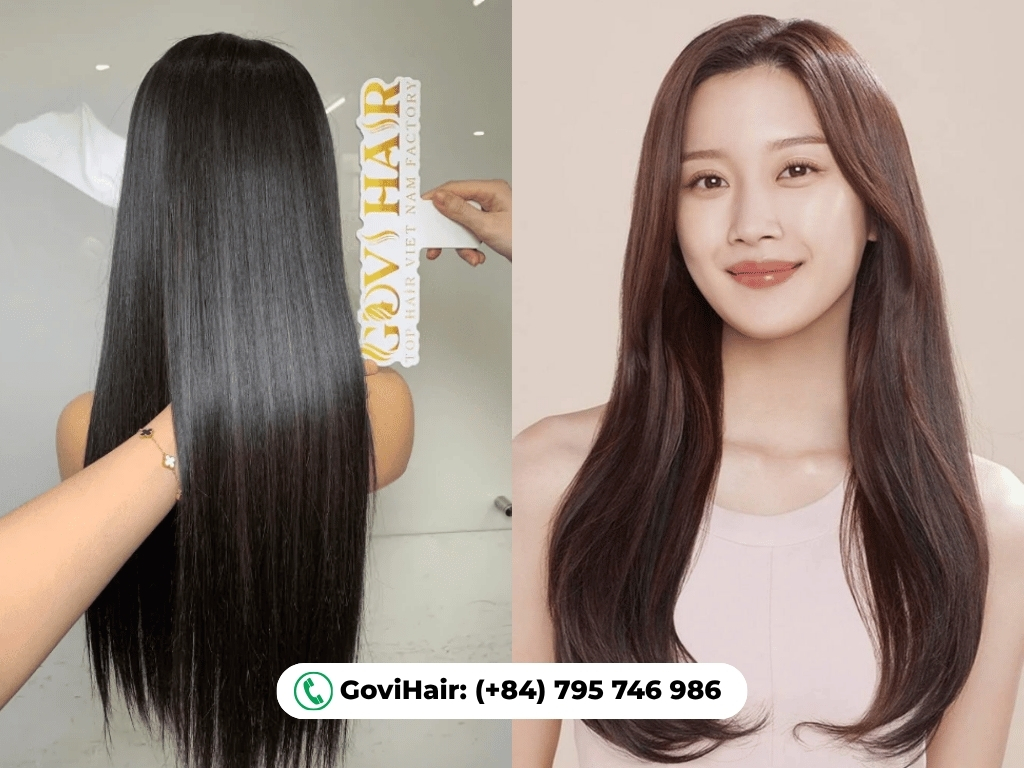
Vietnamese Hair Price at a Glance
The fastest way to sanity-check a quote before reading the full breakdown:
| Product | Typical Wholesale Price 2026 |
|---|---|
| Raw single-donor bundle (100g, single drawn) | $18 – $100+ |
| Raw Vietnamese hair price per kg (natural straight) | $160 – $800+ |
| Virgin multi-donor bundle vs. raw | 20–30% lower than raw |
| Super double drawn premium vs. base grade | +40–60% |
| Machine weft (100g) | $18 – $55 |
| 4×4 closure | $30 – $75 |
| 13×4 frontal | $67 – $144 |
| Closure/frontal wig (2-in-1 set) | $150 – $450 |
| Full lace wig (18″–26″) | $280 – $690 |
What Is Vietnamese Hair — and Why “Raw” Isn’t One Price
Vietnamese hair is human hair sourced from donors in Vietnam, mostly from rural areas in the north where long, uncolored, chemically untreated hair is common. Two labels get used interchangeably but shouldn’t be:
- Raw Vietnamese hair — 100% unprocessed, cuticles intact and aligned root-to-tip, sold in its natural texture. The most expensive and longest-lasting category; it sets the ceiling on Vietnamese hair price.
- Virgin Vietnamese hair — also chemical-free, but usually multi-donor and sometimes steam-set into a wave or curl. Runs 20–30% below raw at the same length and grade.
Anything sold as “raw” that’s been acid-washed, silicone-coated, or steamed into a curl pattern isn’t raw — it’s processed hair with the wrong label, and it’s the main reason Vietnamese hair price swings so widely between suppliers.
The Four Material Tiers (Govihair’s Classification)
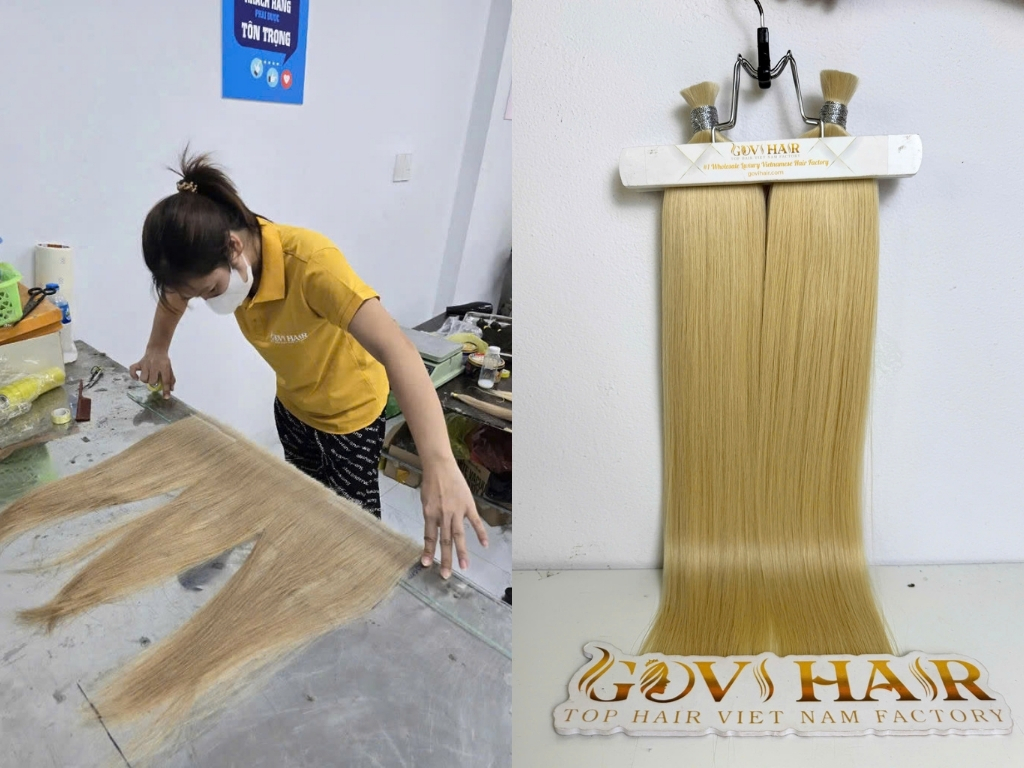
Vietnamese factories don’t grade all hair the same way. Govihair sorts raw material into four tiers — all 100% human hair — differing by donor count, which controls how light the hair can be bleached and how long it lasts:
| Tier | Donors | Bleaching ceiling | Main markets | Lifespan |
|---|---|---|---|---|
| Raw Type 1 (single donor) | 1 | Lightest — up to white #12.0 / platinum; takes any color | US, Europe, West Asia, Russia | 3–5 years |
| Raw Type 2 | 2–5 | Neutral light tones below #60 | Africa | 2–3 years |
| Virgin | Many | Dark tones only — does not lift to light | Africa | 1–2 years |
| Baby hair | 1 (children’s, under 20″) | Any color; softest, most moisture | Specialty / direct-use | 3–5 years |
This is why two bundles at an identical length and grade can carry different prices: single-donor Raw Type 1 costs more because it’s rarer and bleaches cleanly to blonde, while multi-donor virgin is the affordable volume product for dark-color markets.

Why Vietnamese Hair Costs More Than Chinese or Indian Hair
The gap isn’t arbitrary — it reflects real production differences:
- Single-donor sourcing takes labor. Collectors travel hours into rural areas to buy from individual donors — slower and costlier per kilogram than bulk mixed hair from a depot.
- Every bundle is hand-sorted strand by strand to remove short hairs and keep cuticles facing one direction. This sets the grade and can’t be automated.
- No chemical shortcuts. Cheap producers acid-wash floor hair and coat it in silicone to fake smoothness — fast and cheap, but it washes out in weeks. Genuine raw Vietnamese hair is washed with mild shampoo only, which is why it lasts years.
- Donors are paid fairly, which limits how far single-donor sourcing can scale — keeping supply, and price, firm.
What Drives Vietnamese Hair Price
Five variables explain almost every price difference on a quote.
Grade (tail thickness)
Grade measures how much of a bundle is full-length strand versus short, tapered strand toward the ends — the fuller the tail, the more hand-sorting it took:
| Grade | Full-length strand % | Price vs. base |
|---|---|---|
| Single Drawn | ~50–60% | Base price |
| Double Drawn | ~65–75% | +20–35% |
| Super Double Drawn | ~75–85% (no strands under ~40cm) | +40–60% (≈ +$15/100g) |
| Super Premium / Luxury | 85%+ (no strands under ~40cm) | +60–80% (≈ +$20–30/100g) |
Higher grades resell better because the ends aren’t thin — a detail clients notice immediately.
Length
Price scales non-linearly, with a clear jump at 20″+, because long raw bundles are genuinely rarer among donors and take longer to sort.
Texture
Natural straight and bone straight have the most stable supply and pricing. Wave and curly carry a modest premium for processing time (+$5–6/100g); naturally curly raw hair (Burmese, pixie, bouncy curly) is the most expensive per gram, since curly Vietnamese donors are uncommon.
Color
Natural shades (#1B, #2) are base price. Dark colors add +$6/100g; light and blonde shades (#613, platinum) add +$12–$25/100g because bleaching is demanding and rejection rates run higher on lower-quality hair. Genuine Raw Type 1 — never weakened by prior processing — lifts to platinum more evenly with less breakage, which matters for colorists doing #613 work.
Type & lace
Raw > virgin > processed. For closures and frontals, lace choice also moves price: transparent lace (the African-market standard) is base; HD lace (soft, near-invisible for lighter tones) and HD Swiss (finest, melts into the scalp) add 15–25%.
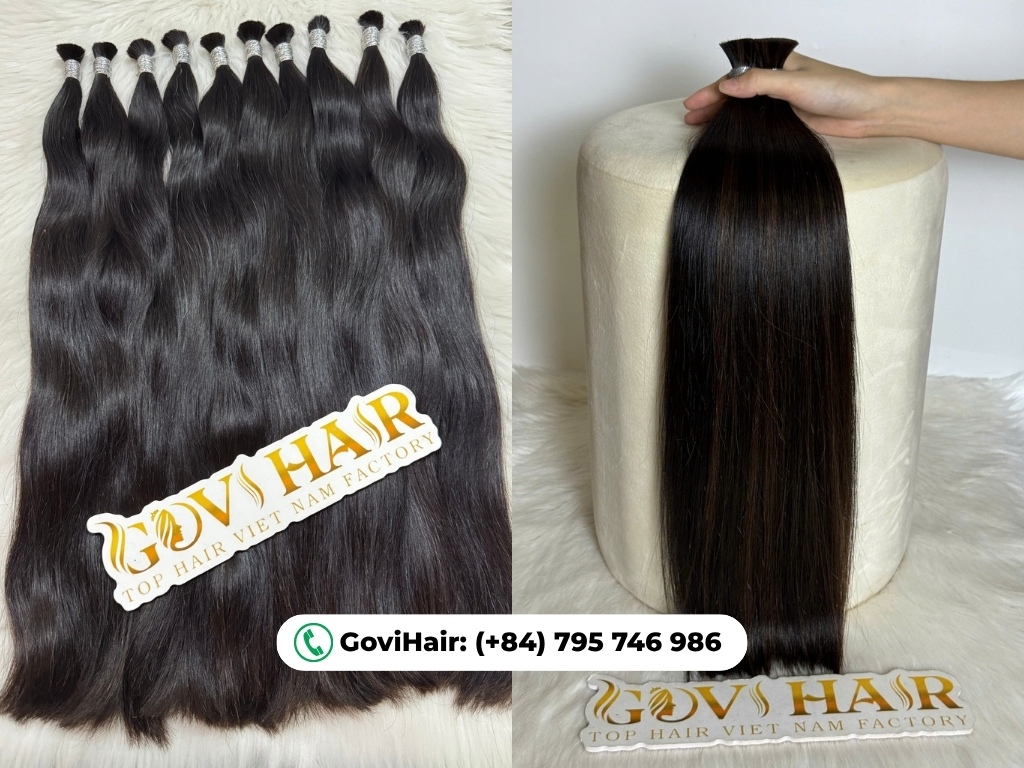
Vietnamese Hair Price List 2026 (Factory-Direct Wholesale)
Raw Single-Donor Bundles (100g)
| Length | Single Drawn | Double Drawn | Super Double Drawn |
|---|---|---|---|
| 8″–12″ | $18–$25 | $22–$30 | $28–$38 |
| 14″–16″ | $22–$32 | $28–$38 | $35–$48 |
| 18″–20″ | $30–$45 | $38–$55 | $48–$68 |
| 22″–24″ | $42–$58 | $52–$70 | $65–$85 |
| 26″–28″ | $58–$78 | $70–$90 | $85–$110 |
| 30″–32″ | $75–$100 | $90–$120 | $110–$145 |
Virgin multi-donor bundles run ~20–30% below raw at the same length and grade (e.g. a 20″ double drawn raw bundle at $48–$55 ≈ a virgin bundle at $36–$44).
Raw Vietnamese Hair Price Per Kg
Volume buyers order by kilogram (~8–10 bundles at 100g each):
| Length | Price per kg (natural straight, single drawn) |
|---|---|
| 10″–14″ | $160–$220 |
| 16″–20″ | $240–$380 |
| 22″–26″ | $380–$550 |
| 28″–32″ | $550–$800+ |
Volume discounts typically start at 5kg and scale progressively above that.
Closures & Frontals (per piece, natural color)
| Type | Size | Straight | Wavy / Curly |
|---|---|---|---|
| Closure | 2×4 | $19–$45 | +$3–5 |
| Closure | 2×6 | $25–$56 | +$3–5 |
| Closure | 4×4 | $30–$75 | +$3–5 |
| Closure | 5×5 | $41–$88 | +$3–5 |
| Closure | 6×6 | $49–$97 | +$3–5 |
| Frontal | 13×4 | $67–$144 | +$5 |
| Frontal | 13×6 | $92–$198 | +$5 |
Dark color +$6/piece; HD or HD Swiss lace +15–25%.
Wigs (2-in-1 sets, natural color)
Govihair’s signature wig is a 2-in-1 set — one wig you can style two ways — built from bundles plus a closure or frontal:
| Wig type | Length | Density | Price |
|---|---|---|---|
| 4×4 / 5×5 closure wig | 16″–22″ | 130–180% | $150–$290 |
| 13×4 frontal wig | 18″–24″ | 130–180% | $210–$320 |
| 13×6 frontal wig | 18″–24″ | 180% | $250–$450 |
| Full lace wig | 18″–26″ | 130–200% | $280–$690 |
Natural colors shown. Pre-bleached/light-color units, higher densities (200–250%), and premium tiers add 15–30%.
Extensions (per 100g or per set)
| Type | Price | Notes |
|---|---|---|
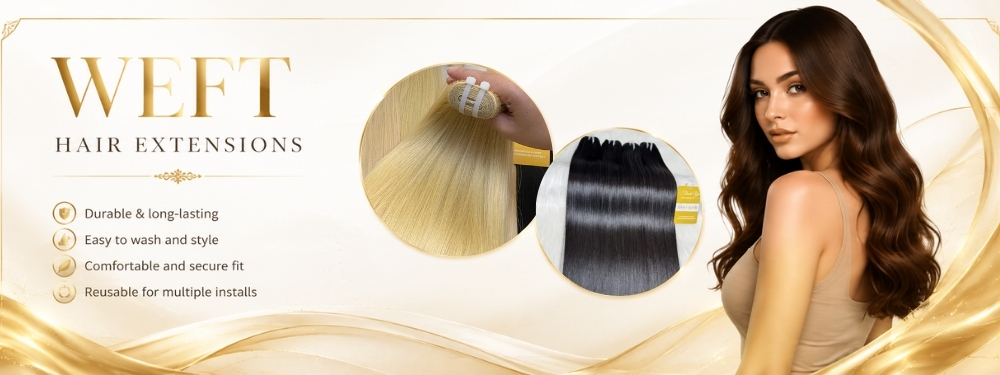
| Machine weft | $18–$55/100g | Most affordable weft |
| Hand-tied / genius weft | $28–$80/100g | 30–50% premium over machine |
| Flat weft | $25–$65/100g | Mid-range |
| Tape-in (20 pcs) | $35–$75/set | 14″–22″ most common |
| Keratin I-tip (100 strands) | $40–$90/set | Single to double drawn |
| Clip-in (7 pcs) | $45–$95/set | 120–150g/set |
| Bulk hair (braiding) | $12–$45/100g | No weft |
How Much Does a Wig Actually Cost to Build?
Wig pricing confuses buyers because a wig isn’t one item — it’s 2–3 bundles + one closure or frontal + a sewing fee (~$25/set). Roughly:
- Under 16″ → 2 bundles + 1 closure/frontal
- Over 16″ → 3 bundles + 1 closure/frontal
- Smaller closures (2×4, 2×6) need more bundles (the lace covers less); frontals (13×4, 13×6) need the fewest.
Worked example — a 20″ 4×4 closure wig: 2 bundles (20″) + one 4×4 closure (22″) + $25 sewing ≈ $170–$240 in material and labor, before color surcharges and shipping. Comparing this to the all-in wig-set price tells you whether to build or buy ready-made.
Vietnamese Hair Price vs. Other Origins
| Origin | 20″ double drawn bundle | Lifespan | Bleaches to #613 | Notes |
|---|---|---|---|---|
| Vietnamese Raw | $48–$65 | 2–5 years | Yes, reliably | Single-donor, cuticle intact |
| Vietnamese Virgin | $36–$48 | 1–2 years | Partially | Multi-donor, cuticle aligned |
| Chinese | $12–$25 | 3–6 months | Rarely | Often processed, silicone-coated |
| Indian | $20–$38 | 6–18 months | Sometimes | Mixed processing levels |
| Cambodian | $35–$55 | 1–3 years | Partially | Coarser, less consistent |
Cost-per-wear tells the real story: a $55 raw Vietnamese bundle worn through multiple installs over 3 years costs less per month than a $20 Chinese bundle replaced every 4 months.
What Moves Vietnamese Hair Prices
- Harvesting season. Collection slows around Lunar New Year (January–February); prices rise 5–15% beforehand and normalize by March.
- Demand cycles. Peak US salon buying (October–December) affects lead times more than price.
- Exchange rates. Factories price in USD; large USD/VND moves can pass through.
- Long-length supply. Genuinely long raw hair (26″+) is naturally scarce — booking ahead avoids inventory-driven spikes.
What doesn’t move price: a supplier’s marketing, website, or how many platforms they’re listed on. The cost is raw material, sorting labor, and logistics — nothing else.
3 Quality Checks to Verify a Fair Vietnamese Hair Price
A low price is only a good deal if the hair matches raw, single-donor quality. These checks confirm what you’re paying for without lab equipment:
- Burn test. Burn a few strands. Real human hair singes, curls, smells like burning protein, and leaves soft, crumbly ash. Synthetic or silicone-coated hair melts into a hard bead and smells chemical.
- Cuticle slide test. Run fingers down a strand tip-to-root. Raw, cuticle-aligned hair resists one way and feels smooth the other. Equal smoothness both ways means the cuticles were stripped or artificially realigned — a sign of acid-washed, non-raw hair.
- Elasticity test. Wet a strand and stretch gently. Healthy raw hair stretches 20–30% before springing back. Hair that snaps immediately has been chemically weakened, whatever the quote calls it.
If a supplier won’t let you run these on a sample before a bulk order, treat that as a warning sign on its own.
How to Get the Best Wholesale Vietnamese Hair Cost
- Buy direct from factory. Trading companies that resell add 20–40% markup without adding value.
- Order consistent volume. Factories price better for regular buyers than for one big order followed by silence.
- Negotiate by product line, not total spend. Ask which textures or lengths they’re overstocked on.
- Pay deposits on time — it protects your pricing leverage on future orders.
- Don’t anchor on the lowest quote. It almost always reflects the lowest quality. If a “raw” quote is well below market, ask about donor tier, washing process, and cuticle alignment — the answer usually explains the price.
Warning Signs of a Bad Quote
- Price too low for what’s claimed — raw single-donor 20″+ under $25/bundle isn’t supported by real cost.
- No live video verification offered.
- Wildly inconsistent quotes from one “factory” — a sign pricing is guesswork, not cost-based.
- 100% upfront payment demanded — standard is a deposit to start, balance after video confirmation.
- No published price list at all, everything “custom quoted.”
Wholesale Terms & Getting a Vietnamese Hair Price Quote
Contact Govihair on WhatsApp (+84 79 574 6986) with hair type (raw or virgin), texture, length, grade, quantity, and color for a specific quote and invoice.
- MOQ: 500g for bundles (~5 bundles), 2 units for wigs — no minimum once a relationship is established.
- Deposit: from 30% to start production; balance after video confirmation of your order on a scale, before shipping.
- Payment: bank transfer (SWIFT, USD/EUR), Wise, Western Union / MoneyGram / Ria / Remitly, secure credit-card link, and USDT / Bitcoin.
- Shipping: 1–3 days production for in-stock items (5–9 days door-to-door to the US via DHL/FedEx/UPS); 5–10 days for custom textures, colors, or 26″+ lengths. Europe 5–7 days; Africa 7–9 days via cargo agents.
- Freight estimate (express air, VN→US): 0.5kg ≈ $42, 1kg ≈ $45, 2kg ≈ $62, 3kg ≈ $78, 5kg ≈ $110 (excludes peak-season surcharges and import duty).
Every order ships with a signed sales contract and itemized commercial invoice.
FAQs About Vietnamese Hair Price
How much does Vietnamese hair cost per bundle in 2026? Raw single-donor hair runs $18–$25 for short lengths (8″–12″), $30–$45 for mid-lengths (18″–20″), and $58–$100+ for long lengths (26″–32″) at single drawn grade. Double and super double drawn add 20–80%. Virgin multi-donor hair runs 20–30% below raw at equivalent lengths and grades.
What is the raw Vietnamese hair price per kg? Raw single-donor natural straight hair by the kilogram runs $160–$220 for 10″–14″, $240–$380 for 16″–20″, $380–$550 for 22″–26″, and $550–$800+ for 28″–32″. Volume discounts typically start at 5kg.
Why is Vietnamese hair more expensive than Chinese or Indian hair? Single-donor sourcing, hand-sorting for cuticle alignment, and chemical-free washing cost more than industrial acid-bath processing — producing hair that lasts 2–5 years versus 3–6 months for cheap alternatives.
How much does a Vietnamese hair wig cost? Closure and frontal wigs (2-in-1 sets) run about $150–$450 depending on lace size, length, and density; full lace wigs run $280–$690. A wig is 2–3 bundles + one closure/frontal + a ~$25 sewing fee, so length and grade drive the final price.
What’s the price difference between raw and virgin Vietnamese hair? Roughly 20–30% for equivalent length and grade. Raw’s extra cost reflects single-donor traceability, longer lifespan, and cleaner bleaching to light colors; virgin delivers better margin for volume distribution in dark-color markets.
Does Vietnamese hair price change by season? Yes, modestly. Prices firm up around Lunar New Year (January–February) when collection slows. March–September are the most stable pricing windows.
Can I negotiate price with Vietnamese hair factories? Yes — on volume and consistency. Per-bundle pricing is fairly fixed because cost structures are, but buyers ordering 5kg+ monthly negotiate better per-kg rates. Custom textures, colors, and non-standard lengths are less negotiable.
What’s the cheapest way to buy Vietnamese hair wholesale? Buy direct from factory (eliminates the 20–40% middleman markup), place consistent monthly orders (unlocks volume pricing), and start with in-stock textures and standard lengths (avoids custom-production premiums). Natural-color straight or body wave at 16″–20″ in double drawn is the best-value entry point for most wholesale buyers.
How do I know if I’m paying a fair price? Compare any quote against the price ranges in this guide. If it’s significantly below market for what’s claimed, ask specific verification questions about donor tier, washing process, and cuticle alignment. If it’s significantly above market, you’re likely paying middleman markup — go direct to the factory instead.
Related Guides
- The Ultimate Guide to Vietnamese Hair Grades — single, double, and super double drawn explained with photos.
- Top 10 Vietnamese Hair Vendors in 2026 — how to evaluate suppliers beyond price alone.
- The Ultimate Guide to Vietnamese Hair Quality — the burn, cuticle, and elasticity checks in more detail.
- How to Import Hair From Vietnam — duties, paperwork, and shipping by market.
 Ms. Jessica