







Human Hair Wigs
How to Measure Your Head for a Wig Like a Professional
May
Finding the right wig size is the most important step in achieving a look that is both beautiful and comfortable. A well-fitted wig stays securely in place without the need for constant adjusting, prevents headaches caused by tightness, and ensures the hairline sits flat against your skin for a completely natural appearance. If the cap is too big, it will slide; if it is too small, it will ride up and feel unnatural.
In this guide, we provide a simple, step-by-step method how to measure your head for a wig perfect fit using a standard measuring tape.
No tools at home? No problem. We will also show you how to get an accurate measurement using common household items so you can shop for your next wig with total confidence.
What You Need Before You Measure Head for a Wig
The most important thing to remember is that your measurements are only as accurate as your hair prep. If your natural hair is bulky under the tape, your wig will feel loose and look unnatural once you actually put it on.
To get a true reading:
- A flexible cloth measuring tape is your top tool. It wraps smoothly around your head for the most accurate size.
- Pull your hair flat under a wig cap first. This mimics how the wig will sit and prevents puffed-up numbers that lead to loose caps. Flat hair means a perfect match every time.
- Keep a mirror nearby so you can check that the tape stays level and doesn’t slip down at the back.
- Have a pen and paper ready to jot down each number immediately, as even a half-inch difference can change your recommended wig size.
- Optional: string and ruler if you do not have a tape measure.

6 Easy Steps To Measure Your Head Perfect Fit
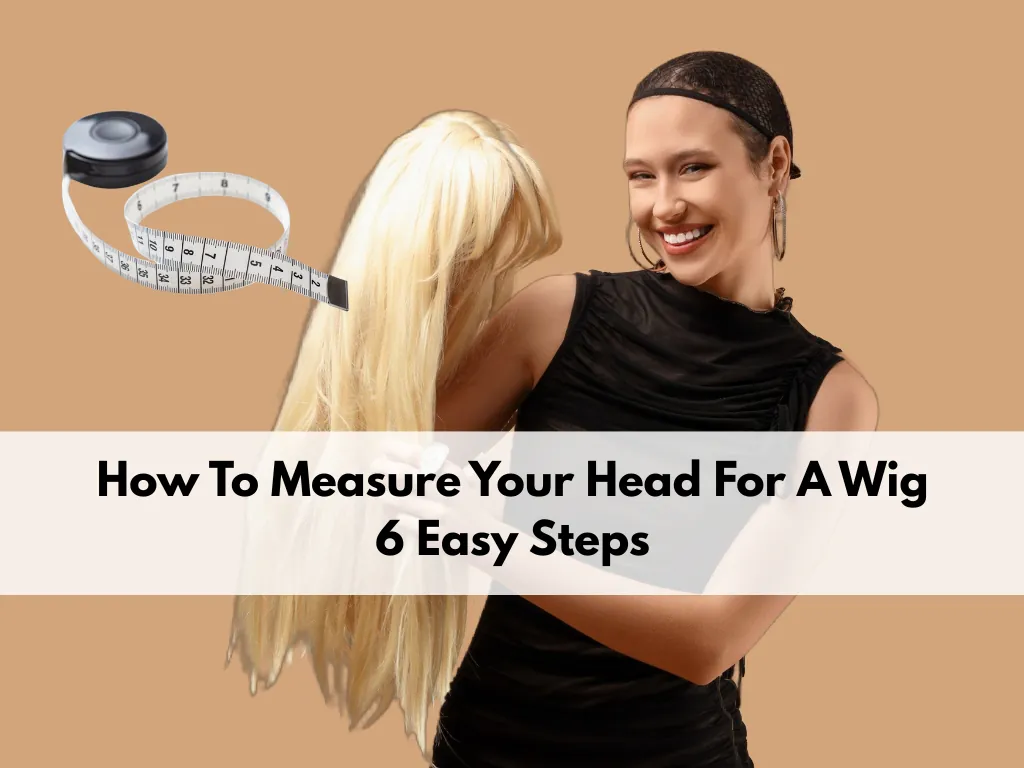
Use a flexible fabric measuring tape to measure your head for a wig. Ensure your hair is flattened beforehand such as in braids, a low ponytail, or under a wig cap to achieve accurate results. While head circumference is the most essential measurement, taking additional measurements helps ensure a more secure and comfortable fit.

Step 1: Circumference
Start with head circumference, your most vital number for wig fit. Place the tape measure at your front hairline center. Wrap it snugly over your ears and around the back of your neck, then note the inches.
No tape? Grab a string or cord instead. Mark where it meets after wrapping the same path, lay it flat, and measure against a ruler. This keeps your numbers spot-on without special tools.
Step 2: Front to Back
Next, run the tape from your front hairline over the crown to your nape. This front-to-back length ensures the wig covers your full head shape. Flat hair under a cap makes it precise.
Step 3: Ear to Ear (Across Forehead)
Measure ear to ear across your forehead next. Start at one temple, about 1.5 inches back from the hairline, and go straight to the other side. It locks in hairline placement.
Step 4: Ear to Ear (Over Top)
For crown fit, measure ear to ear over the top. Position tape at the top of one ear, across the highest crown point, to the other ear. This stops sagging or tight spots up top.
Step 5: Temple to Temple (Around Back)
Temple to temple around the back checks side stability. Start at one temple, curve behind the ears to the opposite temple. It prevents forward slips during wear.
Step 6: Nape of Neck
Finish with nape width at the neck base. Measure side to side right where your hairline ends. This tailors the lower cap for comfort all day.
Before finalizing your size, use the Four Finger Rule as a quick sanity check. Place four fingers horizontally above your eyebrows; this is generally where your wig’s hairline should sit to look natural and feel comfortable against your forehead.
How to Measure Your Head for a Wig Without a Tape Measure
The most important thing to know is that you don’t need a professional tool to get an accurate measurement. By using standardized household items or your own body proportions, you can find the dimensions of almost anything. The key is using a “reference object”, something that never changes size, to bridge the gap between an unknown length and a specific number.
1. The String or Cable Method
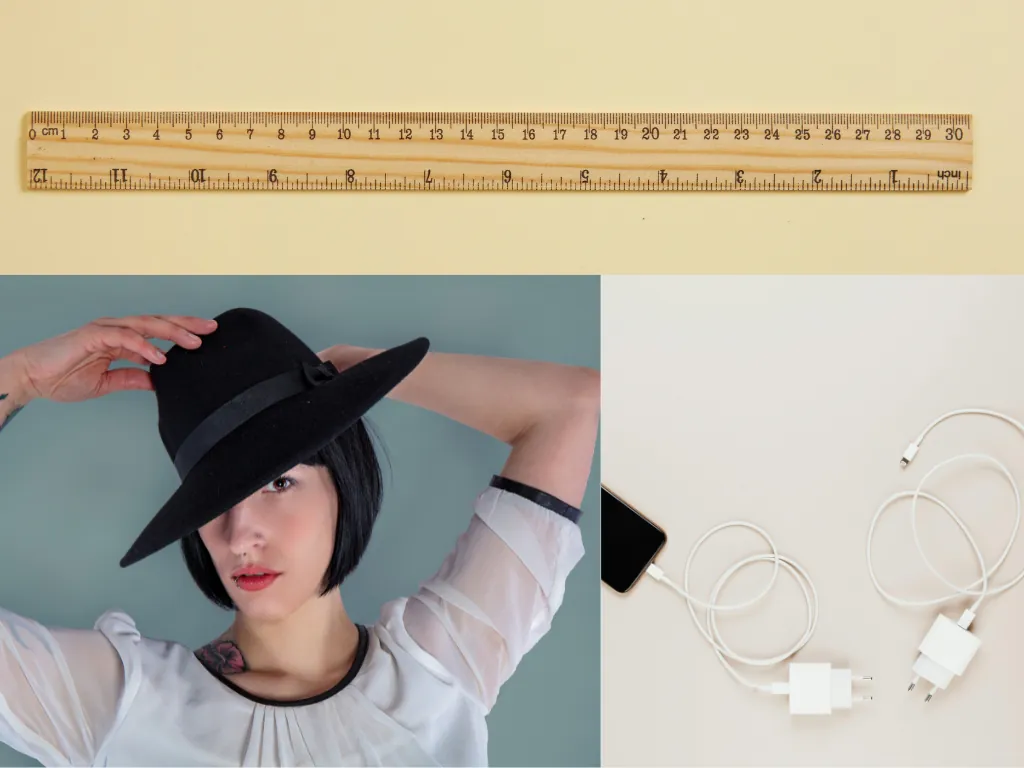
This tops the list for curves like waists or heads, it’s flexible and precise. Take a non-stretchy string or an old phone cable.
- Wrap it snug around the spot you need (keep it straight, not loose).
- Mark or snip where ends meet.
- Stretch flat and use a ruler to read the length. A ruler’s markings make it easy and exact
2. The “Hat Size” to Wig Conversion
If you are trying to buy a wig but don’t have a flexible measuring tape, your hat size is the most reliable shortcut.
Hats are manufactured based on the circumference of the head. If you know your hat size (usually found on the inside tag), you can easily find your head measurement in inches or centimeters using a standard conversion chart.
Check the label inside (e.g., size 7 means 22 inches around).
No label? Here is the the common conversions:
- A Small hat usually fits a head of 21 to 21.5 inches.
- A Medium hat fits 22 to 22.5 inches.
- A Large hat fits 23 to 23.5 inches.
>> See more: Wig Length Chart: A Comprehensive Guide
Common Wig Measurement Mistakes
The secret to a natural-looking wig is a perfect fit. Even a high-quality wig will look like a “costume” if it is too loose or sits too high. To get the most accurate results, you must avoid these 5 common errors that can throw off your measurements by several inches.

1. Measuring Over Bulky Hair
The most frequent mistake is measuring your head while your natural hair is loose or in a thick ponytail. This adds extra bulk, leading you to buy a wig that is too large.
The Fix: Always style your hair exactly how you plan to wear it under the wig. Braiding it into flat cornrows or pinning it down tightly with a wig cap ensures the measurement reflects your true head size.
2. Pulling the Tape Too Tight (or Too Loose)
It is tempting to pull the measuring tape tight to ensure the wig won’t slip, but this results in a cap that is painfully small and causes headaches.
The Fix: The tape should be snug but comfortable. You should be able to fit one thin finger under the tape. If the tape is indenting your skin, it is too tight.
3. Starting at the Wrong Hairline Point
If you start measuring too far down on your forehead or too far back on your crown, the wig will either slide into your eyes or expose your natural hair.
The Fix: Start the tape measure exactly where your natural hairline begins at the center of your forehead. For the back, ensure the tape sits at the “nape”, the small indentation at the very base of your skull where your neck begins.
4. Measuring Only the Circumference
Many people believe that the “Circumference” (the circle around the head) is the only number that matters. However, every head shape is different.
The Fix: You must measure at least three points:
- Circumference: Around the hairline.
- Front to Back: From the forehead hairline to the nape of the neck.
- Ear to Ear: Over the top of the head. Ignoring the “front to back” measurement often results in a wig that doesn’t cover your hair at the neck or forehead.
5. Ignoring Brand-Specific Size Charts
A “Medium” in one brand is not the same as a “Medium” in another. Every manufacturer uses slightly different dimensions for their caps.
The Fix: Never assume your size. Always compare your actual inch or centimeter measurements against the specific size chart provided by the brand you are purchasing. If you are between sizes, it is usually safer to go with the larger size, as most wigs have adjustable straps inside to tighten the fit.
>> Read more: Wig Lace Sizes Guide: Find the Right Fit for Your Head
Final Thought
Measuring your head for a wig doesn’t have to be complicated, but it does require patience and precision. Whether you are using a professional tape measure or a simple piece of string, the goal is to get a true reflection of your head’s shape without any extra bulk.
Important Notes to Remember:
- Consistency is Key: Always measure at least twice. If you get two different numbers, take a third measurement to be sure.
- Flat Hair Matters: Your wig will only sit as flat as your natural hair underneath. Measure on hair that is pinned down or braided.
- Don’t Guess: Even if you have worn wigs before, sizes can vary between styles (like lace fronts vs. full caps). Always check the specific size chart for the unit you are buying.
A well-fitted wig is the difference between feeling self-conscious and feeling completely confident. If you are looking for high-quality, breathable, and comfortable options, consider visiting Govi Hair.
Our human hair wig collection is designed to provide a natural look and a secure fit, ensuring you feel as good as you look every single day.
FAQs
What is the “Four Finger Rule” for wigs?
The Four Finger Rule is a quick way to check if your wig is sitting naturally on your forehead. To use it, place your hand flat against your forehead with your pinky resting right above your eyebrows. Your index finger should touch the edge of the wig hairline.
If there is space for roughly four fingers between your brows and the wig, the placement is likely correct. If the gap is smaller, the wig is too low; if it’s larger, the wig is sitting too far back.
How big is a 25-inch head?
This measures head circumference around the hairline, far larger than average (21.5-22.5 inches). It fits extra-large wigs (23.5+ inches); most brands offer adjustable straps, but check petite/average/large charts first for custom caps.
Is it okay to wear a wig every day?
Yes, for 8-12 hours on human hair wigs or 6-8 on synthetics, but remove nightly for scalp air, preventing itch, buildup, or thinning. Use wig caps, moisturize natural hair, and take full days off weekly for health.

 Ms. Victoria