


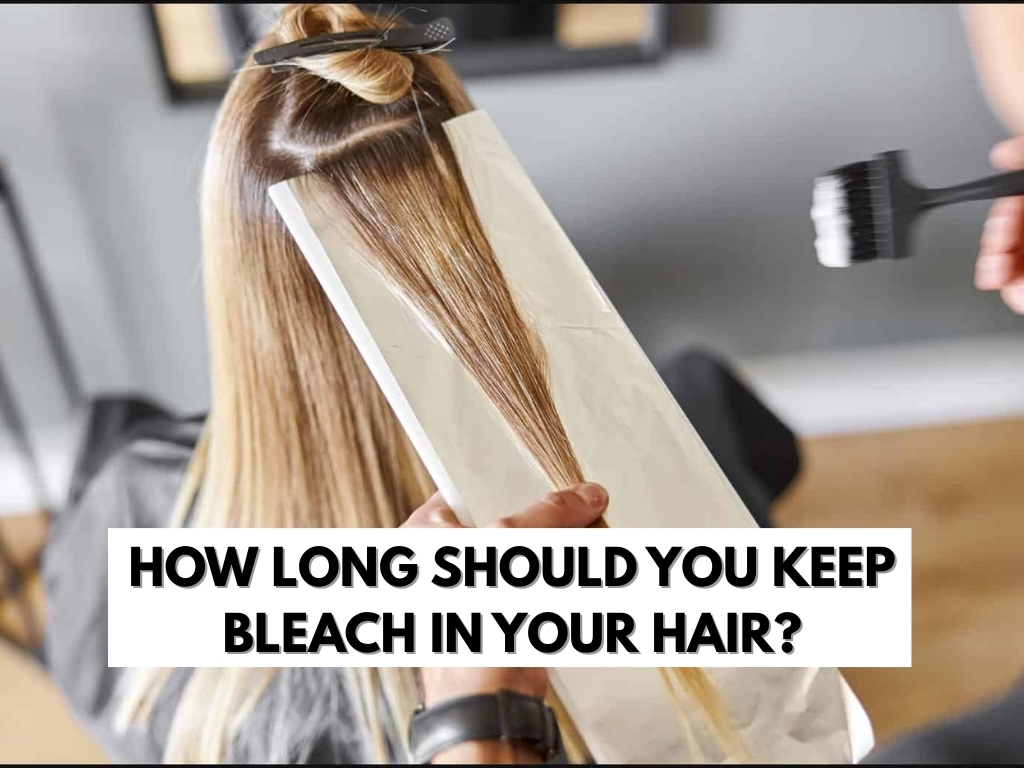
Achieving the perfect blonde relies heavily on precise timing. If you are asking how long should you keep bleach in your hair, you must be careful to avoid irreversible breakage. Understanding the maximum time to leave bleach on hair without damaging it ensures you get the color you want without sacrificing hair health. Here is Govihair’s complete guide to safe bleaching times based on developer strength and hair type.
How Bleach Works on Your Hair?
Bleach works through a chemical process called oxidation. The mixture lifts the hair cuticle to dissolve the natural pigment (melanin) housed in the cortex. To visualize this, imagine your hair strand as a tree trunk with a protective bark. The bleach forces this outer layer open, penetrating the deep core to break down the natural color.
Because this is an aggressive process, knowing how long should you keep bleach in your hair after bleaching is crucial. If left on too long, the bleach goes beyond simply removing color and begins to shatter the protein bonds that give hair its strength. The result is a total loss of elasticity, causing the hair to become gummy and suffer from irreversible breakage.
How Long Should You Keep Bleach in Your Hair?
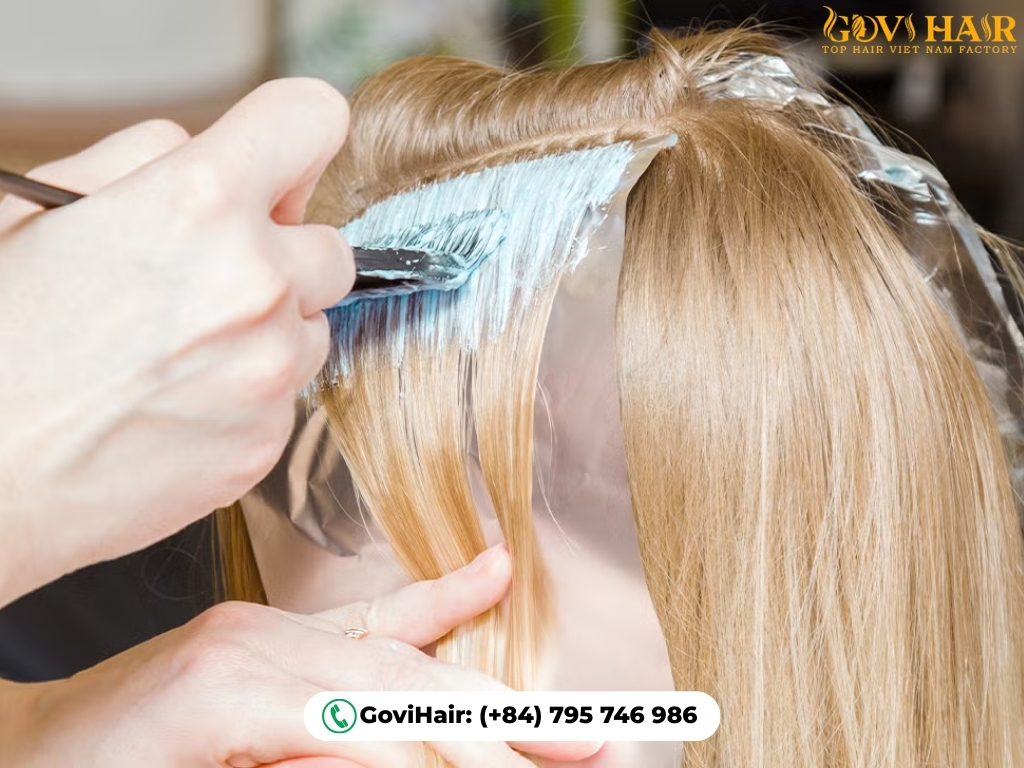
The general rule of thumb is that bleach can stay on the hair between 15 to 45 minutes. However, there is no single answer. The exact time depends on your starting color and hair texture. Generally, the time to keep bleach in your hair should never exceed 50-60 minutes in a single session, as the product stops lifting effectively and starts eating away at the protein bonds.
For those asking how long do you leave bleach in your hair, the absolute maximum time to leave bleach on hair without damaging it significantly is typically around 45 minutes for standard bleach.
Timing Based on Developer Volume
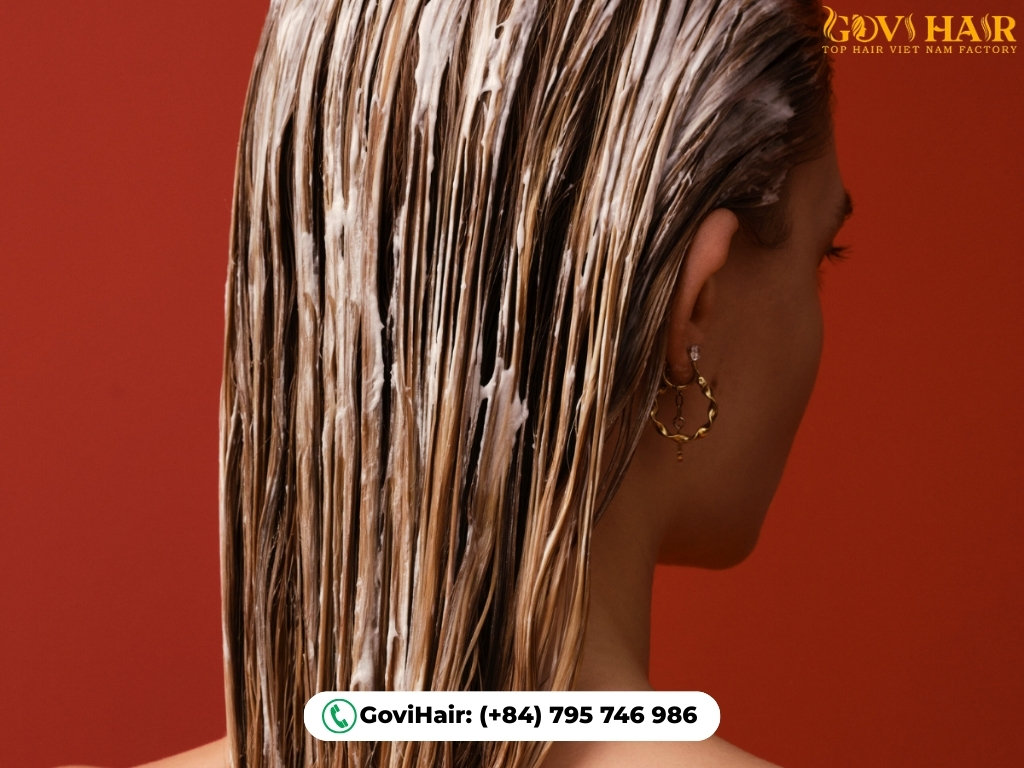
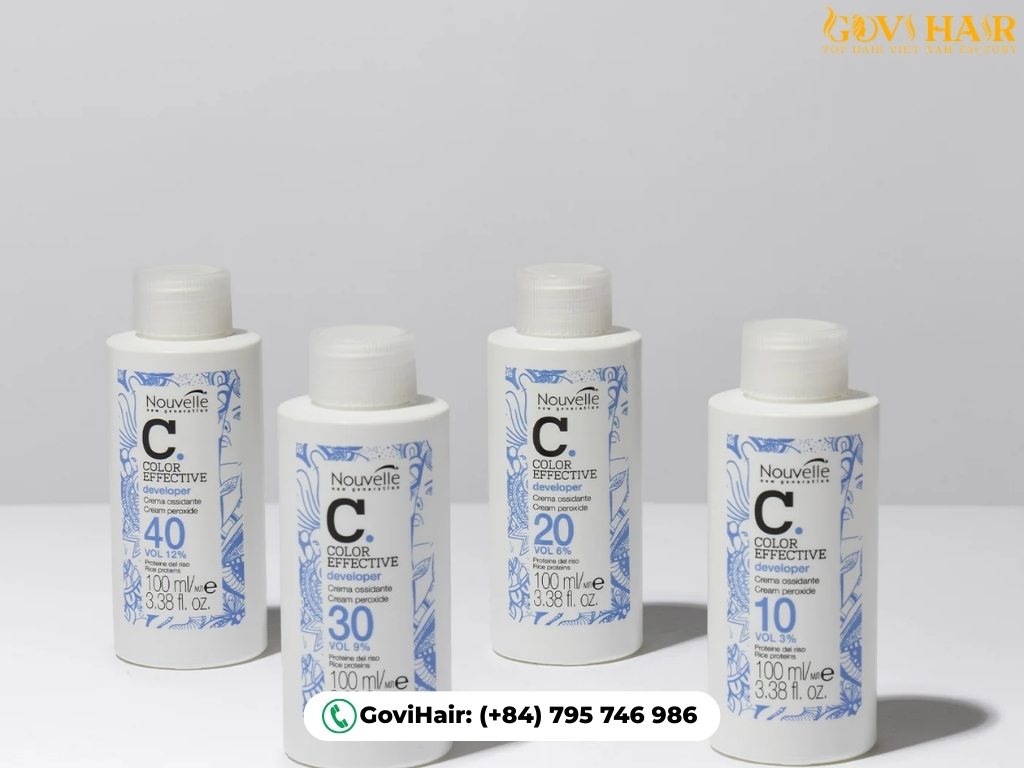
The strength of your developer (hydrogen peroxide) dictates the speed of the lift.
How Long to Leave Bleach In with 10 Vol Developer
10 volume is the gentlest option. It lifts slowly, usually 1-2 levels. You can leave this on for 30–45 minutes. It is ideal for delicate hair or subtle shifts.
How Long to Leave Bleach In with 20 Vol Developer
This is the standard for covering grey or lifting 2-3 levels. When determining How long to leave bleach on hair 20 vol, aim for 30–45 minutes. It provides a steady, controlled lift with manageable damage control.
How Long to Leave Bleach In with 30 Vol Developer
This is a potent developer for lifting 3-4 levels. How long to leave bleach on hair 30 vol? Usually 25–35 minutes. Because it works faster, you must check your hair every 10 minutes to avoid over-processing.
How Long to Leave Bleach In with 40 Vol Developer
This is very aggressive and often not recommended for on-scalp application. If you must use it, be extremely careful. How long to leave bleach on hair 40 vol? Maximum 15–20 minutes. It acts very quickly and carries a high risk of scalp burns.
Key Factors That Determine Bleach Processing Time
Calculating exactly how long should you keep bleach in your hair isn’t a guessing game; it depends on your specific hair profile.
1. Hair Texture & Porosity
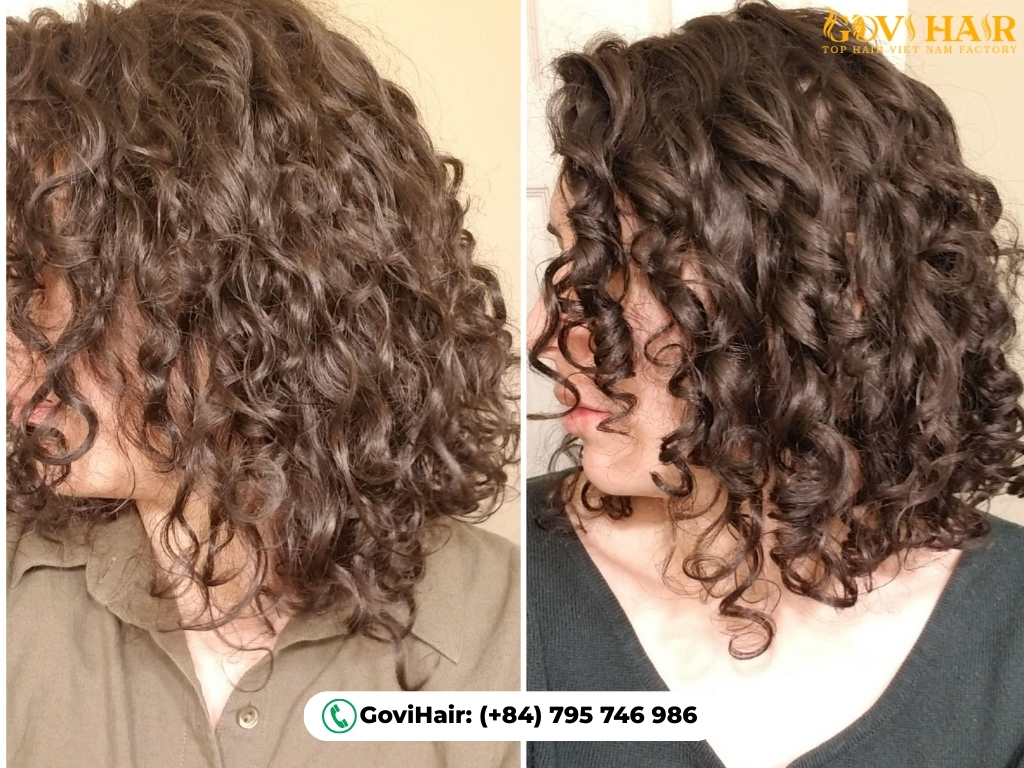
Fine or high-porosity hair absorbs chemicals instantly and lifts very fast. Conversely, coarse or low-porosity hair has tight cuticles that resist the bleach, requiring a longer processing time to penetrate the cortex.
2. Starting Color
The darker your natural hair, the more melanin there is to dissolve. Determining how long to leave bleach on black hair is tricky; while light brown hair might lift in 20 minutes, jet black hair often needs the full safe duration just to reach a copper stage.
3. Desired Result
If you only want a subtle sun-kissed look, a short 15-minute session is enough. However, when asking how long do you leave bleach in your hair to get blonde (specifically icy platinum), you will likely need to leave the product on for the maximum safe limit (around 45–50 minutes).
4. Developer Strength
Higher volumes (30 or 40 vol) speed up the chemical reaction but leave a shorter window before damage occurs. Lower volumes (10 or 20 vol) lift slower, allowing for a longer, more controlled processing time.
5. Application Method
Heat accelerates lifting. Bleach wrapped in foils processes much faster because body heat is trapped inside. Open-air applications (like balayage) tend to dry out and stop working sooner.
How to Tell When It’s Time to Remove Bleach
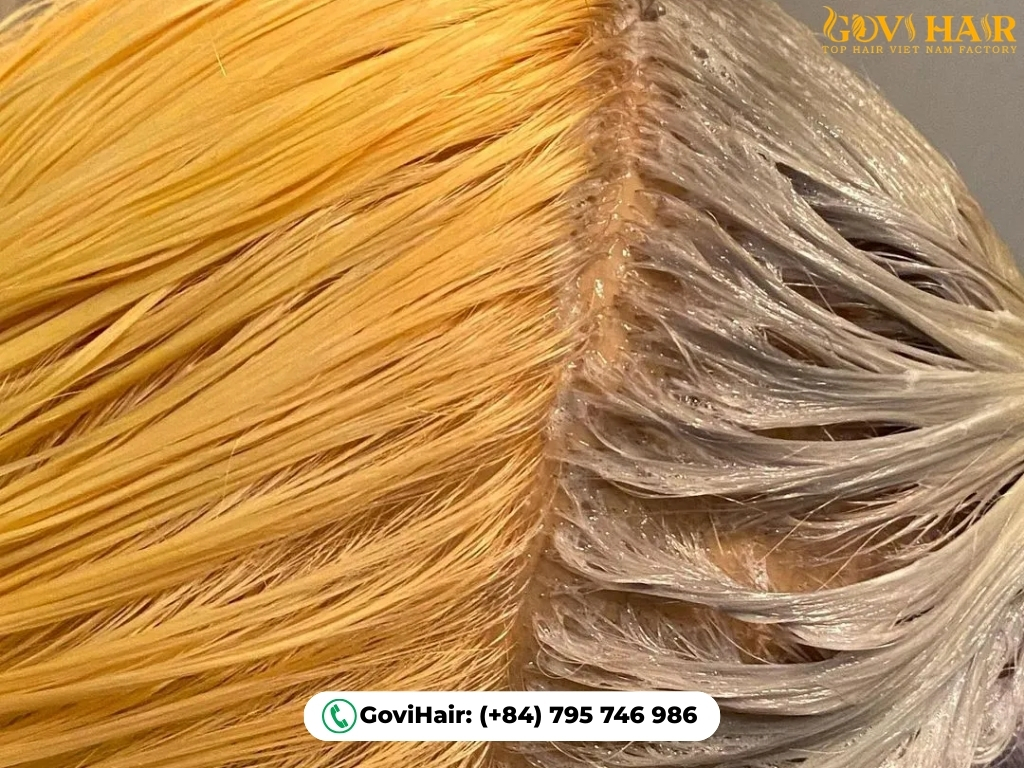
Do not rely solely on the clock; instead, perform a “scrape test” by wiping the product off a small strand to check progress. If the hair is still orange, it needs more processing time within the safe limit, but if it has reached a pale yellow (like the inside of a banana), it is ready to rinse. Crucially, you must also test the texture by gently pulling the strand: if it stretches like gum or feels mushy, rinse immediately regardless of the color, as this indicates the structural bonds are breaking down.
Common Bleaching Situations and What to Do
Dark regrowth but light lengths
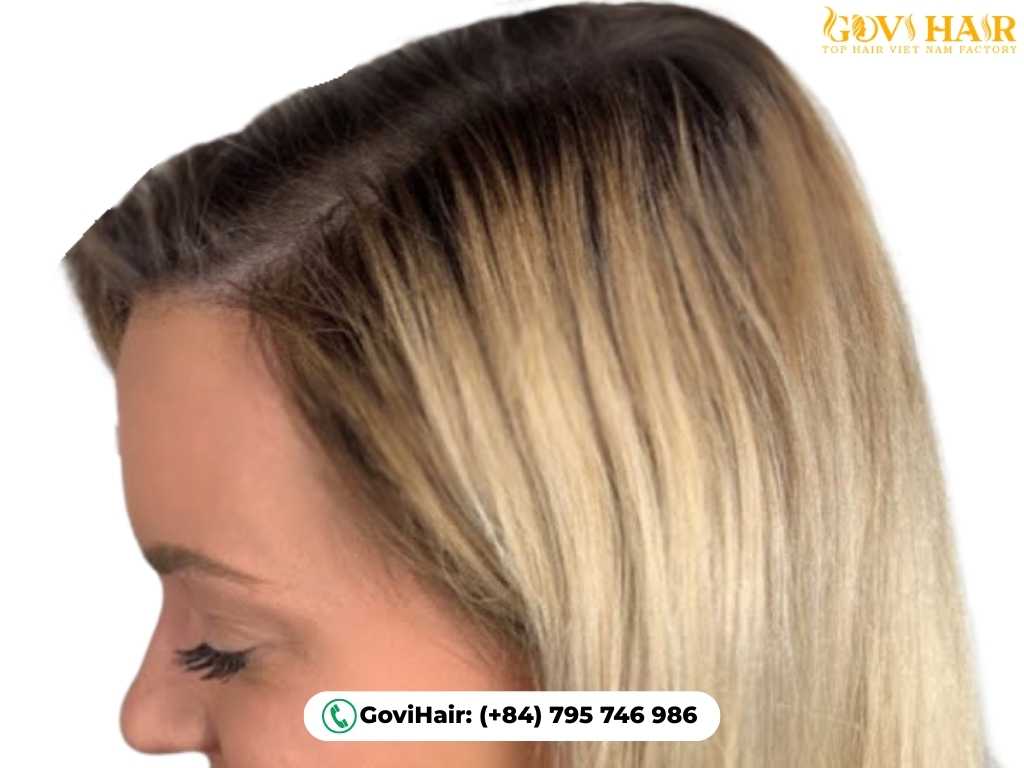
When touching up roots, remember that new growth processes about twice as fast as the lengths due to heat radiating from your scalp. Knowing how long to leave bleach on roots vs ends of hair is critical to prevent breakage. Apply bleach strictly to the dark regrowth with precision, avoiding any overlap with the previously lightened hair. Overlapping creates a weak point known as a “band of breakage” where the hair can snap off. Check your progress early, typically around the 20-minute mark.
Orange bands during processing
If you notice orange bands or spots, it is usually the result of uneven saturation or the product drying out too quickly. To correct this, spot-treat only the brassy areas with fresh bleach using a low-volume developer (10 or 20 vol). Be extremely careful not to touch the surrounding pale blonde hair, as re-bleaching already fragile strands will lead to chemical cuts.
Uneven lift from previous color
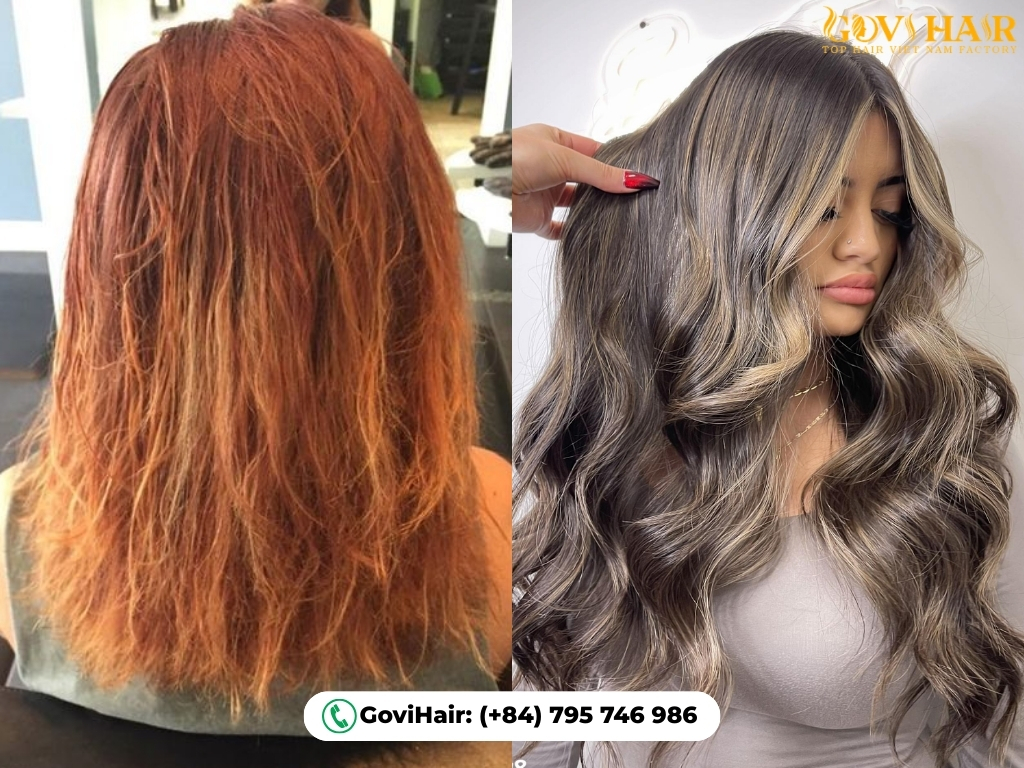
Artificial hair dye is much harder to remove than natural pigment, often resulting in patchy areas where the old color “stains” the cuticle. In this case, you cannot apply bleach globally. You must perform a corrective application, targeting only the darker, stubborn patches while protecting the lighter areas with conditioner or foil to prevent over-processing.
When to reapply bleach?
If 45 minutes have passed and your hair is still brassy, the bleach has essentially stopped lifting and is now only damaging the protein structure. Do not extend the time. Instead, rinse it out, apply a bond-building treatment, and wait at least a week before attempting a second session. Forcing the process at this stage will likely turn the hair into mush rather than making it blonde.
Should you use foil?
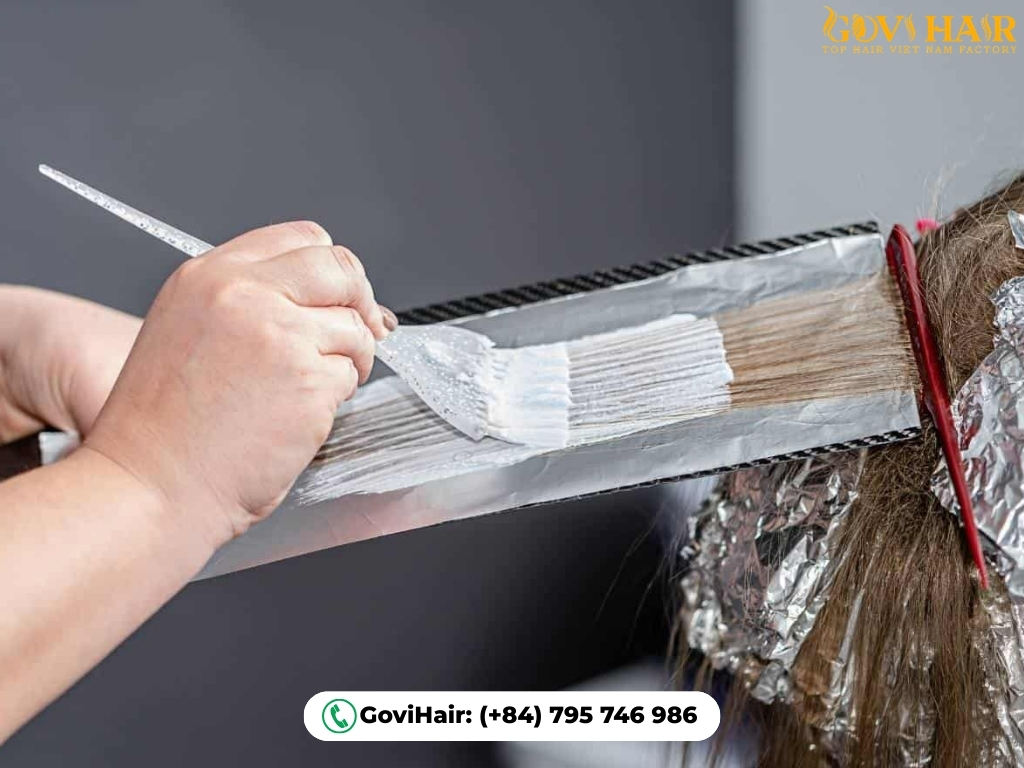
Foils trap heat and moisture, significantly intensifying the chemical reaction. If you are calculating how long do you leave bleach in your hair for highlights, assume the processing time will be half of standard open-air applications. Check every 10–15 minutes. If a packet feels hot to the touch, open it immediately to release the excess heat before the hair suffers from thermal damage and breakage.
What Happens If You Leave Bleach On Too Long?
Ignoring the recommended processing time causes the chemical reaction to shift from removing color to destroying the hair’s architecture.
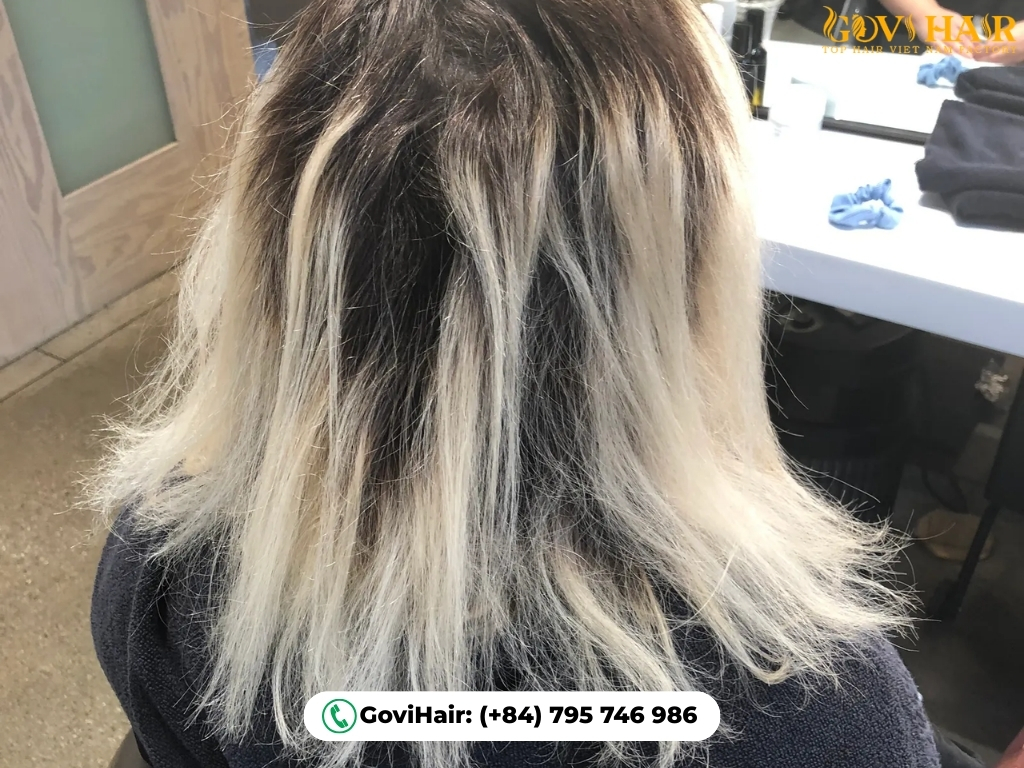
Hair turning white or gummy
This indicates critical structural collapse where the internal disulfide bonds are shattered. Wet hair becomes translucent and stretchy like bubblegum; however, once it dries, it turns brittle like straw and snaps off at the slightest touch.
Loss of moisture retention
Over-processing blows the cuticle scales wide open or strips them away entirely. The hair becomes severely porous, meaning it absorbs water instantly like a sponge but releases it just as fast, leaving strands chronically dry and unable to hold toner or color.
Keratin breakdown & breakage risk
Once the melanin is dissolved, the bleach begins to digest the keratin protein that makes up the hair fiber. This leads to a “chemical haircut,” where strands disintegrate and break off in clumps near the root or mid-shaft, resulting in severe thinning.
How to Apply Bleach Properly
Speed and saturation are the secrets to an even lift. To avoid patchy results, here is the step-by-step guide on how to bleach your hair:
1. Sectioning (The Setup)
Divide your hair into 4 clean quadrants (two at the back, two at the front). This organization is crucial to ensure you work efficiently before the bleach dries out and stops lifting.
2. Prioritize Mid-lengths and Ends
Start applying at the back (nape) where hair is naturally darkest and thickest. Apply bleach to the mid-lengths and ends first. These areas are far from the scalp and process at room temperature, meaning they require the most time to lift effectively.
3. Roots Last (Scalp Heat Factor)
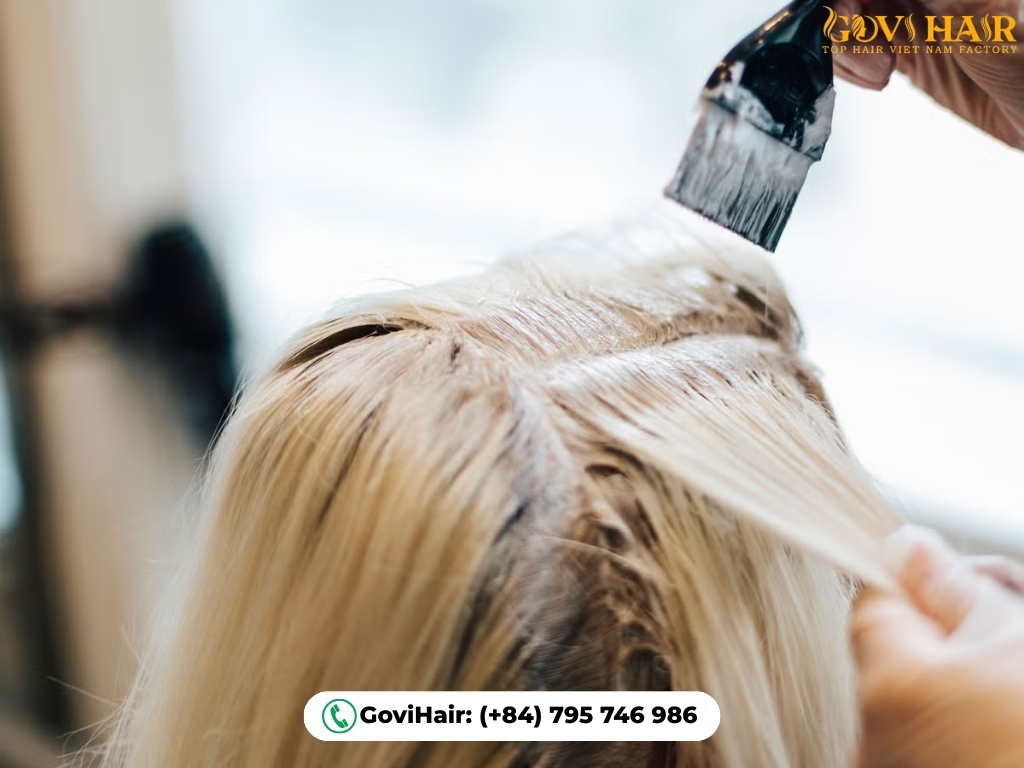
Unless you are doing a root touch-up, keep the bleach about 1/2 inch (1-2 cm) away from the scalp initially. The natural heat radiating from your body accelerates the chemical reaction significantly at the roots. Applying them at the same time as the cool lengths will result in “hot roots” (roots that are brighter/whiter than the ends). Apply here only in the final 15–20 minutes.
4. Thin Slices & Saturation
Take very thin sections (transparent enough to read text through). Saturate the hair fully—do not just paint the surface. The hair needs to be encased in the product. If a spot looks dry, the chemical reaction will stall, leaving dark or orange patches.
Toning Your Hair After Bleaching
Bleaching rarely results in a perfect finished shade; it simply strips pigment to reveal the raw “undercoat” (usually yellow or orange). Toner is the essential second step to correct these unwanted warm tones.
How to choose the right toner
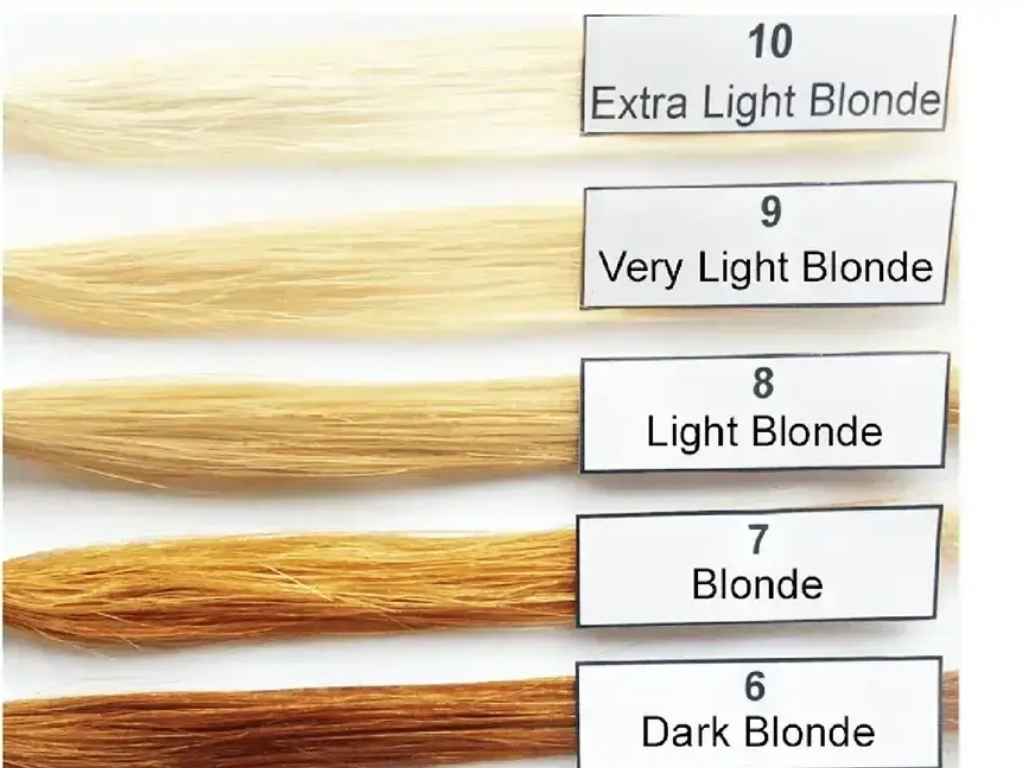
Selection is based entirely on the Color Wheel principle of neutralizing opposites. First, compare your lifted hair to a hair bleach chart to identify the exact level:
- Yellow Undercoat: If your hair looks like the inside of a banana (Level 9-10), use a Violet (Purple) based toner. Violet cancels out yellow to create platinum or cool blonde.
- Orange/Brass Undercoat: If your hair looks like a penny (Level 7-8), use a Blue based toner. Blue cancels out orange to create a neutral light brown or dark blonde.
- Note: You cannot tone dark orange hair into platinum blonde. Toner only deposits color; it does not lift (lighten) the hair further.
What developer to use with toner
Toning is a “deposit-only” process, meaning you only want to add color, not open the cuticle aggressively.
- Recommended: Use 10 Volume (3%) or lower (6 Volume).
- Why: Low volume ensures the toner grabs onto the bleached strands without “shifting the base” (lightening your natural dark roots and turning them orange). Never use 20, 30, or 40 volume for toning, as it causes unnecessary damage and uneven color.
How to apply toner
- Preparation: Apply toner to damp, towel-dried hair. Water helps equalise the porosity, preventing the toner from “grabbing” too dark on the porous ends.
- Speed is Key: Toner processes very fast (sometimes in 5–10 minutes). Apply quickly from roots to ends.
- Visual Monitor: Do not walk away. Watch the color change in the mirror. As soon as the yellow/orange disappears and you see your desired cool shade, rinse immediately to prevent the hair from turning purple or muddy grey.
Aftercare & How to Maintain Blonde Hair
Once bleached, your hair is permanently altered. It becomes more porous and fragile, requiring a completely new maintenance routine to prevent breakage and color fading.
- Bond Repair is Mandatory: Conditioners only coat the surface. To truly save bleached hair, you need bond-building treatments (like Olaplex No.3 or K18) at least once a week. These products penetrate the cortex to patch up the broken sulfur bonds, stopping the hair from snapping.
- The “Purple Shampoo” Rule: Use purple shampoo to neutralize brassy yellow tones, but do not use it every wash. It is very drying. Use it only once a week or every 3-4 washes, alternating with a high-moisture, sulfate-free shampoo.
- Cold Water Rinses: Wash your hair with cool or lukewarm water. Hot water opens the cuticle, stripping away your toner and natural oils, leaving the hair dry and frizzy.
- Limit Heat Styling: Bleached hair has a lower burning point. If you must use hot tools, always use a heat protectant and never exceed 300°F (150°C). Ideally, embrace air-drying to minimize stress on the strands.
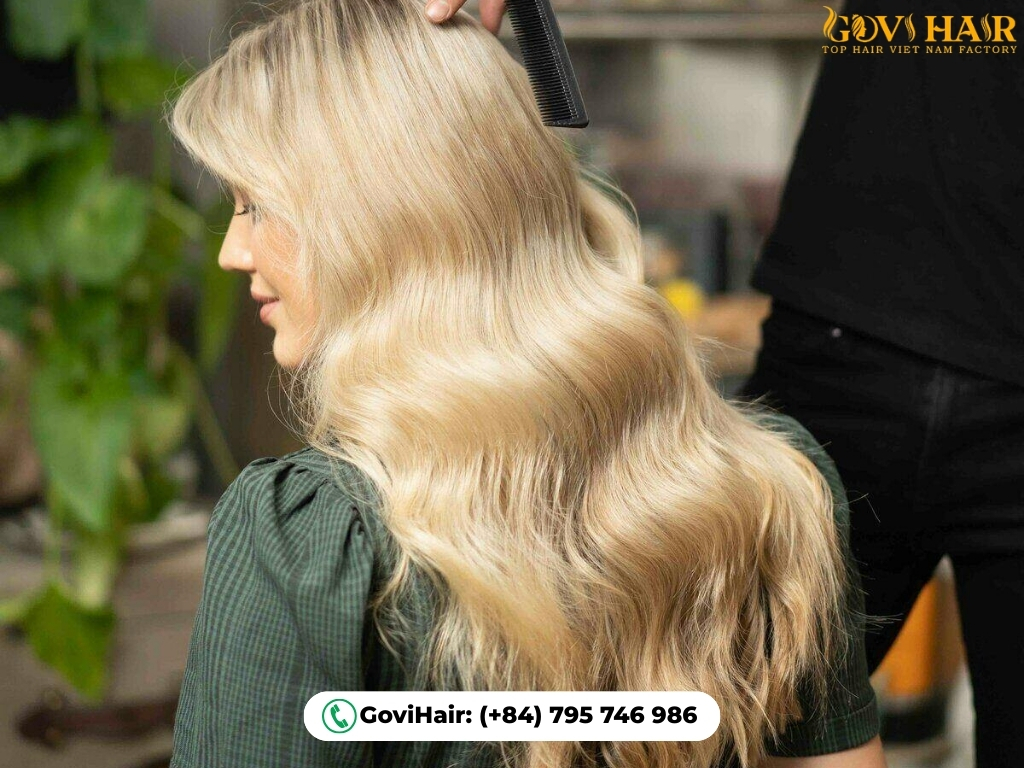
Precautions Before Bleaching
Bleaching is a high-stakes chemical process. To avoid scalp burns or accidental hair loss, never skip these three safety checks.
Patch test
Allergies can develop at any time, even if you have dyed your hair before.
- How to do it: Apply a tiny dab of the bleach mixture behind your ear or on the inner fold of your elbow.
- Wait: Leave it for 48 hours.
- Result: If you experience any itching, severe redness, swelling, or weeping (oozing), do not use the product. This reaction on your scalp could lead to chemical burns or anaphylaxis.
Reading instructions
Not all bleaches are created equal. A professional powder might require a 1:1.5 mixing ratio, while a drugstore kit might call for 1:2.
- Why it matters: Guessing the ratio changes the chemical potency. Too much developer makes the mixture runny and aggressive (causing scalp burns); too much powder makes it dry out instantly (causing spotty, uneven lift). Always follow the specific manufacturer’s guide on how long should you keep bleach in your hair.
Evaluating your hair’s condition before bleaching
Bleach works best on healthy “virgin” hair. If your hair is compromised, it may not survive the process.
- The Elasticity Test: Wet a strand of hair and gently stretch it. If it snaps immediately without stretching, or stretches but doesn’t return to its original shape, your hair lacks the protein structure to withstand bleach.
- Chemical History: Be honest about what is on your hair. If you have used metallic dyes, henna, or relaxers, applying bleach can cause a chemical reaction that literally melts the hair or turns it green. In these cases, seek a professional.
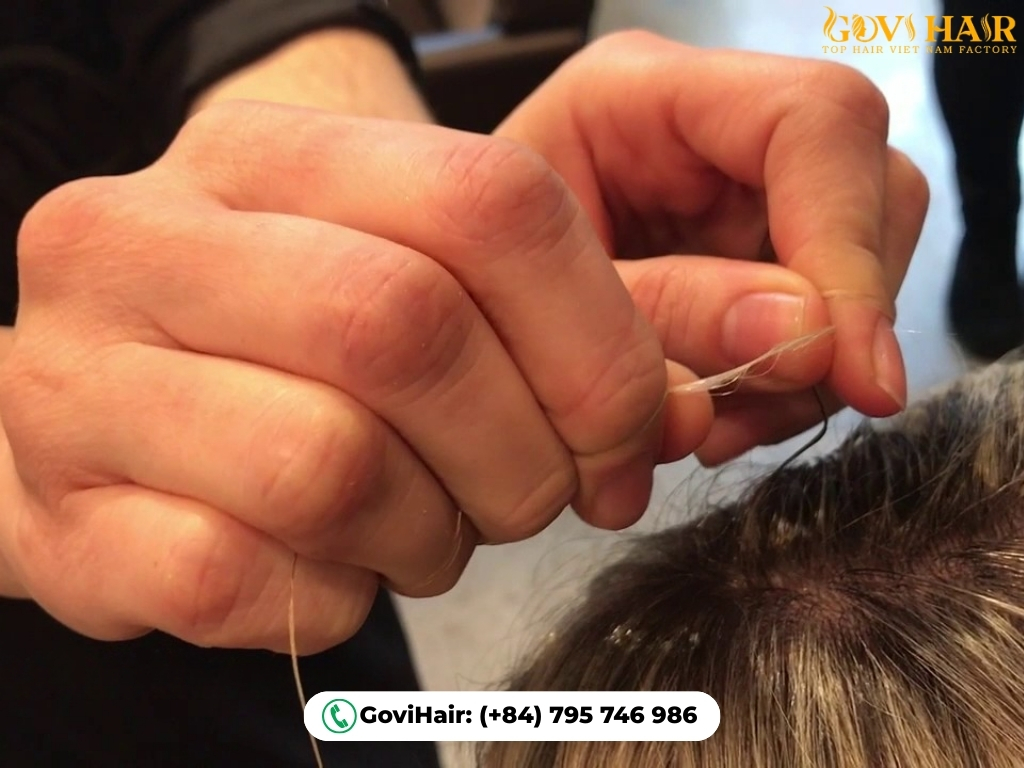
If your natural hair is too fragile to withstand the lifting process, do not risk melting it. Instead, consider starting with a stronger foundation like Govihair. We offer premium raw hair (collected from 1-5 donors), which ensures structural uniformity and is the optimal choice for bleach hair extensions. Thanks to its exceptional strength, this hair is perfect for achieving high-level blondes or platinum without compromising quality.Alternatively, if you prefer natural dark tones, their virgin hair is the perfect chemical-free option.
FAQs
1. Is 1 hour too long to leave bleach in hair?
Yes, leaving bleach on for 1 hour is extremely risky and can cause chemical burns or hair breakage. Most bleach stops lifting effectively after 45-50 minutes and only causes damage beyond that point.
2. How long should I leave 30 volume bleach on my hair?
For 30 volume developer, the recommended time is usually between 15 to 30 minutes. Do not exceed 40 minutes as this strength processes faster and is more aggressive than 20 volume.
3. Does bleach stop working after a certain time?
Yes, bleach has a lifespan. Once it dries out (usually around 45-60 minutes), the chemical reaction stops lifting color but continues to damage the hair structure. Keeping it moist helps it process properly.
4. How long do I leave bleach on dark hair to get blonde?
Dark or black hair may require the maximum safe processing time (up to 45 minutes). However, you often cannot go from black to blonde in one session. It is safer to bleach twice over separate weeks than to leave it on too long.
5. Should I wash bleach off if it starts burning?
Yes, immediately. A slight tingling sensation is normal, but intense burning or pain indicates a chemical burn or allergic reaction. Rinse it out instantly with cool water to protect your scalp.
Conclusion
Mastering how long should you keep bleach in your hair is the fine line between dream hair and disaster. Never exceed 45 minutes and monitor closely. If you crave that stunning platinum look without the chemical risk, explore Govihair for premium, damage-free extensions. Whether choosing their durable Raw hair or natural Virgin strands, prioritize your hair’s health for the best results.
Contact us for hair business:
- WhatsApp: (+84)795 746 986
- Email: [email protected]
- Instagram: govihair vietnam factory
- Tik Tok: govihairvietnam_official
- Website: https://govihair.com/


 Ms. Jade