

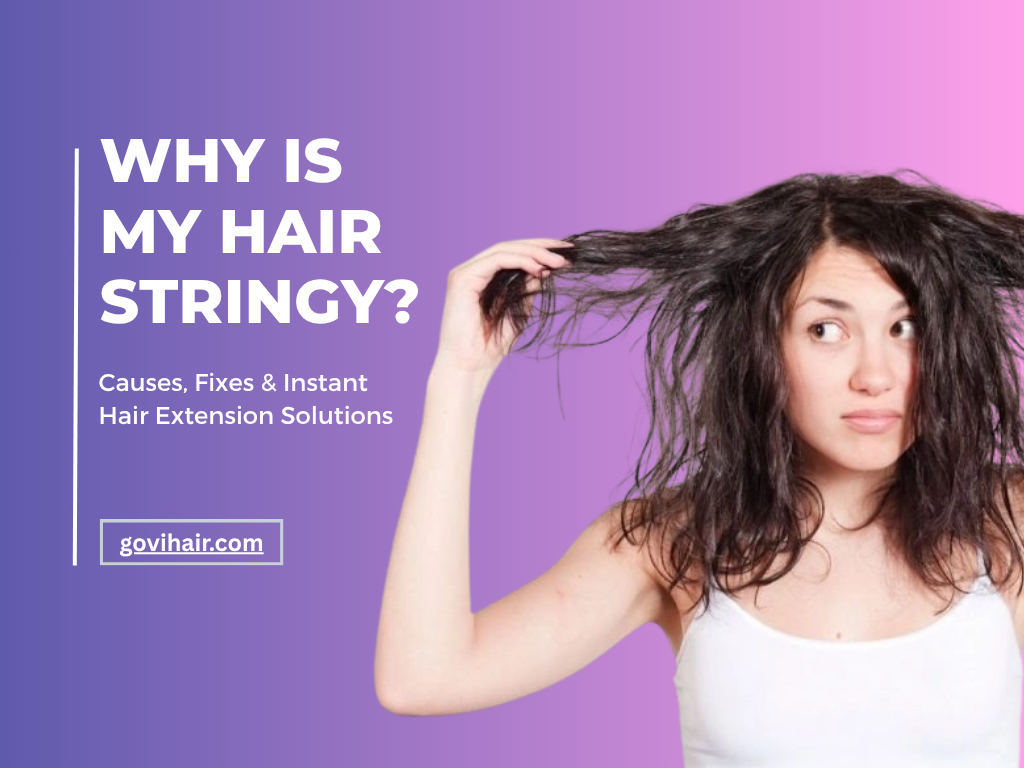
Have you ever looked in the mirror and thought, “Why is my hair stringy?” You’re not alone. Stringy hair is a frustrating issue that affects people of all hair types. Whether your strands look greasy hours after washing, feel limp and lifeless, or refuse to hold volume, stringiness can leave your hair looking dull, thin, and unhealthy.
In this complete guide, GoviHair will uncover what causes stringy hair, how to fix stringy hair, and the fastest way to get full, beautiful hair instantly with GoviHair’s premium hair extensions. Let’s dive in.
What Is Stringy Hair and Why Is My Hair Stringy?
Stringy Hair Is?
Stringy hair appears in separated, limp strands instead of forming smooth, voluminous locks. It often looks greasy even when clean, tends to clump at the ends, and lacks body and bounce.
It can affect anyone, but it’s especially common in those with fine or thin hair types. More than just a cosmetic issue, stringy hair can signal an imbalance in your scalp’s oil production, product misuse, or even deeper health concerns.
So if you’re constantly wondering, “Why is my hair stringy all of a sudden?” it’s time to investigate what’s going on beneath the surface.

What Cause Stringy Hair?
Let’s explore the most common reasons your hair may be looking stringy, and how to spot them.
Product Buildup
Using heavy conditioners, serums, or oils too frequently can weigh hair down. Residue from silicone-rich styling products or even dry shampoo may coat the hair, causing clumps and flatness.
Solution: Use a clarifying shampoo once a week to remove buildup and allow your hair to breathe.
Overwashing or Improper Moisture Balance
Many people assume oily or stringy hair needs more washing, but overwashing actually strips your scalp of natural oils. This can cause your scalp to overproduce oil, leading to greasy, stringy strands.
On the flip side, undermoisturized hair becomes dry, brittle, and separated, another version of stringy.
You just washed your hair, but instead of feeling fresh and clean, it looks limp and greasy what gives? If you’re asking yourself, “Why is my hair stringy after washing?” the answer might lie in your products or technique. Using the wrong shampoo for your hair type or not rinsing thoroughly can leave behind residue that weighs hair down and causes separation.
Solution: Wash every 2–3 days with a gentle, sulfate-free shampoo and pair it with a lightweight conditioner. Rinse thoroughly to avoid residue.

Damaged Hair Cuticle
If your ends are starting to look thin, uneven, or clumped together, it could be a sign of damage. Hair that’s been colored, bleached, or heat-styled often has a weakened cuticle, making it more prone to splitting and separation, especially at the tips. Wondering “Why is my hair stringy at the ends?” That’s likely your answer.
Solution: Trim your ends regularly and use a leave-in conditioner with protein to help rebuild strength and smoothness.
Hormonal Imbalance or Health Changes
Sometimes the cause of stringy hair goes deeper. Hormonal changes from pregnancy, birth control, menopause, or stress can suddenly alter your scalp’s oil levels or hair growth patterns.
If your hair is stringy and falling out, it could signal nutritional deficiencies (like iron or vitamin D) or thyroid issues.
Solution: Speak with your doctor if you’ve noticed sudden changes in hair texture, thinning, or shedding.
Morning Hair Disasters
Ever wake up wondering, “Why is my hair stringy in the morning?” It could be due to:
- Sleeping with wet hair
- Using cotton pillowcases (which absorb moisture)
- Not tying your hair up at night
Solution: Sleep on a silk pillowcase and loosely braid your hair before bed to prevent friction and preserve volume.
How Do I Stop My Hair from Being Stringy?
If you’re searching for solutions to stop stringy hair, the good news is that with a few key adjustments to your hair care routine and lifestyle, you can restore volume, softness, and bounce. Stringy hair usually results from buildup, damage, or imbalance in moisture and protein, so addressing these factors is essential.
Clarify Once a Week
One of the most common causes of stringy hair is product buildup. Oils, conditioners, and styling products can accumulate on your scalp and strands, weighing your hair down and causing it to clump together. Using a clarifying shampoo once a week helps remove this buildup and restores your hair’s natural body.
If you prefer a gentler, natural option, an apple cider vinegar (ACV) rinse can be a great choice. ACV balances the scalp’s pH, removes residue, and adds shine. To try it, dilute 1–2 tablespoons of apple cider vinegar in a cup of water and pour it over your hair after shampooing, then rinse thoroughly.
Use Lightweight, Balancing Products
Choosing the right hair products can make all the difference. Heavy butters and oils might feel nourishing but can easily weigh down fine or limp hair, making stringiness worse. Instead, opt for lightweight shampoos and conditioners formulated to balance moisture and protein. These products strengthen strands without excess heaviness.
Lightweight oils such as argan, jojoba, or grapeseed oil can be used sparingly to nourish and add shine without making your hair greasy or limp. Apply just a few drops to the ends or mid-lengths to smooth frizz and prevent that stringy appearance.
Detangle Carefully
Wet hair is more fragile and prone to breakage, so detangling requires a gentle approach. Avoid harsh brushing right after washing, which can cause split ends and make hair look even more separated and stringy. Instead, use a wide-tooth comb or a detangling brush, starting at the ends and gradually working upward to the roots.
This method reduces damage and helps keep your hair strands smooth and intact.

Rethink Your Conditioner
Applying too much conditioner or applying it too close to your scalp can cause buildup and grease, which contributes to stringy hair. Instead, focus conditioner on the mid-lengths and ends where hair is drier and more prone to damage.
If your hair is very fine or thin, you might also consider using a lightweight leave-in conditioner or detangler rather than a heavy rinse-out formula.
Nourish Your Hair from the Inside
Beautiful, full hair is not just about what you apply topically, it’s also about what you feed your body. Hair health depends heavily on nutrition. Incorporate foods rich in essential vitamins and minerals that support hair growth and strength.
- Omega-3 Fatty Acids: Found in fatty fish, flaxseeds, and walnuts, omega-3s nourish the scalp and promote shiny, healthy hair.
- Vitamins A, C, and E: These antioxidants protect hair follicles from damage and support collagen production, which strengthens hair. Sources include leafy greens, citrus fruits, and nuts.
- Zinc and Iron: Minerals essential for hair repair and growth, found in meat, beans, and spinach.
Maintaining a balanced diet with these nutrients will gradually improve your hair’s texture and reduce limp, stringy strands.
Stay Hydrated
Drinking plenty of water daily keeps your scalp hydrated and supports healthy hair growth. Dehydration can cause dryness, making hair brittle and more prone to stringiness.
Bonus Tip: Try Hair Extensions for an Instant Boost
If you’re dealing with persistent stringy hair or thinning ends, high-quality hair extensions can provide an immediate solution. Extensions add volume, thickness, and fullness to limp strands, instantly transforming your look. Choose 100% human hair extensions, like those from GoviHair, which blend naturally, maintain softness, and won’t contribute to further damage or stringiness.

How to Style Stringy Hair for a Fuller, Healthier Look
Stringy hair can be tricky to style, it often lacks volume, separates easily, and tends to look oily or limp. But with the right styling methods, you can transform flat, stringy strands into fuller, more polished looks. Here’s how:
Use a Volumizing Blowout Technique
Flip your head upside down and blow-dry your hair at the roots first. This creates instant lift. Use a round brush to smooth the ends while keeping volume at the crown. Finish with a blast of cool air to lock in shape.
Pro tip: Apply a volumizing mousse or root-lifter before drying to build structure without stiffness.
Add Loose Waves for Volume
Stringy hair often looks flat when straight. Use a curling wand or flat iron to create loose waves or soft curls, this adds body and breaks up thin-looking strands. Focus on mid-lengths to ends for a natural, beachy effect.
Styling hack: Curl hair in alternating directions to create fuller, more effortless texture.

>> Read more: Loose Wave Vs Deep Wave: What’s Difference?
Try a Textured Half-Up Hairstyle
Pulling back just the crown section into a clip, ponytail, or small braid adds visual interest while keeping some volume on top. This works especially well if your hair separates or clumps easily when left all down.
Bonus: Use dry shampoo or texturizing spray at the roots first to give the style grip.
Use a Crimper or Micro Waver Underneath
To fake fuller hair, crimp or micro-wave just the bottom layers underneath your top hair section. This hidden texture creates lift when the top layers lay over them, giving the illusion of thicker hair.
Go for Layered or Face-Framing Styles
Haircuts matter. Style your hair to show off subtle layers or curtain bangs, these create movement and prevent hair from hanging limply. Even if your hair is already cut this way, re-styling with a round brush or curler can revive the shape.
Finish with a Lightweight Texturizing Spray
After styling, avoid oils or heavy serums. Instead, mist your hair with a dry texturizing spray or sea salt spray. This boosts separation and volume without adding weight or grease.
Extra Tips: Fix Stringy Hair with Human Hair Extensions
If you want thicker, fuller hair instantly, hair extensions are your best friend, especially if your natural hair looks stringy and limp no matter what you do.
Why Extensions Work
Hair extensions add:
- Immediate volume and fullness
- Seamless length and bounce
- Natural blending when made from human hair
Even if your hair is thinning or damaged, extensions provide a polished, healthy look while you work on restoring your natural strands.
Best Extensions for Stringy Hair
Not all extensions are created equal. For stringy hair, GoviHair recommend:

- Clip-in extensions: Great for daily wear and easy removal
- Tape-in extensions: Lightweight and lie flat, ideal for fine hair
- Weft hair extensions: Perfect for longer-term volume
Choose human hair instead of synthetic one. Since synthetic hair can often make stringy hair worse because it lacks the natural movement, moisture, and flexibility of real hair. It tends to tangle, frizz, and hold onto product buildup, which makes limp strands more noticeable.
That’s why choosing 100% human hair extensions, like those from GoviHair – Vietnamese hair vendors, is a smart choice. GoviHair’s premium human hair feels soft, looks natural, and helps you maintain healthy, full, and string-free hair.
Read more: Differences Between Human Hair Bob Wigs and Synthetic Wigs
FAQs
Why does my hair look stringy after washing?
This often happens due to product buildup, over-conditioning, or not rinsing thoroughly, which weighs hair down and causes strands to stick together.
Can oily hair cause stringy hair?
Yes. Excess oil from the scalp can coat the hair strands, making them clump and appear greasy and stringy.
Does using too much conditioner make hair stringy?
Absolutely. Overusing conditioner—especially near the roots—can over-soften the hair, removing natural volume and causing separation.
Can damaged hair look stringy?
Yes. Heat damage, chemical treatments, or over-bleaching can weaken hair structure, causing strands to lose elasticity and clump together.
Why is my hair stringy when it’s wet?
Wet hair naturally clumps, but excessive stringiness may indicate low protein levels, cuticle damage, or lack of moisture balance.
Conclusion
Now, you’ve found an answer to the question “Why is my hair stringy”, and it’s not permanent, it’s definitely fixable. By understanding the root causes like product buildup, damage, moisture imbalance, and even hormonal changes, you can take targeted steps to restore your hair’s natural bounce and fullness. From clarifying shampoos to better conditioning habits, small changes make a big difference.
And if you’re looking for an instant transformation, don’t underestimate the power of hair extensions. GoviHair’s 100% human hair extensions give you immediate volume, softness, and confidence, without compromising the health of your natural hair.
Say goodbye to limp, greasy strands and hello to soft, full, and effortlessly styled hair. Start your transformation today with GoviHair.
Drop Us a message:
- WhatsApp:(+84) 795 746 986
- Email: [email protected]
- Website:govihair.com
- TikTok:govihairvietnam_official
- Instagram:govihair_factory


 Ms. Jade