

Vietnamese Human Hair
How to Source Vietnamese Hair Products: Top 5 Sellers Compared (2026)
Apr
Finding the right Vietnamese hair products – raw and virgin bundles, wefts, and wigs from single Vietnamese donors – starts with knowing which product line actually fits your business. At Govihair, buyers usually arrive with one of two questions. Which raw or virgin grade holds up longest? And which format – bundles, wefts, wigs, tips, or clip-ins – matches their order size? This guide compares the five best-selling raw Vietnamese hair bundles wholesale buyers are sourcing in 2026, with real market pricing against other origins, so you can pick the right one before you request a quote.
What Are Vietnamese Hair Products and Why Are They Trending in 2026?
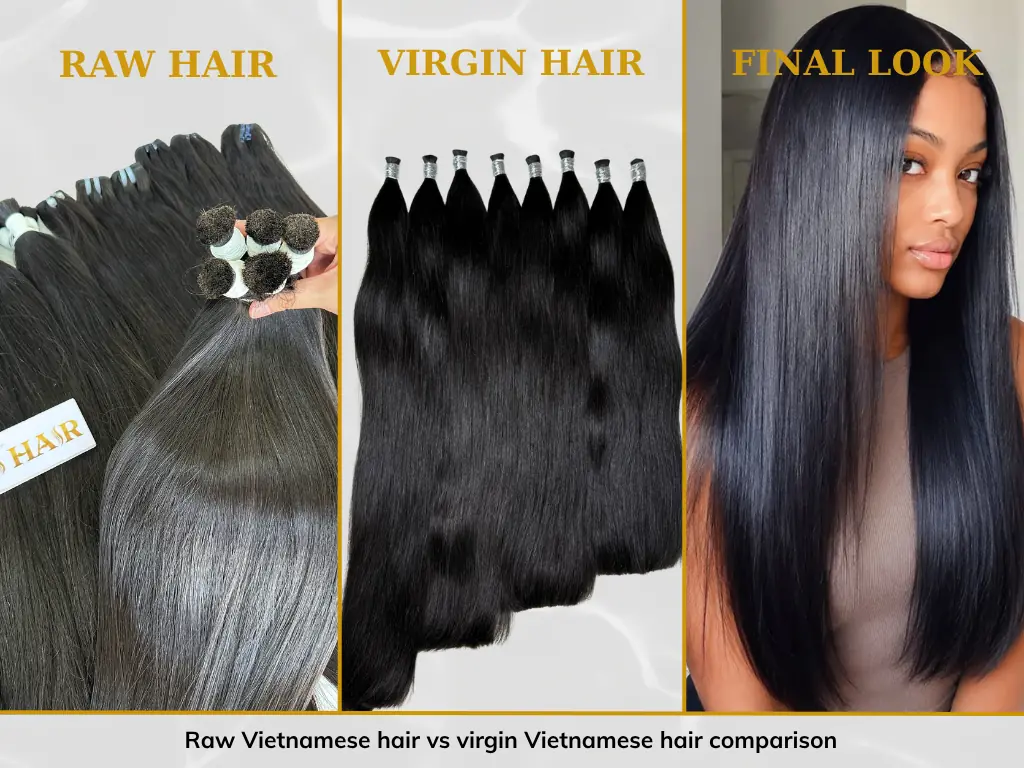
Vietnamese hair products cover everything from raw bundles to full wigs and bonded extensions sourced from Vietnamese donors. What’s changed in 2026 is how carefully buyers tell apart two words suppliers often use loosely: raw and virgin.
Raw Vietnamese hair is 100% unprocessed – no chemicals, no steaming. The cuticle stays whole and facing the same direction it grew. Virgin Vietnamese hair is also chemical-free, but it may have been steam-set into a texture that wasn’t the donor’s own. Both are honest options; they simply hold up differently over time.
For fast-moving retail resale, styled virgin hair can still be the smarter buy. For a premium or bleach-heavy line – closures, frontals, blonde installs – raw hair with a whole cuticle holds up better to repeated processing.
Why Vietnamese Hair Products Outperform Other Origins
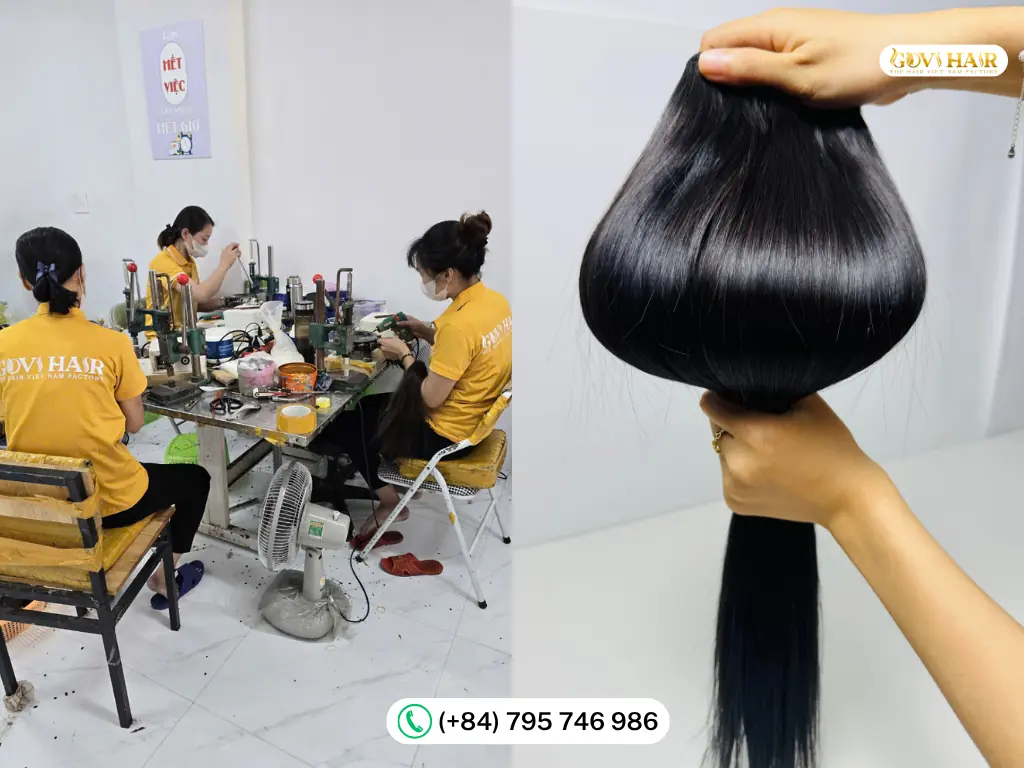
The reputation isn’t marketing. It comes down to raw material quality that other producing regions genuinely struggle to match.
The hair quality starts with the donors. Vietnamese hair is primarily collected from women in rural, high-altitude regions who keep long, uncolored hair and use minimal chemical products. That translates to thicker individual strands, intact cuticle layers, and natural strength that holds up through bleaching and heat styling in ways factory-processed hair from other regions can’t.
Cuticle alignment changes the end-user experience. Vendors who collect and sort properly ensure all strands run root-to-tip in the same direction. That alignment eliminates the friction between strands that causes tangling – the main complaint clients have with cheap extensions. When a salon client stops calling to complain about tangling, that’s a real business impact. Our ultimate guide to Vietnamese hair weaves covers how weft construction affects this.
Bleaching capability opens up a high-margin product category. Raw Vietnamese hair lifts cleanly to #613 platinum blonde because the cortex has never been pre-processed. This is now a priced product tier: several Vietnamese factories sell bleach-guaranteed donor hair at a published premium over standard virgin.
The lifespan math favors premium positioning. Raw Vietnamese hair lasts 2-5 years with basic care. That’s 3-5 re-installs for a salon client from the same set of bundles. Framed that way, the higher upfront price becomes a retention tool, not an obstacle.
How Does Vietnamese Hair Compare to Indian, Cambodian, and Chinese Hair?
Here is a comprehensive hair comparative matrix designed for the B2B hair business to break down the global hair market. This data directly highlights the structural differences, sourcing mechanisms, and realistic lifespans across all five popular hair origins.
| Feature | Vietnamese Hair | Indian Hair | Brazilian Hair | Chinese Hair | Raw Cambodian Hair |
|---|---|---|---|---|---|
| Origin | Vietnam (Traceable rural & highland donors) | India (Direct from temple auctions & tonsure) | Mixed Asian origins (Typically India/China; rarely Brazil) | Primarily imported bulk (India, Pakistan, Myanmar) | Cambodia (Direct from rural villages) |
| Strand Thickness & Profile | Exceptionally thick, round, and heavy strands. | Fine to medium, slightly oval strand profile. | Medium thickness; engineered to mimic Afro-Caribbean blend. | Varied; often thinned down during aggressive processing. | Coarse, highly dense, and distinctly textured strands. |
| Natural Texture | Sleek straight or gentle natural wave; heavy swing. | Bouncy, natural waves to soft, defined curl patterns. | Varies widely; heavily steamed into deep waves or curls. | Naturally straight or slightly wavy before factory styling. | Naturally wavy, coiled, or slightly rough straight styles. |
| Cuticle Condition | 100% Intact: Manually sorted and completely aligned. | Highly Intact: Collected cleanly at source, well-aligned. | Stripped/Altered: Cuticles are typically chemically removed. | Stripped/Coated: Acid-bathed and sealed with industrial silicone. | 100% Intact: Raw, completely unprocessed, and aligned. |
| Bleaching & Dye Resilience | Elite: Effortlessly lifts to uniform #613 platinum blonde. | Good: Lifts well to honey blondes/browns; splits if over-bleached. | Poor: Melts, thins, or sheds heavily if high-lift chemicals are applied. | Very Poor: Severe degradation; structural breakdown under bleach. | Excellent: Robust cortex handles high-lift color processing smoothly. |
| Market Pricing Tier | Premium: Mid-to-high investment with high B2B margins. | Accessible Economy: Competitive pricing due to massive supply. | Budget-Friendly: Mass-market pricing targeted at casual retail. | Low at short lengths: Cheaper under 18″, level with Vietnam from 20″ up. | Luxury Premium: High pricing due to limited regional supply. |
| Realistic Lifespan | 2 to 5+ Years (With consistent care) | 1 to 2 Years (With proper hydration) | 2 to 4 Months (Degrades once silicone washes out) | 1 to 3 Months (Prone to matting after initial washes) | 3 to 5 Years (Highly resilient and long-lasting) |
| Best Used For | Luxury wigs, high-end bone straight extensions, and professional salon coloring. | Adding lightweight volume, texturized curls, and natural movement. | Budget-conscious everyday retail lines and temporary styling. | High-volume, low-margin e-commerce operations or discount beauty stores. | High-volume styles, blending with coarse/relaxed natural hair textures. |
A few honest, country-by-country comparisons worth knowing for 2026. Indian-origin hair sits toward the budget end of the market, and quality varies more from batch to batch. Cambodian-origin hair usually costs more than Vietnamese hair. It has a naturally thicker, rougher texture that holds curl well, though steady supply is harder to guarantee – worth a look if that texture fits your line. Chinese hair is genuinely cheaper at short lengths, but that gap closes almost entirely past 20 inches. The next section shows the actual numbers.
Vietnamese Hair vs Chinese vs Russian Hair: Real 2026 Pricing
Real 2026 quotes, converted to USD per 100g, natural black, straight, standard grade (double drawn).
| Length | Vietnam (verified range) | China | Russia (Slavic tape-in)* | Vietnam premium vs China |
|---|---|---|---|---|
| 12″ | $28.70 – $38.20 | $22.10 | ~$240 | +30% to +73% |
| 16″ | $37.90 – $50.80 | $28.80 | ~$282 | +32% to +76% |
| 18″ | $41.00 – $55.60 | $36.30 | ~$325 | +13% to +53% |
| 20″ | $48.10 – $66.30 | $48.60 | ~$354 | −1% to +36% |
| 22″ | $58.30 – $72.60 | $58.60 | – | −1% to +24% |
| 24″ | $64.90 – $86.00 | $65.90 | ~$423 | −2% to +31% |
| 26″ | $73.50 – $97.00 | $71.40 | – | +3% to +36% |
*Russian tape-in is quoted per pack (50-70g) at $120-$345. Figures above are normalized to a 100g equivalent. Russian hair is rarely sold as loose bundles.
What most buyers get wrong: China’s price advantage is real at short lengths – and it nearly disappears at long lengths.
At 16″, the cheapest Vietnamese factory is still 32% above the Chinese quote. But at 20″ and 24″, the cheapest Vietnamese double-drawn quotes are level with or below China. Chinese factories price on processing throughput, which scales linearly. Vietnamese factories price on donor supply, which gets scarce fast past 40cm. But long Chinese hair is scarce too, and they have to buy it in. Past 20″, the raw-material constraint dominates in both countries and the gap collapses.
If your product line sits at 20″-30″ – where most US and African wholesale demand concentrates – the “Chinese hair is cheaper” argument barely holds, while the durability gap (2-5 years vs 6-12 months) stays fully intact.
And here’s why that happens. Short hair is where blending becomes invisible. A 12″ bundle can hide synthetic fiber, animal hair, or short filler strands – nobody notices until the third wash. A 24″ bundle can’t. You cannot fake an intact 60cm strand. When the fakeable component disappears, so does the price advantage. The convergence at long lengths is the most honest signal in this market: it is the price of the thing that can’t be faked, and both countries have to pay it.
What You Get Beyond the Price Tag
Price is only half the comparison. The other half is what happens after you place the order.
Hair extensions are a craft product, not a commodity. Sorting by length and texture, aligning cuticles, hand-tying wefts, ventilating a lace frontal – none of this is automated anywhere. It is skilled manual work, and the quality gap between a trained sorter and an untrained one is visible in the finished bundle. Vietnamese production is built around exactly this kind of small-batch handwork. Chinese production is built around throughput. That difference shows up in the product, not in the brochure.
Traceability is built in, not bolted on. Volume creates a real constraint: a supplier moving 20+ tons a month cannot personally select every kilo, so the selection step gets compressed and the origin of any given bundle becomes hard to answer. Vietnamese production runs at a scale where the selection step survives – the supplier can still tell you where a batch came from, and is confident enough to let you bleach-test it before you buy.
True made-to-order means your product line is yours. Vietnamese factories will build to your specification – your weft type, your cap construction, your texture and color, your packaging and label. You end up with a product your competitors cannot buy off a shelf. Mass-produced inventory means every reseller in your market is selling the identical bundle and competing on nothing but price. Exclusivity is a margin decision.
After-sales support is a real differentiator. Reputable Vietnamese suppliers treat a wholesale account as a relationship: they stay reachable after payment clears, they handle quality issues instead of disputing them, and they offer warranty terms in writing. That matters most in the moment you actually need it – a color that came out wrong, a batch that shed, a client threatening a refund.
Your sales contact speaks English and understands your business. The Vietnamese hair industry sells directly into the US, UK, and African markets, and its sales teams are built for that: fluent English, familiarity with what a US salon or a Lagos distributor actually needs, and the technical fluency to answer a question about bleach limits without escalating it. Communication friction is a hidden cost, and it compounds on every order.
How Each Origin Fits a Product Line
Where Vietnamese hair products fit against the alternatives, market by market:
Chinese suppliers dominate in volume and price. Large industrial factories process massive quantities quickly, but the hair is often blended with lower-grade material and coated in silicone to fake softness. That silicone washes off within a few weeks, leaving the hair rough. Best for budget-tier products under 18″ where price is the primary selling point.
Indian suppliers benefit from large supply through temple donation systems, which provides consistent volume. Natural texture tends to be softer and wavier than Vietnamese hair. Chemical processing is common to standardize texture across mixed donor batches. Durability is lower than Vietnamese raw hair. Best for wavy/curly lines at mid-range price points.
Russian/Slavic suppliers offer naturally fine, light-based strands that blend invisibly into Caucasian hair – the one thing Vietnamese hair can’t do. The cost is 4-6× Vietnamese pricing, on a shrinking donor pool, with heavy origin fraud in the market. Best for luxury tape-in and keratin specialists with retail pricing above $200/pack.
Cambodian suppliers offer a coarser, thicker raw material some markets prefer for specific textured styles. Supply is less consistent than Vietnam due to smaller infrastructure. Best for brands that specifically want Cambodian origin for niche markets.
What Types and Grades of Vietnamese Hair Products Are Available?
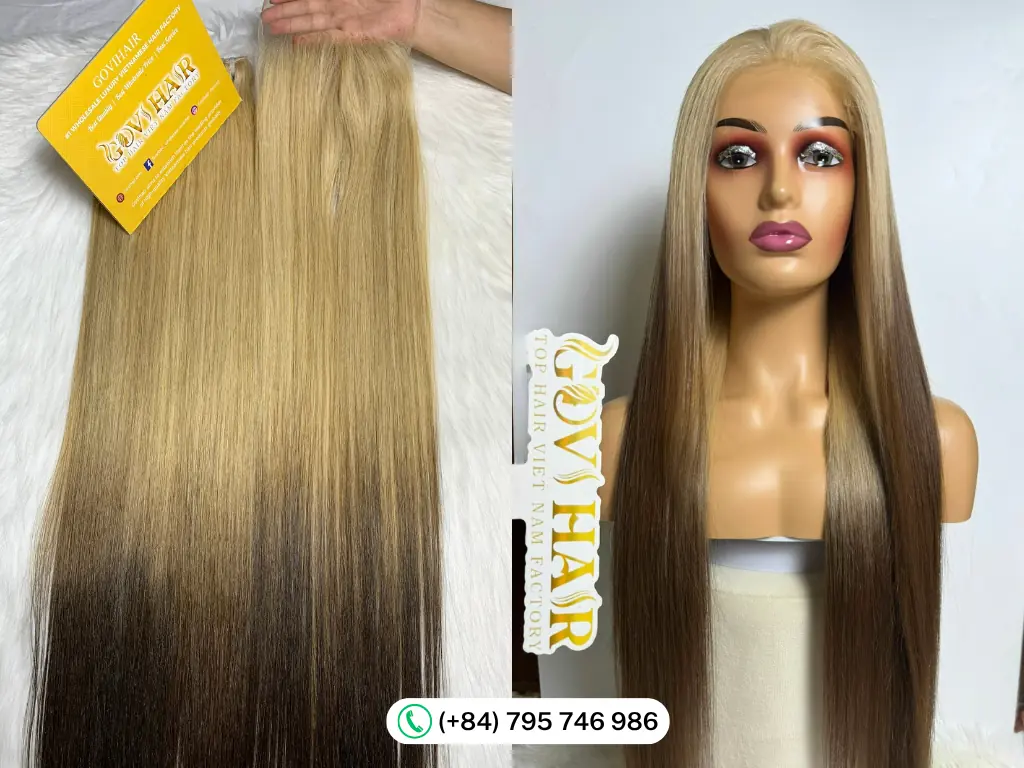
Three separate things decide what a bundle is, and buyers often collapse them into one. Keeping them apart makes it much easier to compare quotes between suppliers.
Donor Tier – how many donors the hair came from
| Donor Tier | Description | Typical Lifespan | Best For |
|---|---|---|---|
| Donor hair / baby hair | Single donor, the rarest tier; easiest to bleach evenly | 3-5 years | Premium lines, blonde and platinum installs |
| Raw type 2 | 2-3 donors – Govihair’s core wholesale line | 2-3 years | High-volume resale, standard salon stock |
| Mixed-donor | Several donors blended; thickest ends, lowest price | 2-3 years | Value-tier resale, bulk starter orders |
Processing – where the texture came from
Raw hair has never been steamed or chemically treated; the texture is the donor’s own. Virgin hair is chemical-free too, but steam-set into a consistent texture. Both labels apply on top of donor tier – a Raw type 2 bundle can be sold raw or steam-set.
Grade – how evenly the strands are sorted
Vietnamese hair is graded by tail thickness across four levels: Single Drawn (40-50% of strands at full length), Double Drawn (60-70%), Super Double Drawn (70-85%+, no strands under 40cm), and Super Premium (85%+, no strands under 45cm). Double Drawn is the base wholesale grade; Super Double Drawn adds USD 15 per 100g and Super Premium adds USD 30 per 100g.
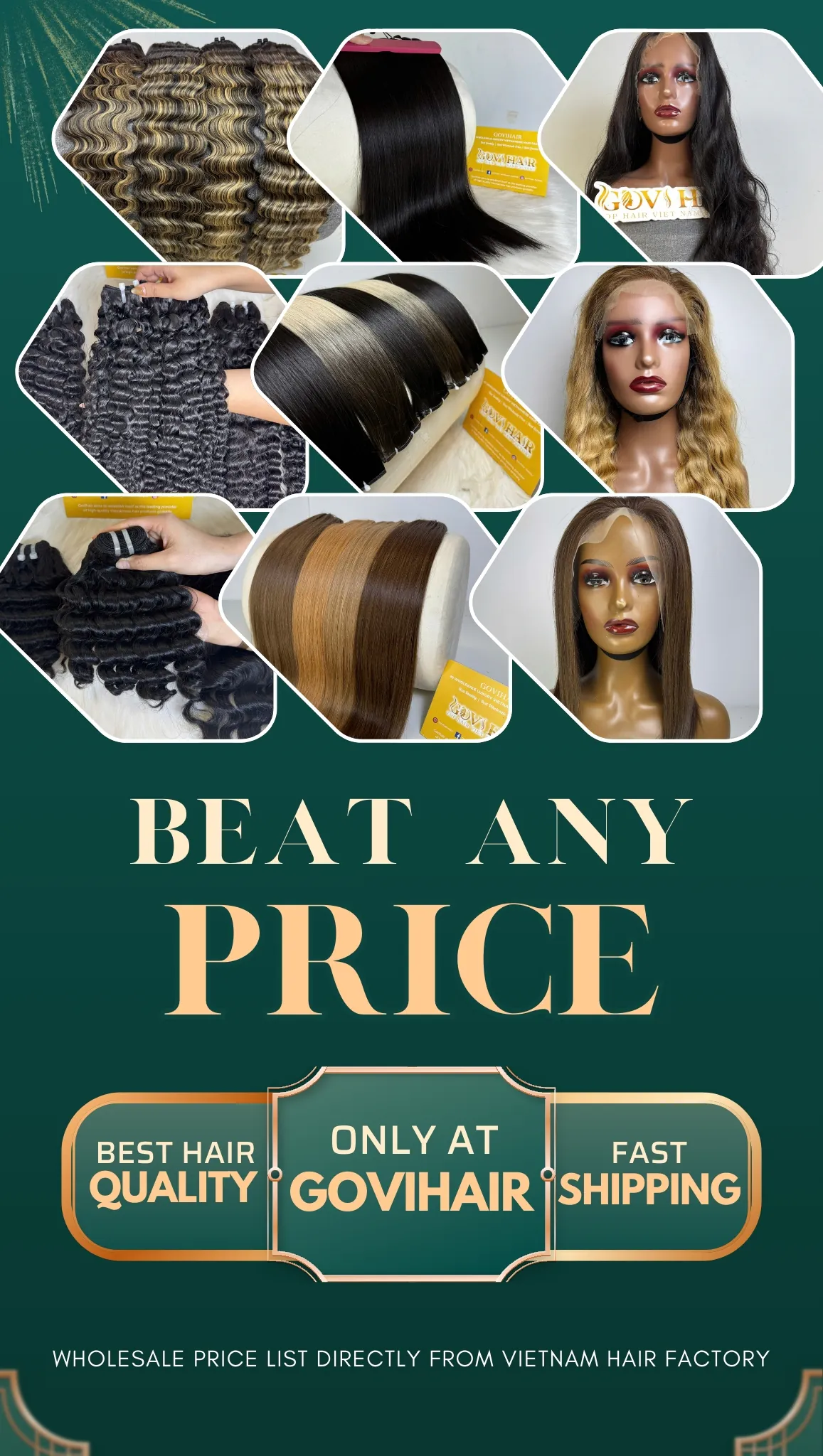
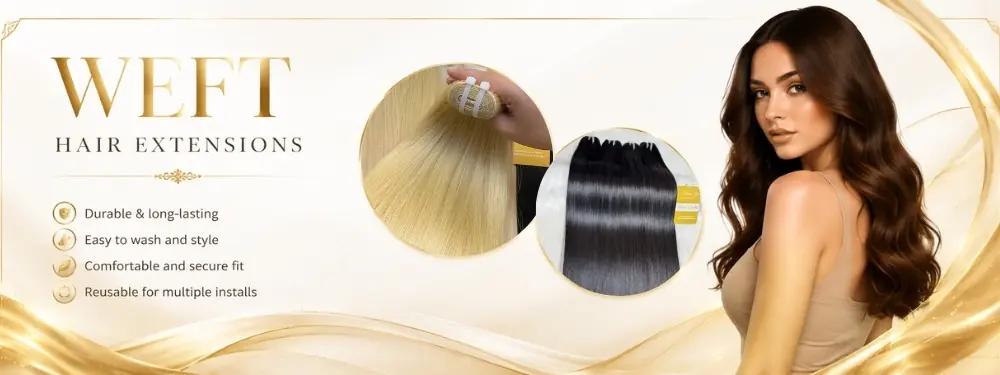
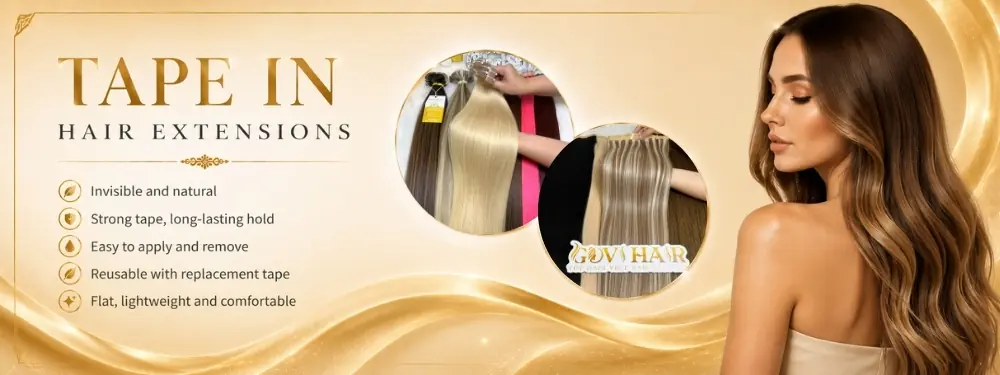
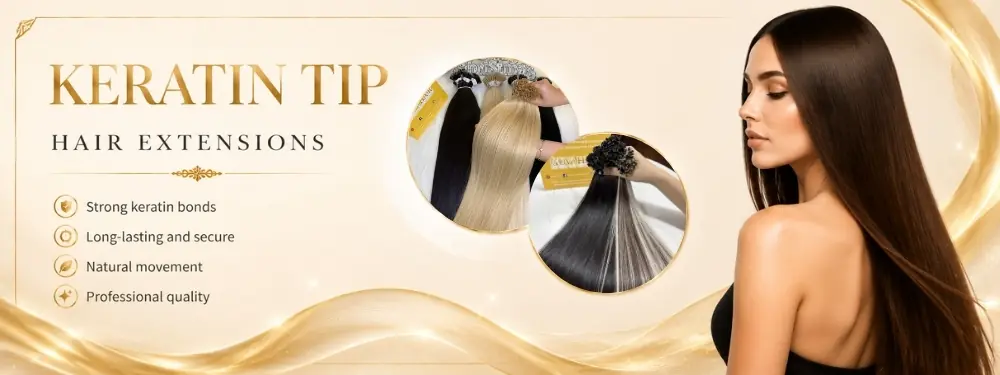
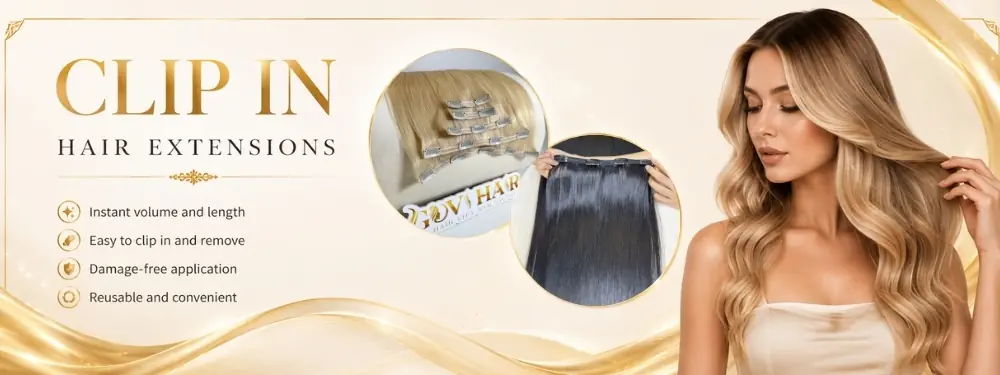
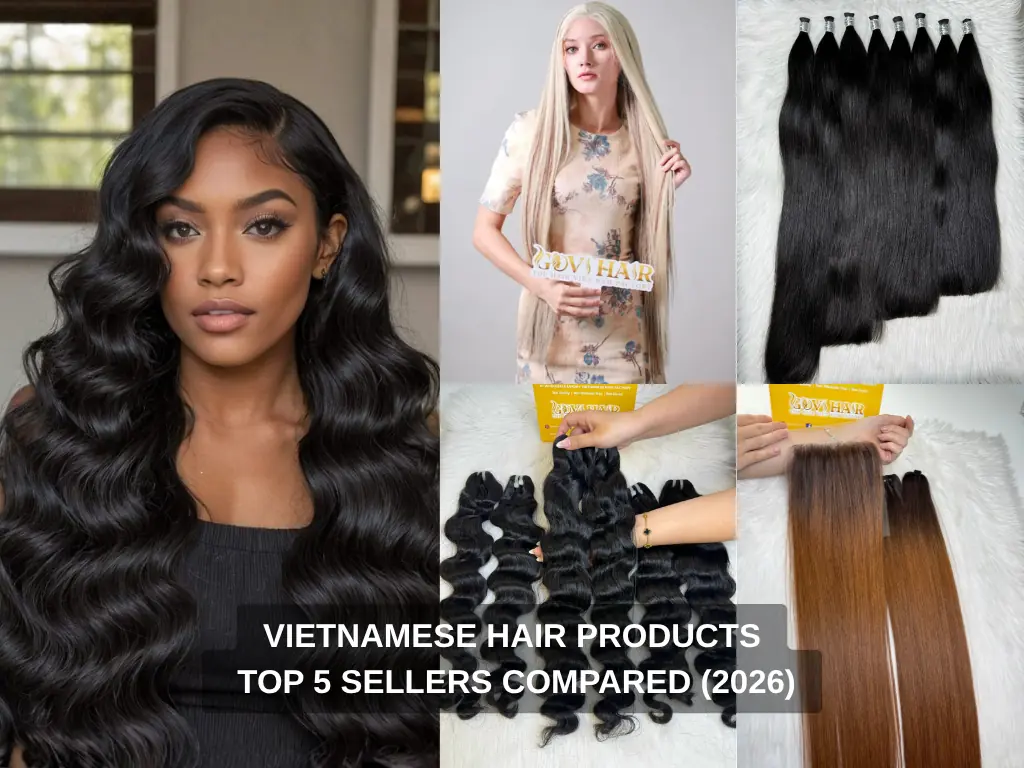
Our best-selling Vietnamese hair products cover the whole catalog, not just one item: raw bundles (100g/bundle), machine wefts, HD-lace closure and frontal wigs, flat tip, I-tip, clip-ins, and feather weft hair. Closures and frontals are cut from the same donor batch as the bundles they ship with, so color and curl always match.
Which grade makes sense also depends on your market. High-volume African markets often lean toward Raw type 2 or Mixed-donor for better value. Premium US and EU salons request Super Premium or Super Double Drawn for consistency across large orders.
How Are Vietnamese Hair Products Made and Sourced?
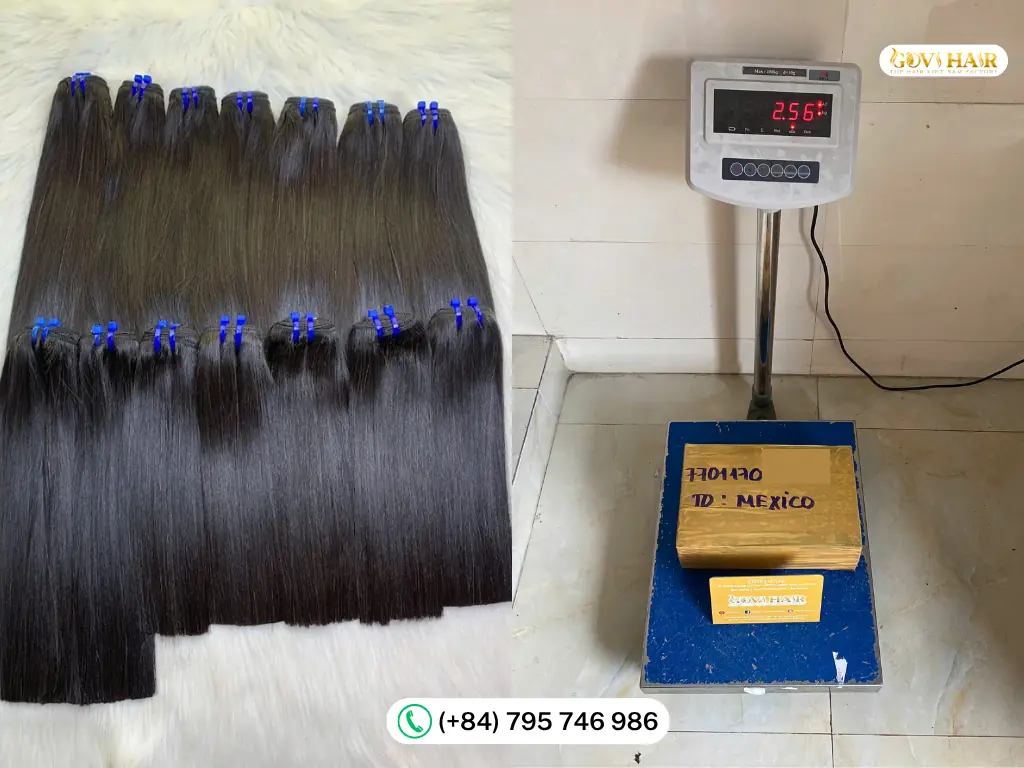
Sourcing is where “raw” claims get tested. Govihair runs its own factory in Da Nang, Vietnam, and the process is built around tracking every single batch – not just claiming good quality. See our full walkthrough of the Vietnam hair factory production process.
Every order follows the same steps. A 30% deposit starts production. Then Govihair sends a confirmation video showing each bundle weighed and filmed up close, before the remaining balance is due. That step answers the question we hear most from new buyers – how do I know the hair is real? – and it’s fast becoming the standard buyers expect from any factory-direct supplier.
Closures and frontals ordered with bundles come from the same donor batch, so a full unit doesn’t end up with mismatched curl or color.
How Do You Choose and Care for Them?
Donor hair / baby hair costs more per unit but holds curl, color, and repeated washing better over 3-5 years. Mixed-donor is easier to afford for a first order but won’t hold up quite the same way over time.
A few checks help you tell genuine raw hair from processed hair sold under the wrong label: tangling or matting within the first wash usually means the cuticle is already stripped. Genuine raw hair is never one flat, solid black straight out of the bag. And once hair is dyed or bleached, it’s color-treated, not raw – a supplier who still calls it raw after processing is worth questioning.
Govihair’s MOQ is 2 wigs per order for wig lines, or 500 grams for Vietnamese hair extensions. Custom colors, lengths, or textures move to a made-to-order timeline instead of shipping from stock.
In-stock items ship in 5-7 days to the US; custom orders need 7-9 days of production first. For care, sulfate-free washing and heat protectant help any donor tier last longer.
Top 5 Vietnamese Hair Products Compared (2026)
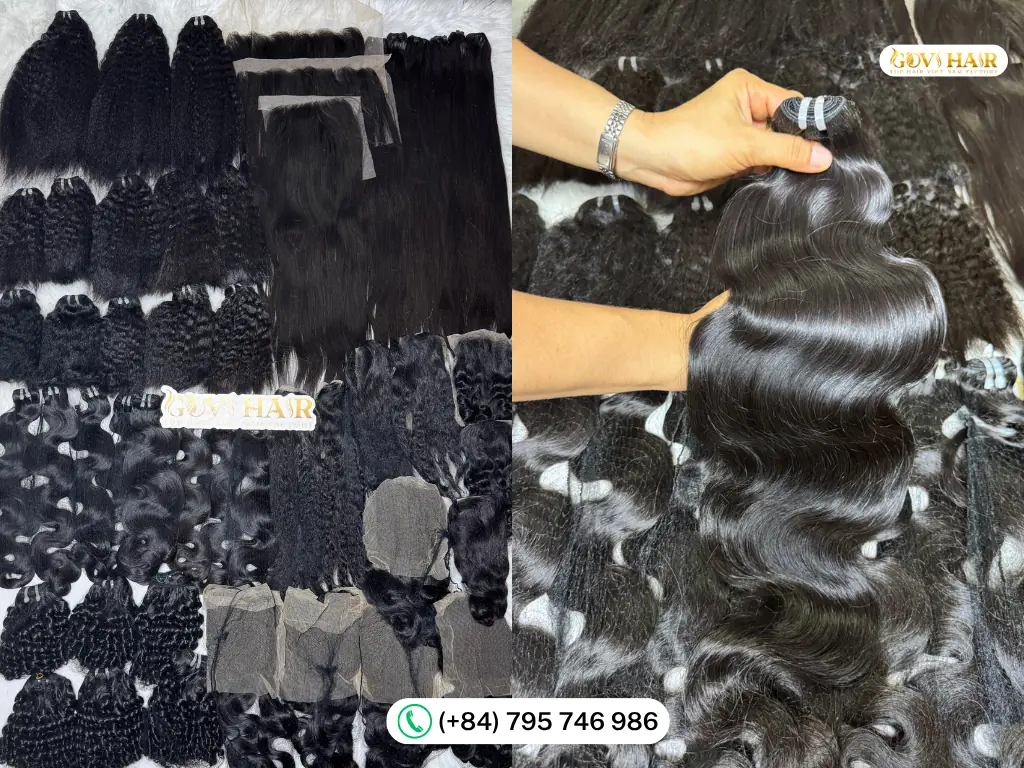
Here’s how the five best-selling lines compare for wholesale buyers:
| Product | MOQ | Top Market | Typical Buyer |
|---|---|---|---|
| Raw bundles (100g) | 500g | US, UK | Salons, resellers |
| Machine weft | 500g | Nigeria, Ghana, US, UK | Salons, wig makers |
| HD-lace closure/frontal wig | 2 wigs | Nigeria, US | Wig makers, resellers |
| Flat tip / I-tip | 500g | US, UK, Europe | Salons |
| Clip-in | 500g | US, UK, Europe | Salons |
Where to Buy Vietnamese Hair Products Wholesale
Start with a wholesale Vietnamese hair supplier who can show, not just describe, how each batch is checked before you pay the balance. See our comparison of wholesale raw Vietnamese hair vendors to check the verification process, MOQ, and payment terms side by side.
Final Thoughts
Vietnamese hair products are moving toward clearer proof of origin, a clearer raw-vs-virgin line, and more buyers asking for that proof before they pay. The pricing table above makes the commercial case plainly: past 20 inches, the cheaper alternative stops being cheaper, while the durability gap stays where it is. Working with a factory that checks every batch on video protects both your margin and your reputation with your own customers. Whichever line fits your order, Govihair ships it from the same video-verified process.
Contact Govihair for Orders & Inquiries:
- WhatsApp: +84 795 746 986
- Email: [email protected]
- Instagram: govihair_vietnamhair_factory
- TikTok: govihairvietnam_official
- Website: govihair.com
FAQ
Is Vietnamese raw hair really 100% unprocessed?
Yes – raw hair from a single donor isn’t treated with chemicals or steam, and the cuticle stays whole and faces the same direction it grew. Virgin hair is chemical-free too, but it may be steam-set into a texture.
Is Chinese hair cheaper than Vietnamese hair?
At short lengths, yes. At 12″-16″ a Chinese quote runs 30% to 76% below the Vietnamese range. From 20″ upward the gap collapses, and the cheapest Vietnamese double-drawn quotes come in level with or slightly below China. Long hair is scarce in both countries, and a long strand can’t be blended with filler the way a short one can.
What is the minimum order quantity for wholesale pricing?
2 wigs per order for wig lines, or 500 grams for hair extensions.
Can I request a custom color or length outside the standard catalog?
Yes – custom requests move to a made-to-order schedule, which usually adds 7-9 days of production time.
How long does shipping take?
In-stock orders ship in 5-7 days to the US. Custom or made-to-order items need 7-9 days of production first.
What payment methods are accepted?
Govihair accepts bank transfer (T/T) in USD and EUR, Western Union, MoneyGram, Ria, Remitly, Wise, Revolut, Lemfi, SendWave, credit card via secure payment link, and USDT (TRC20). Local agent payment is available in Nigeria, Ghana, Cameroon, Ivory Coast and selected African markets. Available methods vary by market – your sales representative will confirm which options apply to your order. Production begins after a deposit from 30%.
How can I verify the hair matches what was promised before paying in full?
Every order includes a confirmation video of each bundle weighed and filmed up close before the remaining balance is due.
Will a closure or frontal match the bundles I order?
Yes – closures and frontals are cut from the same donor batch as the bundles, so color and curl pattern stay consistent.
How long does Vietnamese raw hair typically last with proper care?
Donor hair / baby hair lasts 3-5 years; Raw type 2 lasts around 2-3 years, depending on how well it’s maintained.
Can I combine more than one product line in a single order?
Yes – about 30% of our wholesale orders combine two or more product lines, for example raw bundles with a closure wig. Each line’s own MOQ still applies, but combining lines into one order is common and welcome.
 Ms. Jessica