

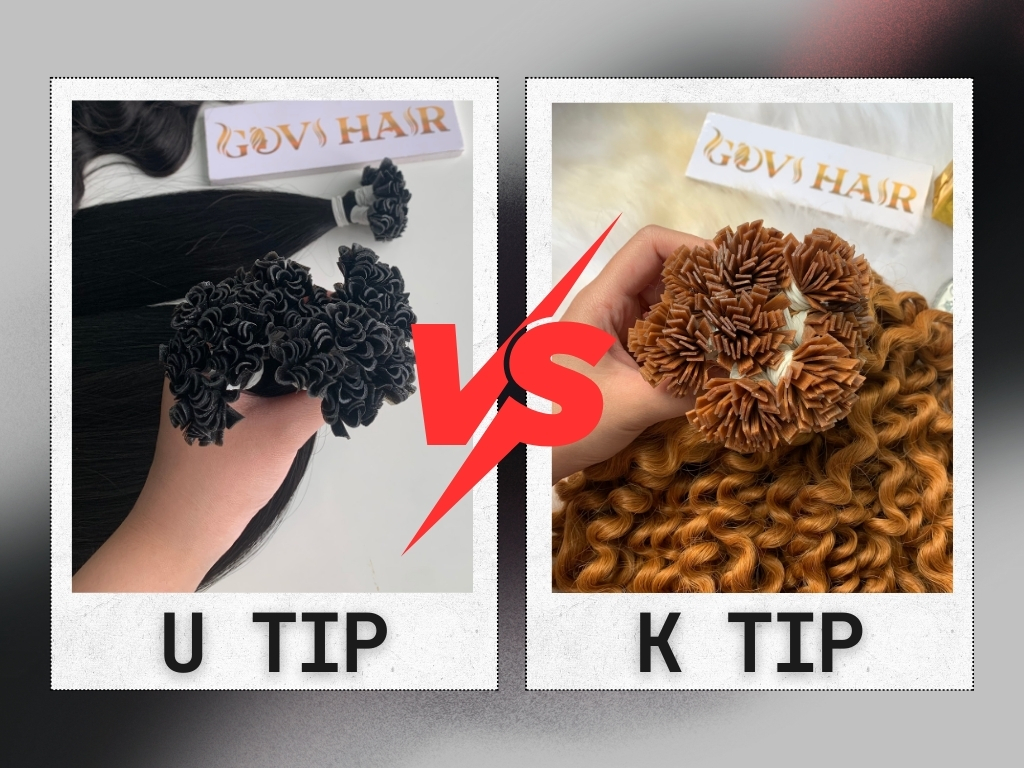
Choosing the right hair extensions can make a major difference in comfort, longevity, and overall style, especially when comparing popular keratin methods. In this guide, GoviHair breaks down U Tip vs K Tip hair extensions, explaining their key differences, benefits, and ideal use cases to help you determine which option is best suited for your hair type, lifestyle, and styling goals.
What Are U Tip Hair Extensions?
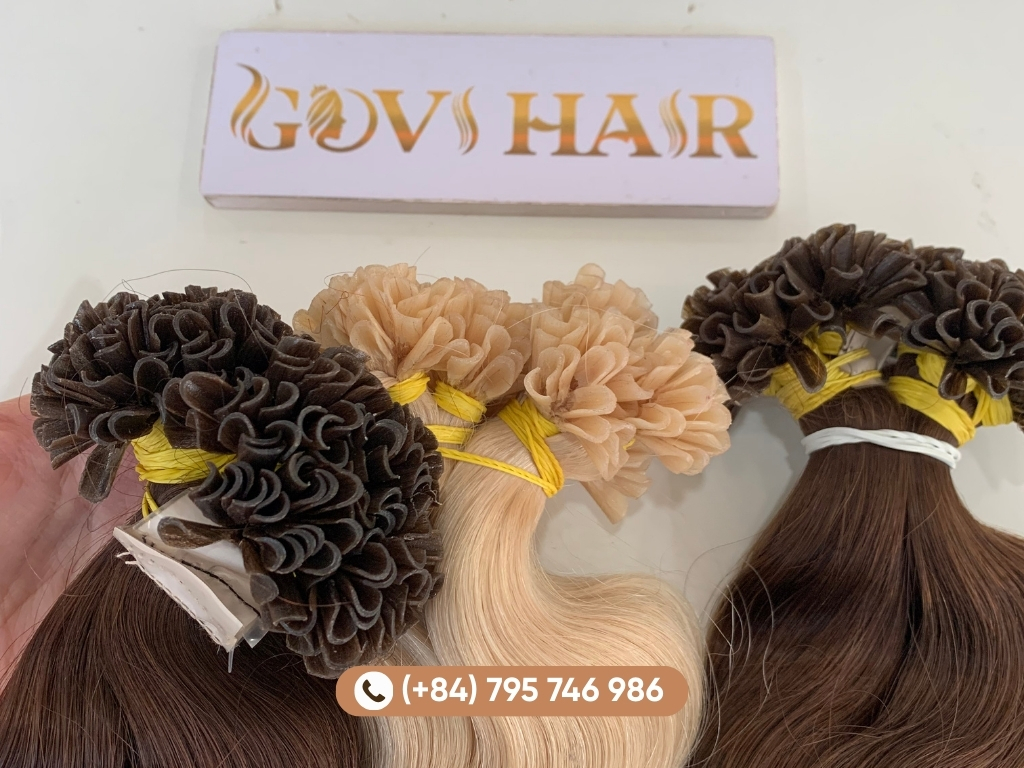
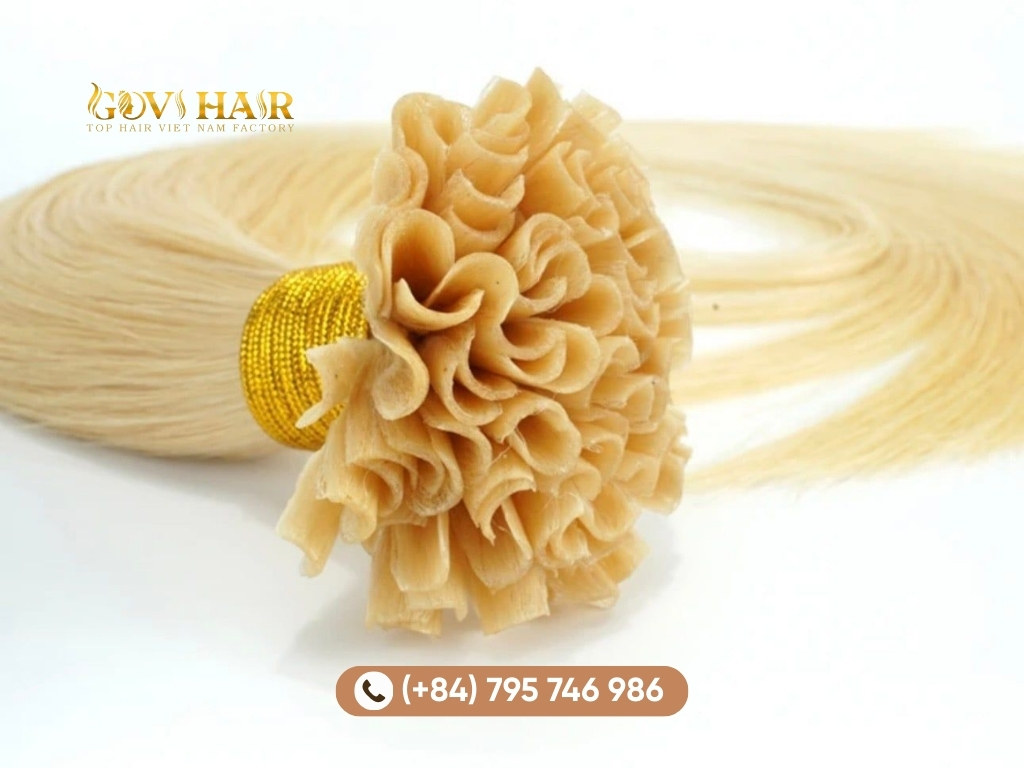
U Tip hair extensions are a type of keratin-bond hair extension designed with a small U-shaped tip made from keratin adhesive. This keratin tip is heat-fused to individual strands of natural hair using a professional heat tool, creating a strong, long-lasting bond that blends seamlessly with the hair. Because keratin closely mimics the structure of natural hair protein, U Tip extensions are known for their durability, natural movement, and discreet appearance.
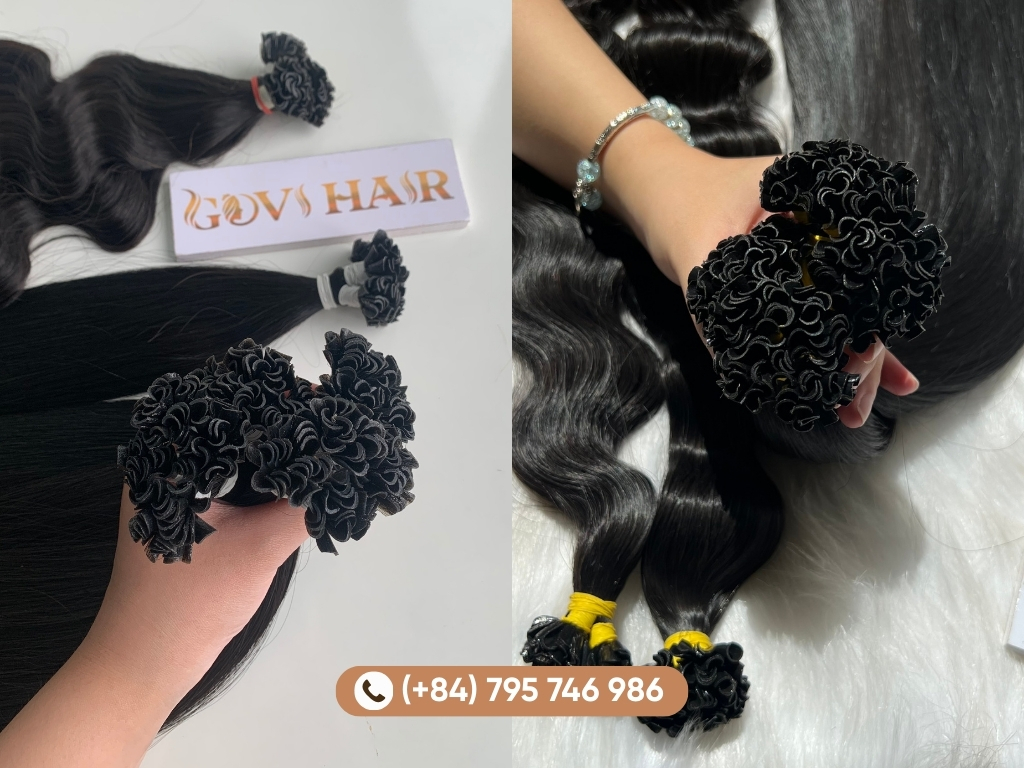
>> Read more: What Are U Tip Hair Extensions? Everything you need to know
Pros and Cons of U-Tip
U-Tip hair extensions are widely chosen for their durability, natural appearance, and styling flexibility. However, like any extension method, they come with both advantages and limitations. Understanding the pros and cons of U-Tip extensions will help you decide whether this keratin-based method is the right fit for your hair type, lifestyle, and maintenance preferences.
Pros of U-Tip Hair Extensions
- Long-Lasting Durability: One of the biggest advantages of U-Tip hair extensions is their lifespan. When installed correctly, they can stay securely in your hair for 3 to 5 months, which is significantly longer than tape-ins or weaves.
- 360° Movement: Because they are installed strand-by-strand, each extension moves independently. This allows for total styling freedom; you can wear high ponytails, braids, or top-knots without the bonds being visible or feeling restrictive.
- Customizable Volume and Color: Stylists can mix different shades of U-tips to create a perfect color match or a “highlighted” effect without dyeing your natural hair. They are also highly effective as u tip vs k tip for curly hair solutions because they blend into the natural curl pattern strand-by-strand.
- Secure Bond: The U-shaped keratin bond is designed to “hug” the natural hair. Once the heat tool fuses the keratin, the bond is very resistant to slipping, even if you have an active lifestyle or oily scalp.
Cons of U-Tip Hair Extensions
- Lengthy Installation Time: Because the stylist must fuse each individual strand one by one, a full head of U-tips can take 3 to 5 hours to install. This usually results in higher labor costs at the salon.
- Application of Heat: Unlike K-Tip extensions which can sometimes be applied with ultrasonic “cold fusion” technology, U-tips almost always require a specialized heat connector tool to melt the keratin. If the stylist is not experienced, improper heat application can cause damage to the natural hair.
- Not Reusable: Typically, U-tips are considered a “one-time use” extension. Once they are removed with a salon-grade alcohol-based solvent, the original U-shaped bond is destroyed. While they can be re-tipped with new keratin, it is a tedious and expensive process.
- Tension on Fine Hair: If the sections of natural hair are too small to support the weight of the U-tip, it can lead to tension or breakage. This is why a professional consultation is vital to ensure your hair is strong enough for the bond.
What Are K Tip Hair Extensions?
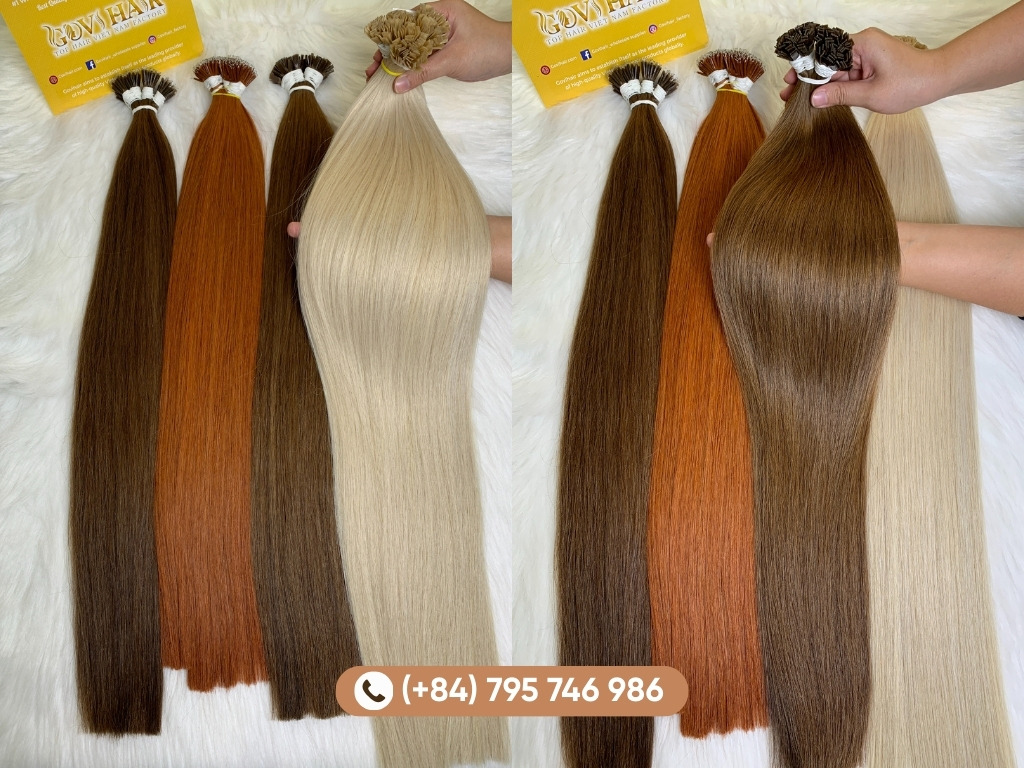
K-Tip hair extensions are a type of keratin-bond hair extension that use a small keratin adhesive tip to attach individual extension strands to natural hair. The “K” stands for Keratin, the protein that naturally makes up human hair, making these extensions strong, flexible, and natural-looking when installed correctly. K-Tip extensions are applied using a heat fusion method, where the keratin tip hair is melted and bonded securely to a small section of your own hair.
>> Read more: Keratin Hair Extensions: The Pros And Cons You Need to Know
Pros and Cons of K-Tip
K tip hair extensions are among the most premium and natural-looking hair extension methods available today. As keratin-bond extensions, they are often compared with U-Tips, making topics like U tip vs k tip pros and cons and U tip vs k tip hairstyles especially important when choosing the right method. Below is a detailed breakdown to help you understand whether K-Tip extensions suit your hair needs and lifestyle.
Pros of K-Tip Extensions
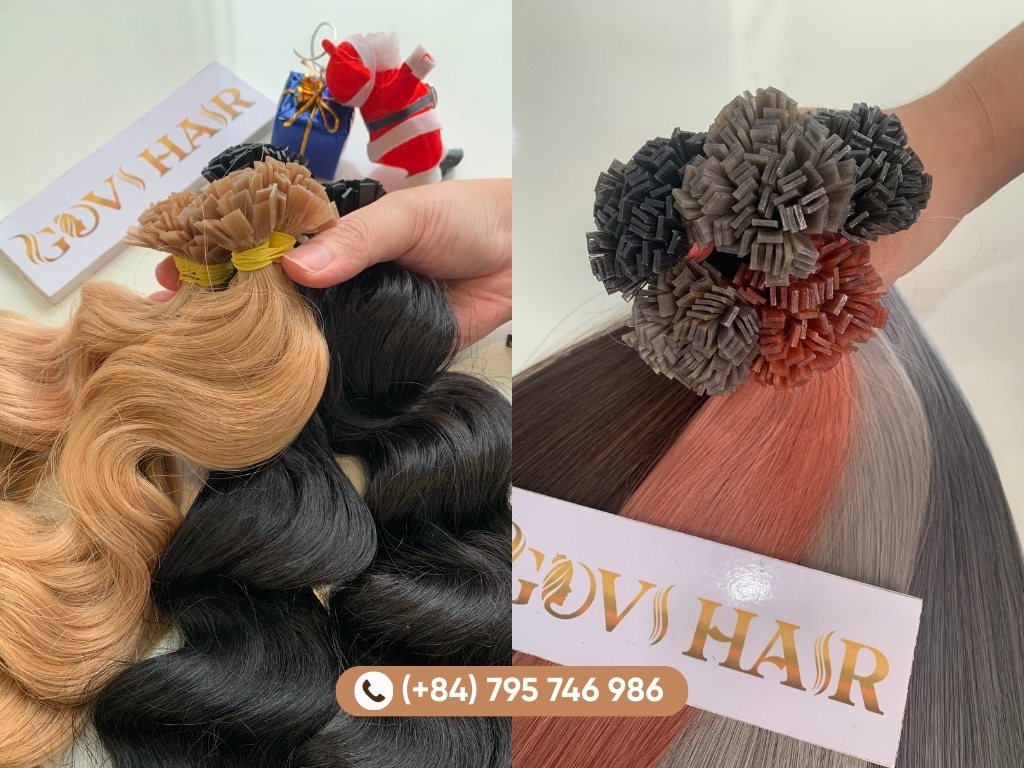
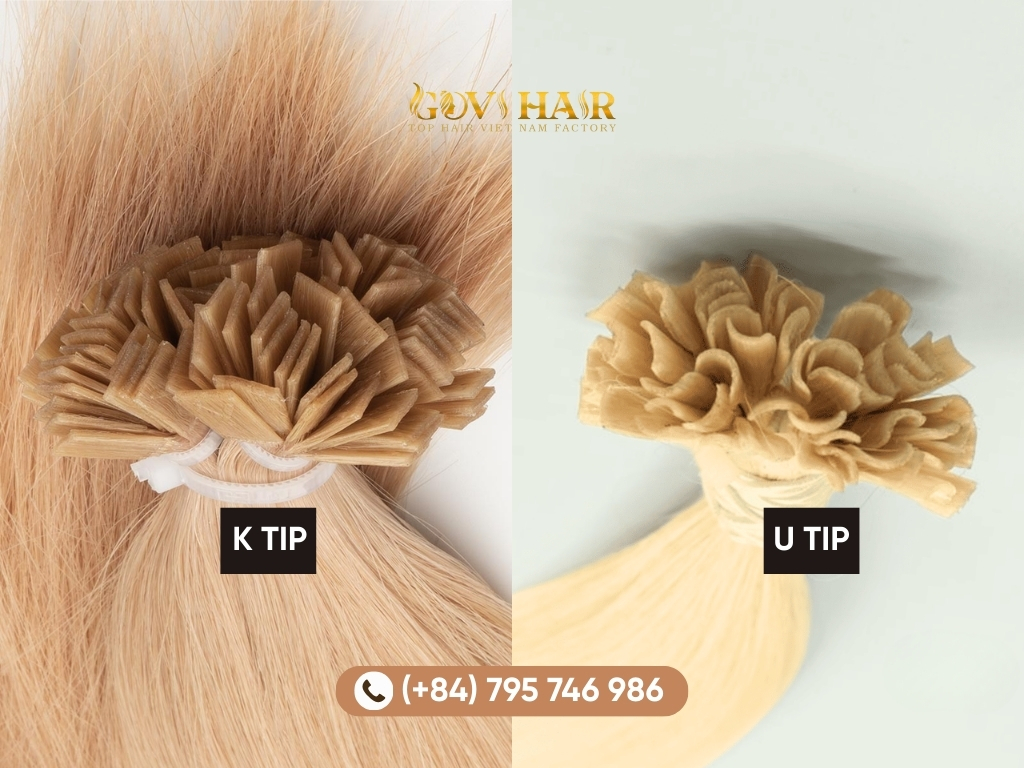
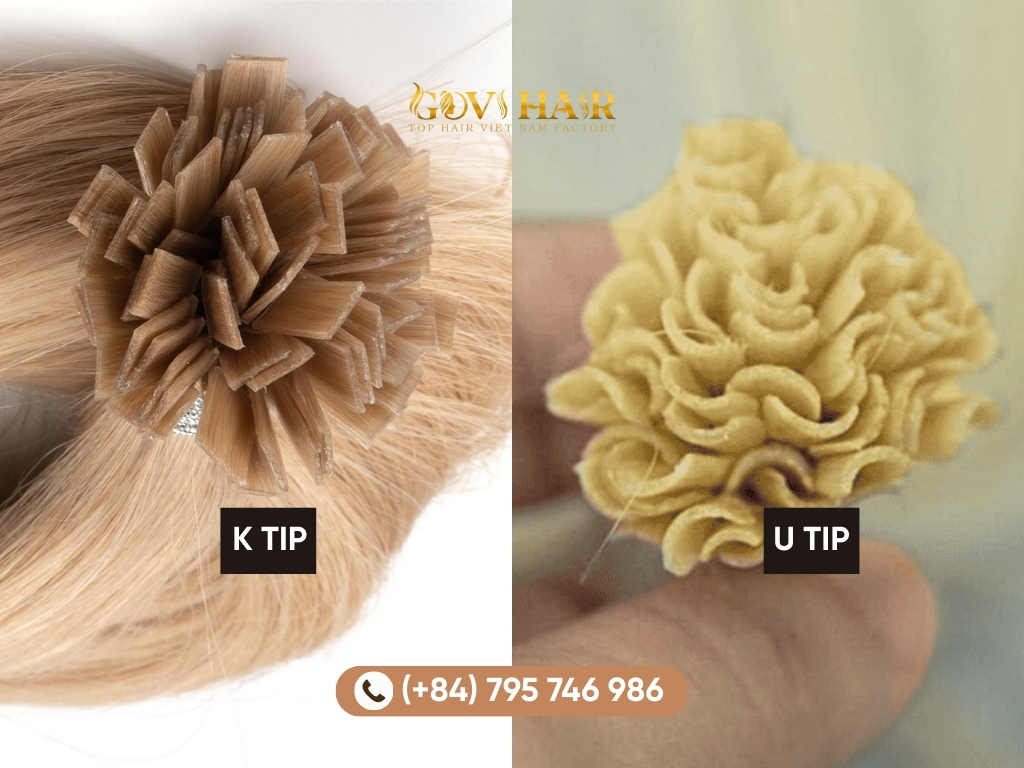
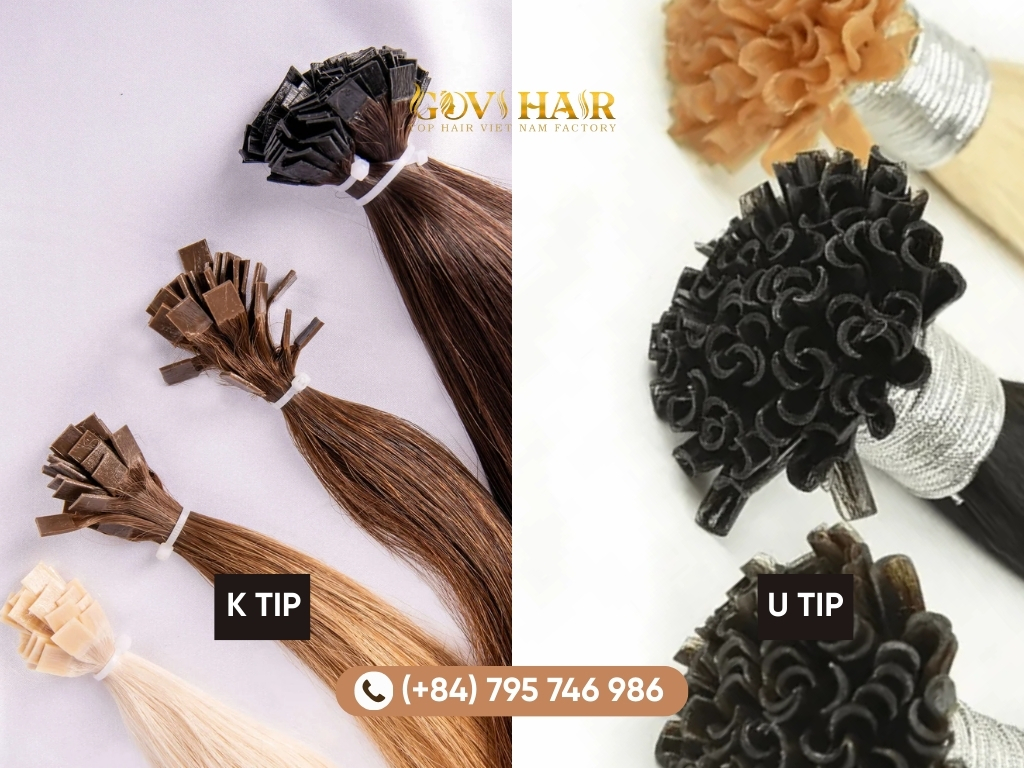
- Ultra-Discreet and Flat: The primary advantage in the u tip vs k tip debate is the bond shape. K-Tips feature a flat keratin square that, once fused, lays flush against the scalp. This makes them significantly less bulky and harder to detect than the rounded bonds of a U tip hair extensions application.
- Ideal for Thin or Fine Hair: Because K-Tips can be easily cut into smaller “micro-bonds,” they are perfect for clients with thinning hair or for filling in delicate areas like the temples and fringe.
- Advanced Application Options: K-Tips are compatible with Ultrasonic Cold Fusion technology. Unlike many U-Tip applications that require a heat wand, cold fusion uses sonic vibrations to soften the keratin, making it a safer choice for heat-sensitive or fragile strands.
- Seamless for Textured Hair: When considering u tip vs k tip for curly hair, K-Tips provide a lightweight feel. The smaller bonds allow curls to move and “clump” naturally without the weight of the extension pulling the curl straight at the root.
- Styling Versatility: Much like U-Tips, K-Tips allow for a full range of u tip vs k tip hairstyles. You can wear your hair in high buns, intricate braids, or sleek ponytails without worrying about a horizontal weft or tape showing through.
Cons of K-Tip Hair Extensions
While K-Tips have many benefits, they also come with drawbacks, particularly in durability and suitability for certain hair types:
- Weaker Hold Compared to Alternatives: The slim bonds can slip more easily on thick, coarse, or very curly hair (4A-4C), especially in humid environments or with oily scalps. In U tip vs K tip pros and cons, U-Tips generally provide a stronger, wrapped grip that holds up better for active users.
- Shorter Lifespan: They typically last 3-5 months, versus 4-6 months for U-Tips. Frequent move-ups (every 8-10 weeks) are needed, increasing maintenance costs and salon visits.
- Risk of Tangling and Matting: Without regular brushing and oil-free products near the roots, bonds can tangle, particularly in textured hair. This is more pronounced than with U-Tips’ secure design.
- Heat Application Concerns: The fusion process (180-200°C) can weaken fine hair if not done professionally, potentially leading to breakage. Removal with acetone adds another layer of risk if mishandled.
- Limited for High-Tension Styles: Not as robust for tight ponytails or heavy accessories, where bonds might loosen faster than in U Tip hair extensions.
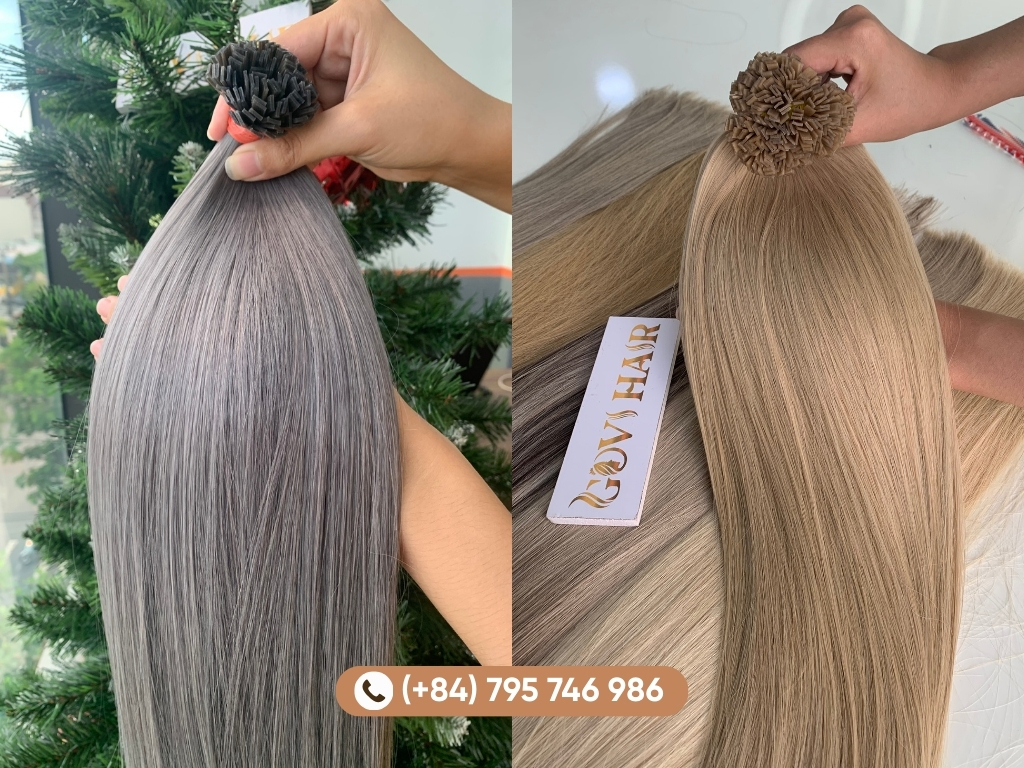
U Tip vs K Tip: Side-by-Side Comparison
When deciding between U Tip hair extensions and K-Tip extensions, the choice often comes down to your hair density, desired lifestyle, and styling habits. Here is a detailed, side-by-side comparison to help you navigate the U Tip vs K-Tip pros and cons.
Installation Method
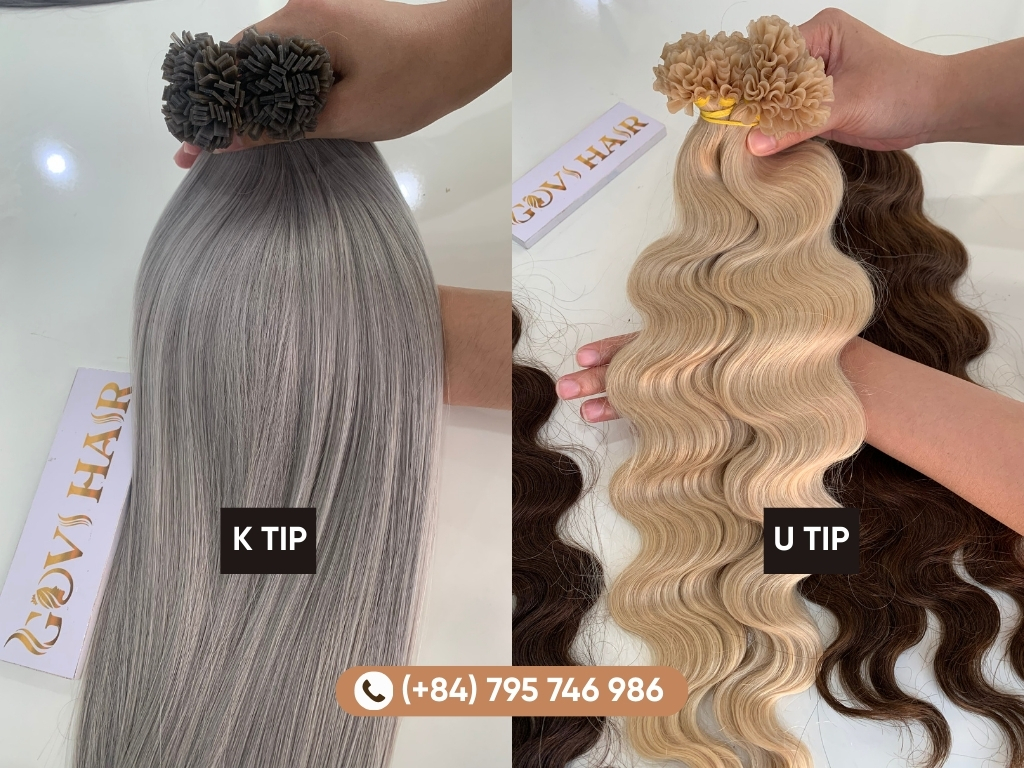
The U tip hair extensions application uses heat fusion, where a U-shaped keratin bond is melted and wrapped around a small section of natural hair. The U shape allows the keratin to distribute evenly, creating a flat and secure attachment.
K-Tip extensions, as a broader category, also use heat fusion but may come in different keratin shapes such as flat, I-tip, or nail tip. This allows stylists more flexibility in bond size and placement, especially for customized installs. In u tip vs k tip hairstyles, both methods deliver natural results, but K-Tips offer more shape options depending on the client’s needs.
Bond Shape & Size
U-Tips have a clearly defined U-shaped keratin bond that melts into a smooth, compact form. This shape helps the bond lie close to the scalp, reducing visibility and increasing stability.
K-Tip extensions vary in bond shape and size, which can affect comfort and customization. This difference is often highlighted in u tip vs k tip pros and cons, as U-Tips offer consistency while K-Tips offer adaptability.
Hair Blending & Finish
Both U-Tip and K-Tip extensions are known for excellent blending because they are applied strand by strand. U-Tips create a uniform, polished finish that works well for sleek and layered styles.
K-Tips, due to customizable bond shapes, may blend more seamlessly in complex styles or textured hair. This is especially relevant in discussions around u tip vs k tip for curly hair, where precise placement helps preserve curl definition and natural movement.
Comfort & Flexibility
U-Tip extensions are comfortable for most wearers, particularly those with medium to thick hair. The flattened bond reduces pulling and feels secure during daily activities.
K-Tip extensions tend to offer greater flexibility because the bond size can be adjusted. This makes them more suitable for fine hair or sensitive scalps. When comparing u tip vs k tip hairstyles, comfort often depends on hair density and installation technique.
Durability & Longevity
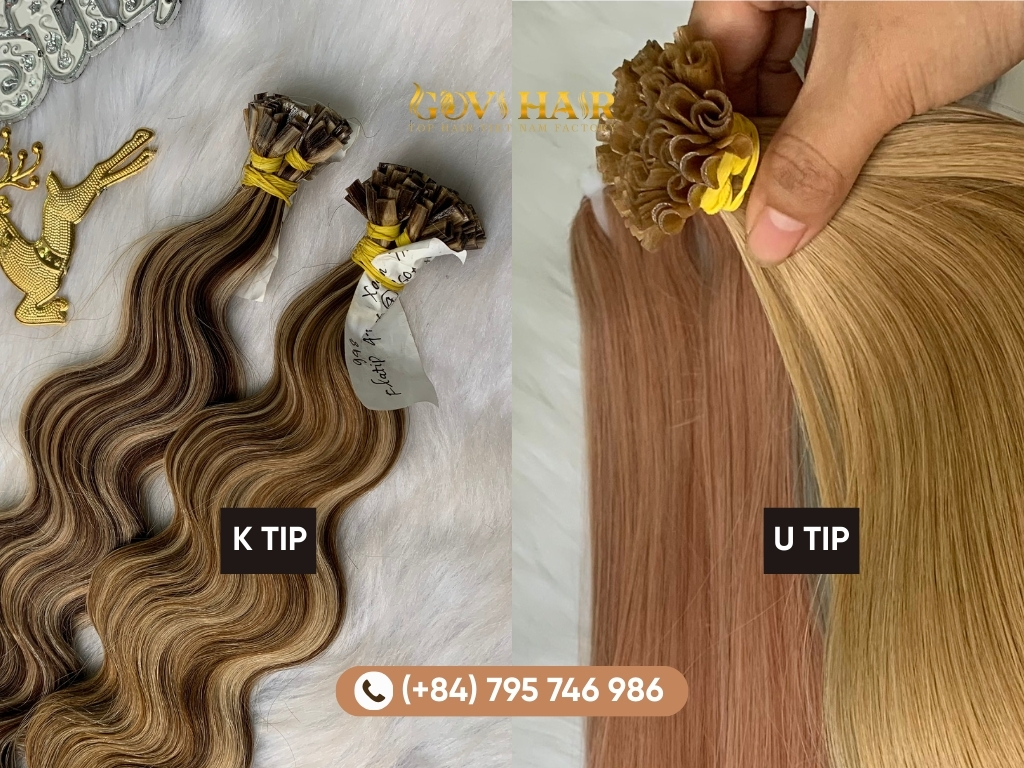
Both methods are highly durable, typically lasting 3–5 months with proper care. U-Tips are known for their strong, long-lasting hold, making them ideal for clients who want minimal maintenance between salon visits.
K-Tip extensions match this longevity but may require more careful upkeep depending on bond type. This durability factor is central to evaluating u tip vs k tip pros and cons for long-term wear.
Removal Process
U-Tip extensions must be professionally removed using a keratin bond remover and specialized tools. Improper removal can damage natural hair, so professional service is essential.
K-Tip extensions follow a similar removal process, though the ease of removal may vary slightly depending on bond shape and size. In both cases, careful removal is critical to maintaining hair health.
Maintenance Tips for U Tip and K Tip Extensions
Proper care is essential to keep U Tip hair extensions and K-Tip extensions looking natural, smooth, and long-lasting. Because both methods use keratin bonds and heat fusion, a gentle, consistent maintenance routine will protect your natural hair while extending the lifespan of your extensions.
- Brush Carefully and Regularly: Use a soft bristle brush or a loop extension brush to detangle hair at least twice a day. Always start from the ends and work upward, holding the hair near the roots to avoid pulling on the keratin bonds. Gentle brushing prevents matting and reduces stress on both U Tip and K-Tip bonds.
- Wash with Sulfate-Free Products: Choose sulfate-free, lightweight shampoos and conditioners to prevent drying out the keratin bonds. Wash your hair 2–3 times per week, focusing shampoo on the scalp and allowing the suds to run down the extensions. Avoid applying conditioner directly to the bond area, as this can cause slippage.
- Avoid Heat Directly on the Bonds: While the hair itself can be styled, avoid applying flat irons or curling tools directly to the keratin tips. Excessive heat can weaken the bonds and shorten the lifespan of both U Tip and K-Tip extensions. Always use a heat protectant when styling.
- Dry Hair Thoroughly After Washing: Never go to bed with wet hair. Moisture left near the bonds can soften the keratin and lead to tangling or slipping. Blow-dry the roots on a low to medium heat setting, keeping airflow directed downward.
- Sleep Protection Is Essential: Before sleeping, gently brush your hair and secure it in a loose braid or low ponytail. Use a silk or satin pillowcase or bonnet to reduce friction and prevent tangling while you sleep.
- Limit Heavy Oils and Styling Products: Avoid applying heavy oils, serums, or creams near the roots. These products can break down keratin bonds over time. Use lightweight products only on mid-lengths and ends.
- Schedule Professional Maintenance: Visit your stylist every 6–8 weeks for a check-up. They can assess bond conditions, remove shedding strands, and ensure the extensions remain balanced and secure. Professional care is especially important for long-term wear.
U Tip vs K Tip: Which One Looks More Natural?
When it comes to achieving the most undetectable finish, K-Tip extensions generally win for natural appearance, especially for those with fine or thin hair. While both methods provide a seamless blend, the structural differences in their bonds significantly affect how “invisible” they are in daily life. Here is the detailed breakdown of which one looks more natural and why.
K-Tips are widely considered the more natural-looking option for several key reasons:
- Flat Bond Shape: The K-Tip starts as a flat keratin square. When fused, it lays flush against the scalp. This lack of bulk makes the attachment points nearly impossible to see, even in areas with very thin hair, like the temples.
- Micro-Bonding Capability: Stylists can cut a single K-Tip into halves or thirds to create “micro-bonds.” These tiny attachments are ideal for the hairline or crown, where traditional extensions would typically be visible.
- Seamless Blend for Fine Hair: Because the bonds are so small and flat, they don’t create “bumps” under the hair. This is particularly beneficial for those with “silky” or fine textures where larger bonds might poke through.
While still very discreet, U tip hair extensions have a slightly different visual profile:
- Cylindrical Bond: U-Tips are rolled into a small, rice-shaped cylinder. While this makes for an incredibly secure bond, it is slightly thicker (about 4–5 mm) compared to the flatter K-Tip (2–3 mm).
- Best for Medium to Thick Hair: On someone with high hair density, U-Tips look perfectly natural because the surrounding hair easily hides the rounded bonds.
- Natural Movement: Both U-Tips and K-Tips offer 360-degree movement, meaning the hair flows, swings, and parts just like your own. In a high ponytail, both are significantly more natural-looking than tape-ins or wefts.
To sum up, you should choose K-Tips if you have fine or thinning hair, or if your primary goal is to have “invisible” extensions that you cannot feel when you run your hands through your hair. And you should choose U-Tips if you have medium to thick hair and want a very durable, secure bond that can handle a lot of styling and volume.
FAQs
Is U tip better than K tip?
Neither is universally “better”, it depends on your hair. U-Tip is better for thick, coarse, or curly hair (stronger hold, longer-lasting). K-Tip is better for fine or thin hair (lighter, more discreet, natural look). Choose based on your type and lifestyle.
Do K tip extensions damage hair?
Minimal damage when installed/removed professionally. Heat fusion and keratin bonds are gentle, but improper application or poor maintenance can cause breakage. With a skilled stylist and good care, they’re one of the safer semi-permanent methods.
Can U tip or K tip be reused?
No, both U-Tip and K-Tip are single-use. Keratin bonds are melted during installation and dissolved during removal, so strands can’t be reinstalled. New extensions are needed for each application.
Where to Buy High-quality U tip and K tip Hair Extensions?
Choosing between U tip vs K tip hair extensions is not only about installation or finish, it’s also about sourcing premium-quality hair from a supplier you can trust. GoviHair stands out as a reliable manufacturer and wholesaler, offering high-end U Tip hair extensions and K-Tip extensions designed to meet the needs of both professional stylists and global distributors.
GoviHair’s U tip and K tip extensions are particularly well-suited for European markets, where hair extensions are in consistently high demand and customers have very high standards for quality. The hair is made from premium Vietnamese raw hair, known for its strength, smooth cuticle alignment, and natural shine.
Best-selling colors focus on natural black and lighter shades such as platinum and blonde tones, making them ideal for clients who prefer subtle elegance or customized highlight styles. This quality allows stylists to confidently create personalized looks in terms of color, length, and styling, satisfying even the most demanding customers.
One of GoviHair’s strongest advantages is production speed.
- For natural black U tip and K tip extensions, production typically takes only 5–7 days, with shipping arranged immediately afterward.
- For custom orders, including specific lengths, colors, or textures, production usually takes 7–9 days, depending on order volume.
This efficiency helps salons and wholesalers maintain steady inventory and respond quickly to market trends.
Furthermore, GoviHair accepts large quantity orders and specializes in wholesale supply. With competitive pricing directly from Vietnam, buyers benefit from factory-level costs without compromising quality. Whether you are comparing U tip vs K tip pros and cons, supplying salons, or building your own hair brand, GoviHair provides consistent quality, flexible customization, and scalable production.
Contact with us:
- WhatsApp: (+84)795 746 986
- Email: [email protected]
- Instagram: govihair_vietnamhair_factory
- Tik Tok: govihairvietnam_official
- Website: https://govihair.com/
GoviHair accepts large quantity orders and specializes in wholesale supply
Conclusion
In conclusion, understanding U Tip vs K Tip hair extensions is essential when choosing the best method for seamless, long-lasting volume and length in 2025. Both deliver natural results with proper installation, but your choice depends on hair type, lifestyle, and desired durability. Consult a professional stylist or trusted manufacturer/wholesaler like GoviHair to determine whether U Tip vs K Tip suits you best for flawless, damage-free extensions that elevate your look effortlessly.


 Ms. Sophia