

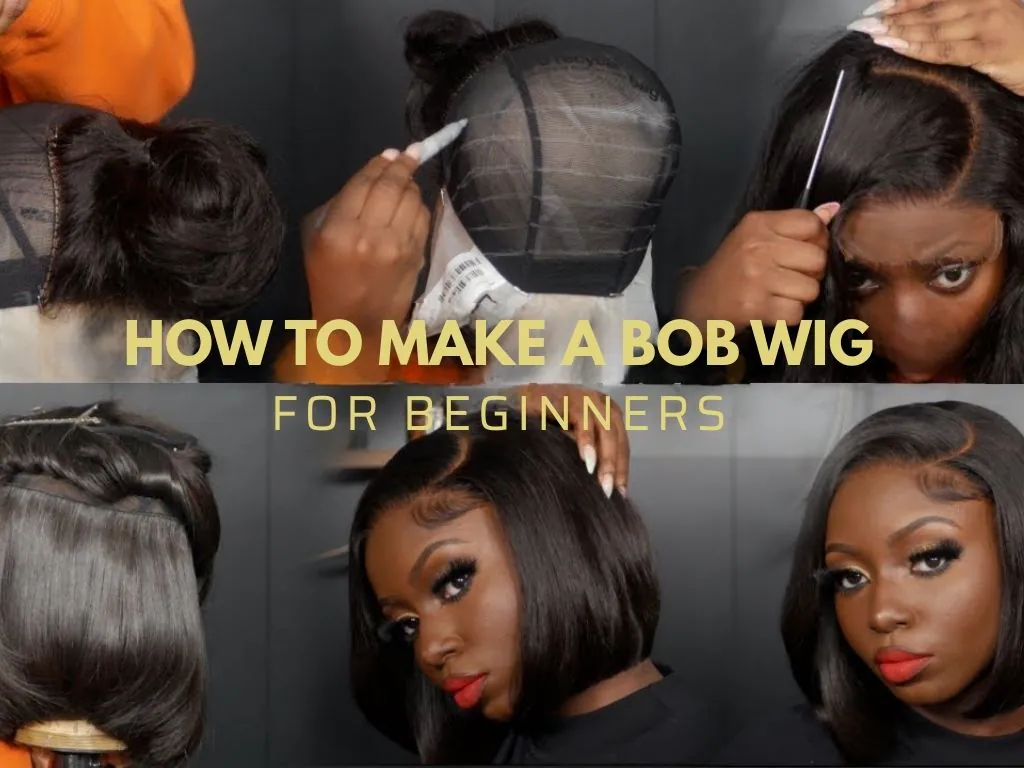
Are you tired of spending a fortune on salon units that never fit perfectly? Learning how to make a bob wig is the ultimate skill for hair enthusiasts. Whether you desire a sharp blunt cut or a chic asymmetrical look, crafting your own unit gives you complete control over style and volume. In this step-by-step tutorial, Govihair will guide you how to make a bob wig for beginners. Get ready to save money and slay your custom hairstyle!
Why Bob Wigs Are So Popular?
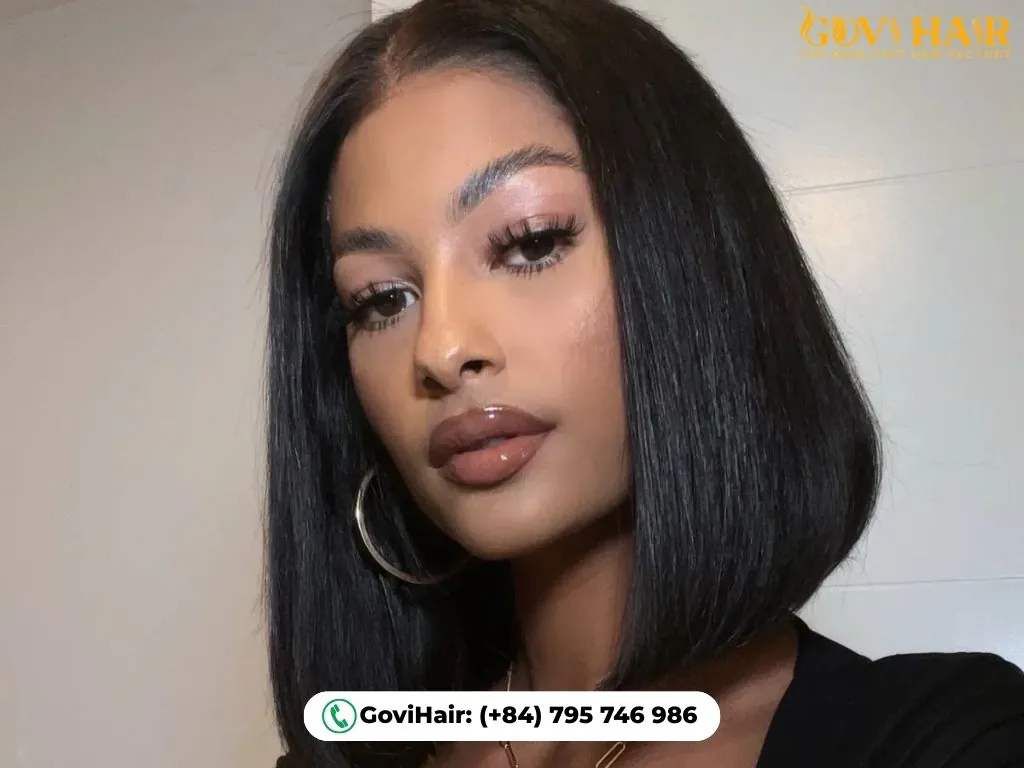
The bob haircut is a timeless style that exudes elegance and confidence. But why are wigs specifically so popular? First, they protect your natural hair. Second, knowing how to make a bob wig allows you to switch up your look instantly without cutting your own hair. From classic bobs to textured waves, this versatile style suits almost every face shape. Furthermore, a custom-made wig offers better longevity and fit compared to mass-produced synthetic options found in local beauty supply stores.
Tools For DIY Bob Wig
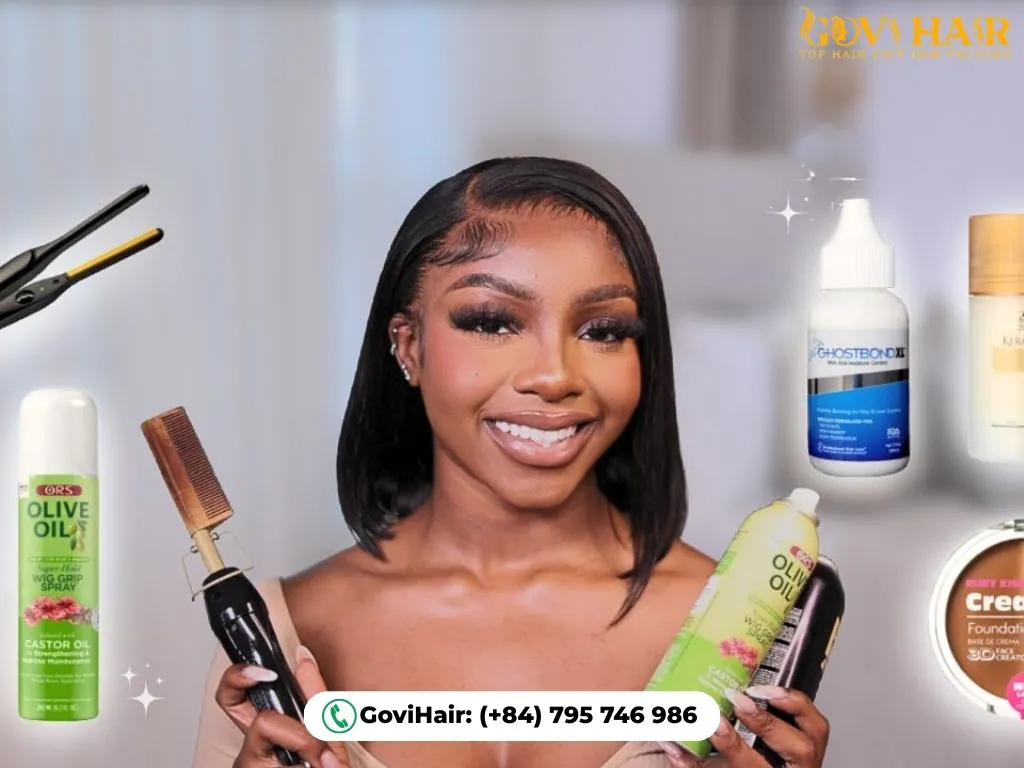
Before diving into how to make a bob wig, you need to gather the necessary tools. Having the right equipment ensures the process is smooth and the result looks professional.
-
Mannequin Head & Tripod Stand: To hold the wig steady.
-
Wig Cap & T-Pins: To create the base structure.
-
Curved Needles & Nylon Thread: For secure sewing.
-
Human Hair Bundles: We recommend 2-3 bundles. Checking a wig density chart beforehand will help you decide how many bundles are needed for your desired volume.
-
Scissors & Tweezers: For cutting tracks and customizing the hairline.
-
Elastic Band: To secure the wig on your head.
How to Make Your Own Bob Wig (Step-by-Step DIY)
Making a wig from scratch sounds complicated, but it is essentially just assembling different parts together. To successfully master how to make a bob wig on your first try, forget the complex techniques and follow this “fail-safe” order used by professionals:
Step 1: Prep the Foundation and Mark Guidelines
Before you touch a needle, you need a perfectly prepared base.
-
Wig Cap Setup: Place the wig cap on your mannequin head. Pro tip: If the mannequin head is smaller than your actual head, pad it with tape or paper under the cap to match your head size.
-
Secure with T-Pins: Use T-pins to pin the cap down tightly at the forehead, temples, and nape. The cap must be stretched taut; if it is loose, the wig will ripple and fit poorly.
-
Draw Guidelines: Use a white eyeliner pencil or chalk to draw a U-shape on the crown (where the closure will sit) and horizontal lines across the back. It is helpful to consult a wig length chart at this stage to visualize exactly where you want the tracks to fall for your desired bob length.
Step 2: Install the Closure First
Many tutorials suggest doing this last, but for beginners, installing the closure first is better because it establishes the structure of the wig.
-
Place your closure exactly within the U-shape guide you marked on the crown. When selecting closures for wigs, ensure the lace color matches your skin tone for the best result.
-
Sew the perimeter of the lace securely onto the cap.
-
Note: Keep your stitches small and close together so the lace sits perfectly flat against the head. This prevents the “bulky” look at the top.
Step 3: Sew the Bundles (The Fold-Over Method)
Now it is time to fill in the wig. You will sew the wefts (hair tracks) starting from the nape and working your way up.
-
The Fold-Over Method: When you reach the edge of the cap, do not cut the weft. Instead, fold the track over and continue sewing the next row. This technique prevents the threads from unraveling and significantly reduces shedding.
-
Density Control: At the nape (neck area), sew the tracks close together for thickness. As you move up toward the crown, you can check a wig density chart to space the tracks out correctly, avoiding the wig looking too bulky or “cone-headed.”
-
Finish by sewing the final track right up against the edge of the closure for a seamless blend.
Step 4: Cut and Define the Bob Shape
Right now, you have a wig with long hair. Now comes the most important part of how to make a bob wig: the cut.
-
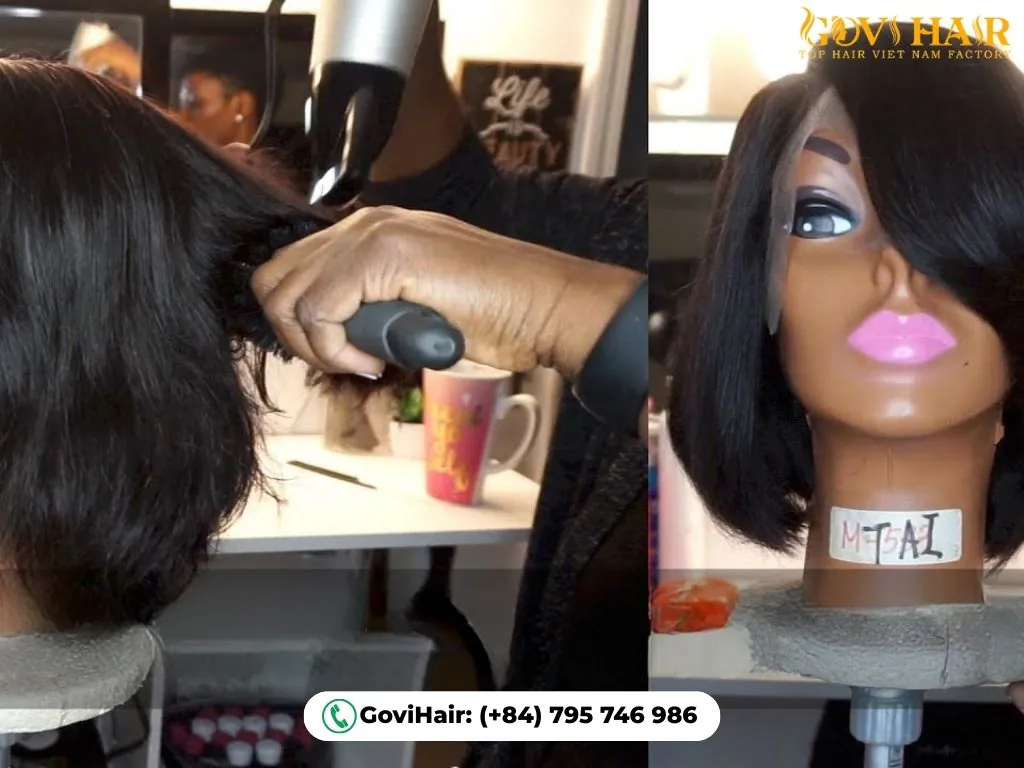
Flat Iron First: Before cutting, straighten the hair bone-straight to ensure your cut is accurate.
-
The Base Cut: Do not cut everything at once. Section the hair into thin layers. Start cutting the bottom layer at the nape to your desired length (usually chin or shoulder length).
-
Create the Bevel (The “Cup” Effect): To make the bob hug your face naturally, cut the inner layers slightly shorter (about 1-2mm) than the top layers.
-
Point Cutting: Use the tips of your scissors to snip vertically into the ends of the hair. This is the secret on how to make a wig look natural, as it softens the blunt line and gives the bob fluid movement. Once the cut is done, you can leave it sleek or learn how to curl a bob wig to add more texture.
Why Should You Buy Bob Wigs At Govihair?
When it comes to finding the perfect human hair bob wig, Govihair stands out as your premier Vietnamese partner. We pride ourselves on using only ethically sourced, premium hair to ensure every unit is soft, shiny, and incredibly durable. Whether you desire a classic straight cut, a trendy lace front with bangs, or a fully customized style, our skilled artisans craft each piece with factory-grade precision. At Govihair, you do not have to compromise quality for price; we offer exceptional factory-direct rates suitable for both personal transformations and bulk business orders. Experience the perfect blend of luxury, versatility, and dedicated support with Govihair today.
Chat with us:
- WhatsApp: (+84) 795 746 986
- Email: [email protected]
- Instagram: govihair_vietnamhair_factory
- TikTok: govihairvietnam_official
- Website: govihair.com
FAQs
1. How many bundles do I need for a bob wig?
Typically, for a bob ranging from 8 to 12 inches, you will need about 2 bundles and a closure. If you want a very full look, 3 bundles are recommended.
2. Can I use synthetic hair for this tutorial?
Yes, you can, but the method on how to make a bob wig works best with human hair because it lasts longer and can be heat-styled.
3. How long does a DIY bob wig last?
The lifespan depends heavily on the hair quality and how well you sew it. If constructed with Govihair’s premium bundles and maintained with a proper bob wig care routine, your custom unit can last anywhere from 1 to 2 years with daily wear.
4. Can I dye or bleach my bob wig?
Absolutely. One of the biggest advantages of using 100% human hair is versatility. You can safely learn how to dye human hair wigs to create trendy ombre, balayage, or highlight effects without damaging the hair’s integrity, unlike synthetic options.
5. How do I stop the ends of my bob from flipping up?
The “flip” is a common annoyance with bob wigs. To prevent this, ensure you cut the underneath layers slightly shorter than the top layers (the beveling technique mentioned in Step 4). This forces the hair to curve inward naturally towards your neck.
Conclusion
Now that you have mastered how to make a bob wig, you can experiment with different styles without breaking the bank. Remember, the secret to a flawless bob lies in precise track placement and sharp cutting techniques. Don’t worry if your first attempt isn’t perfect – practice makes permanent! If you are still unsure how to make a bob wig look natural, consider investing in high-quality hair. Visit Govihair to grab the best bundles and bob wig!


 Ms. Sophia