

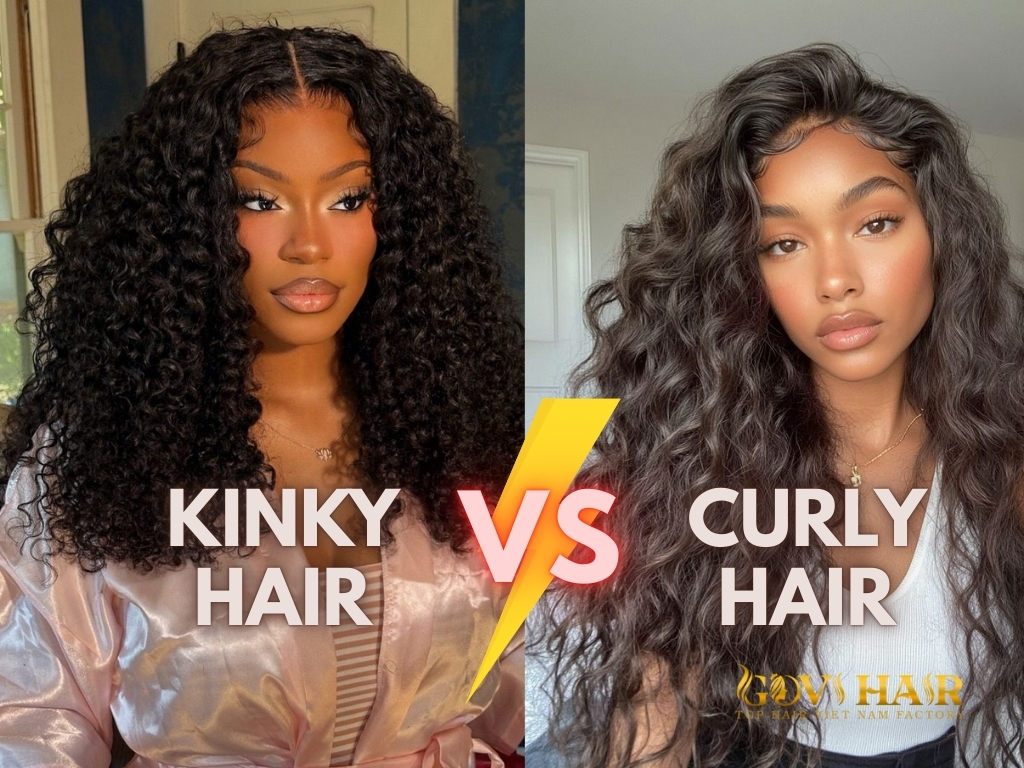
Are you confused about the distinct characteristics of kinky vs curly hair? While both textures offer incredible volume and style, their structures, maintenance needs, and styling limits are worlds apart. This comprehensive guide will settle the debate, breaking down the kinky curly hair difference in terms of density, fragility, and required care. Master this comparison to ensure you choose the perfect hair texture, whether natural or extensions, for a flawless, long-lasting look.
Characteristics of Kinky Hair: What You Need to Know
Kinky hair refers to the tightest curl pattern, often falling under Type 4 on the hair typing chart. It requires specific care to maintain its unique texture and prevent damage.
The Tightly Coiled Structure and High Shrinkage
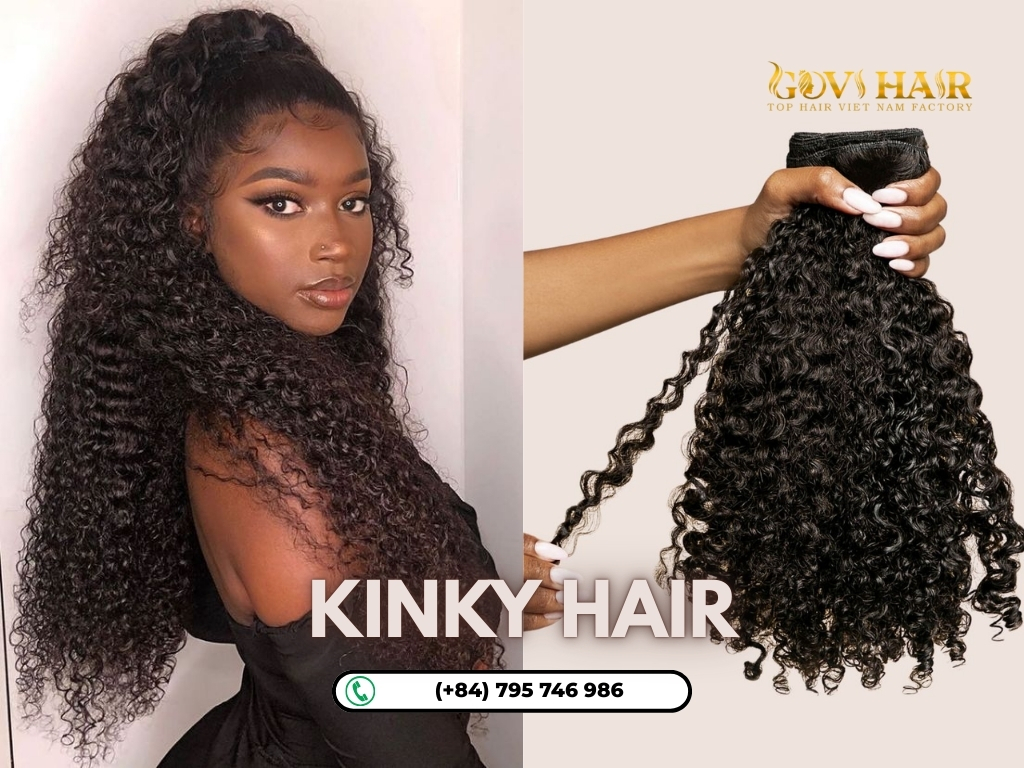
Kinky hair structure is characterized by very small, tightly coiled curls that form sharp, z-angles. These tight coils create immense natural volume and a thick appearance, similar to the natural hair of African descent. A major characteristic is high shrinkage; kinky hair can appear much shorter when dry than it is when wet.
Suitable Styles: Ideal for Afro, Bold, and Voluminous Looks
Kinky texture is best suited for bold, distinctive, and Afro-style hairstyles like voluminous puffs, updos, or twist-outs. It is the ideal choice for those who want an extremely thick, full appearance that provides a strong, energetic, and fashionable look.
The Challenge of Kinky Hair: Prevention of Tangling and Breakage
Because of the numerous twists and turns in the coil, kinky hair is the most fragile texture and is highly susceptible to dryness. It requires special care techniques to prevent tangling and breakage, demanding frequent moisture and gentle detangling methods. Knowing the best products for kinky hair is vital for long-term maintenance.
Characteristics of Curly Hair: Defining the Softer Waves
Curly hair typically ranges from Type 3A to 3C. While it shares a love for moisture with kinky hair, its structure is less fragile.
>>Read more: 2C vs 3A Hair: Key Differences, Care & Styling Tips
Larger, Clearly Defined Curl Patterns
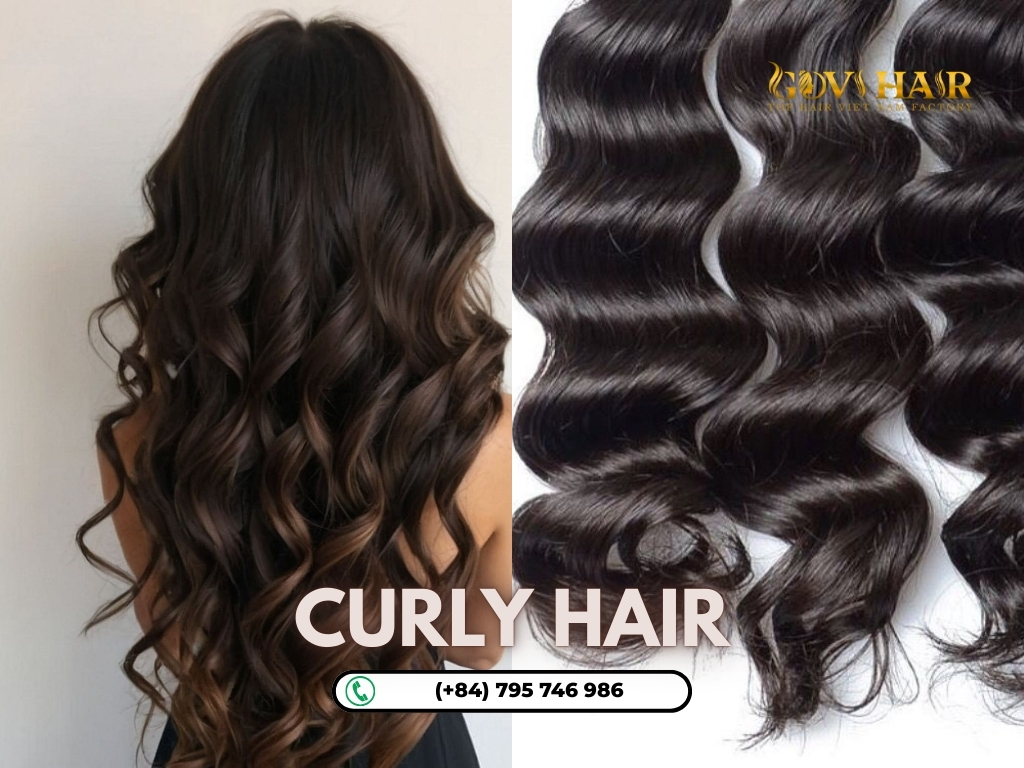
Curly hair pattern types feature larger, clearly defined curl patterns that form a recognizable ‘S’ shape. These soft, natural waves retain a visible curl definition even when dry. This texture is generally smoother and reflects light better than kinky hair.
Suitable Styles: Versatility for Straightening and Layering
Curly hair offers immense styling versatility. It can be easily styled into voluminous, feminine looks, or smoothed and straightened for temporary changes. It is compatible with various lengths and extension methods. It suits both youthful and elegant appearances.
Common Issue: Frizz and Loss of Curl Definition
While curly hair is easier to manage than kinky hair, it is still prone to frizz and loss of curl definition if not properly maintained. A good curly hair wash day routine must include moisture-rich products and defined techniques to lock in the curl shape.
Kinky vs Curly Hair: 5 Major Differences in Structure and Maintenance
Understanding these fundamental differences is key to successful maintenance, whether you choose your natural curl or what is kinky hair extensions.
Difference 1: Curl Pattern Tightness and Natural Volume
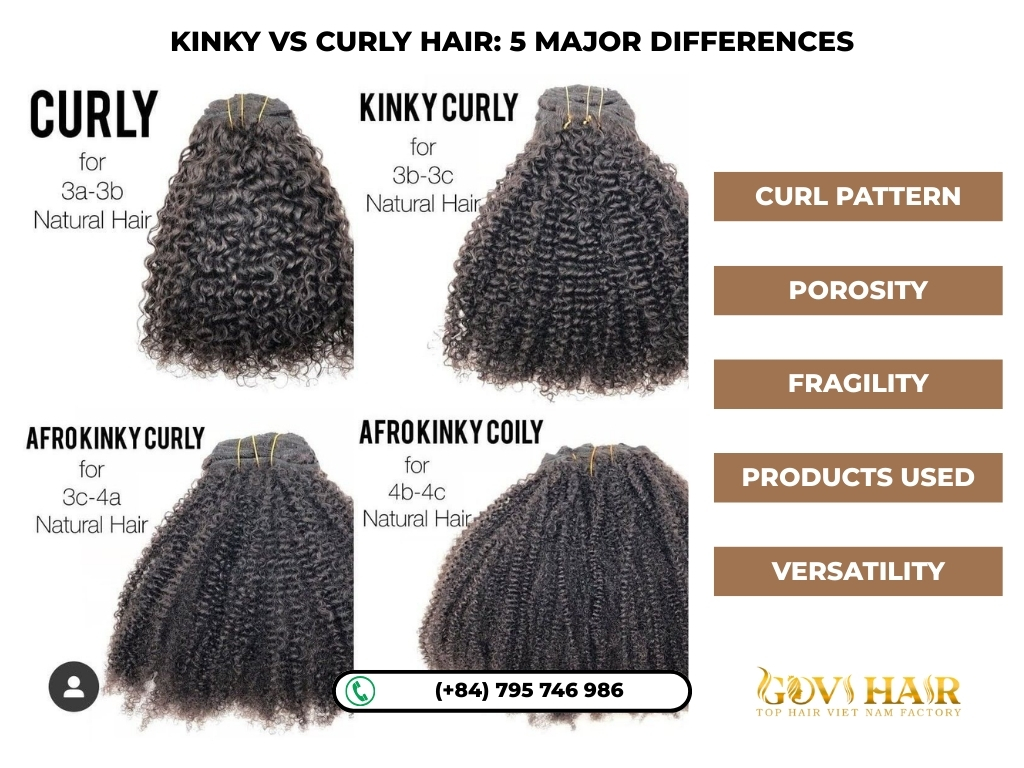
The most obvious kinky curly hair difference lies in density. Kinky hair (Coily/Type 4) features tightly packed micro-coils, resulting in extreme volume and a thicker appearance. Curly hair (Type 3) has looser, springier curls, leading to less shrinkage and a more defined length. This distinction is sometimes referred to as curly vs coily hair.
Difference 2: Porosity and Moisture Retention Requirements
Kinky hair often has a higher porosity due to its raised cuticle scales, meaning it loses moisture faster. It requires heavy butters and creams to seal hydration. Curly hair generally has better moisture retention but still needs hydration to prevent frizz.
Difference 3: Fragility and Recommended Detangling Methods
Due to its tightly packed structure, kinky hair is the most fragile. Detangling must be performed very gently when soaking wet and covered in conditioner. Curly hair is less prone to breakage but should still be detangled using the “ends to upward” method with a wide-tooth comb.
Difference 4: Best Products to Maintain Definition (Oil vs. Cream)
Best products for kinky hair are typically thick creams, custards, and butters to penetrate and seal the micro-coils. For curly hair, lighter mousses, gels, and curl-setting sprays are often preferred to maintain definition without weighing down the softer curls.
>>Read More: See tips on how to keep a curly wig looking wet for product ideas.
Difference 5: Versatility in Dyeing and Styling
Curly hair is generally less resistant to chemical processes and heat, making it slightly more versatile for permanent dyeing (especially lightening) and straightening. Kinky hair requires more careful processing to avoid immediate damage and breakage.
How to Choose the Right Style: Kinky Hair vs. Curly Hair
Your choice between the two textures should align with your desired look, lifestyle, and how much maintenance you are willing to commit to.
Choosing Kinky Hair for Bold, Thick, and Distinctive Appearance
Choose kinky hair if you prioritize maximum volume, thickness, and a strong, distinctive Afro-style look. This texture is fantastic for protective styling and adding significant bulk.
Choosing Curly Hair for Soft, Easy-to-Style, and Feminine Looks
Choose curly hair if you prefer softer, more voluminous, and easier-to-style curls that hold a defined ‘S’ shape. This texture offers greater styling flexibility, including temporary straightening or layering.
Matching Texture and Color to Your Natural Hair and Skin Tone
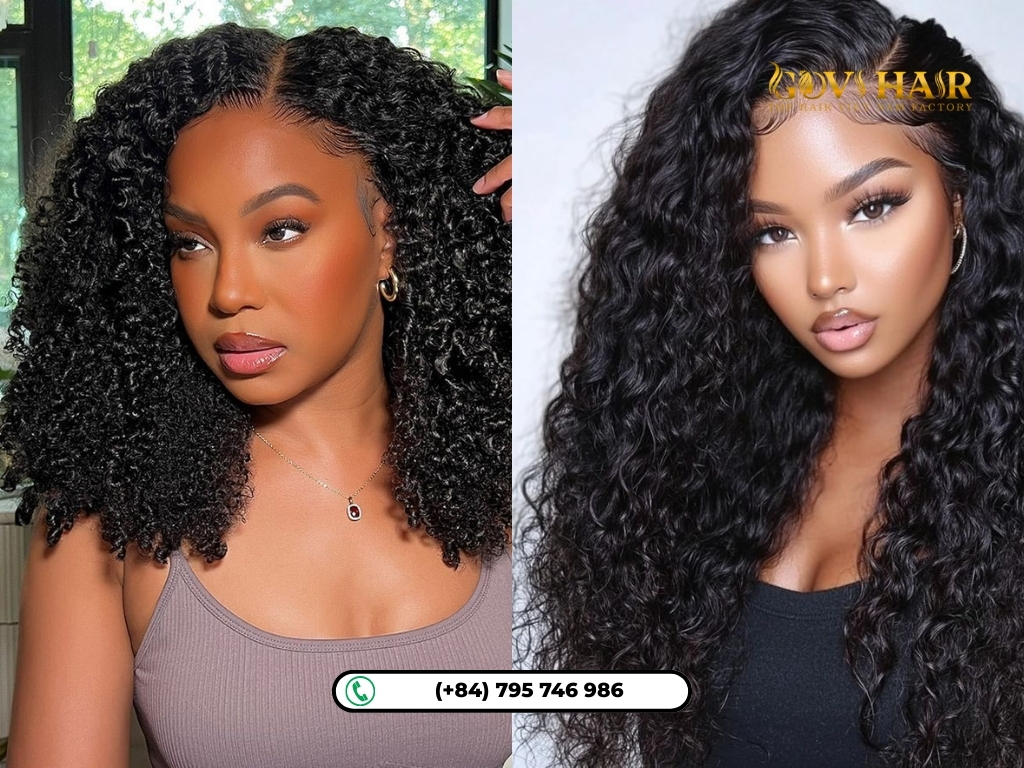
Whether you opt for the tight coils of kinky hair or the defined shape of curly hair, always select a texture and color that complements your skin tone for a more vibrant, cohesive look. Both textures are especially popular among customers in African markets for their natural volume and versatility.
Why Choose Curly and Kinky Hair from Govihair?
Govihair specializes in premium human hair extensions, offering both Kinky and Curly textures that meet the highest standards.
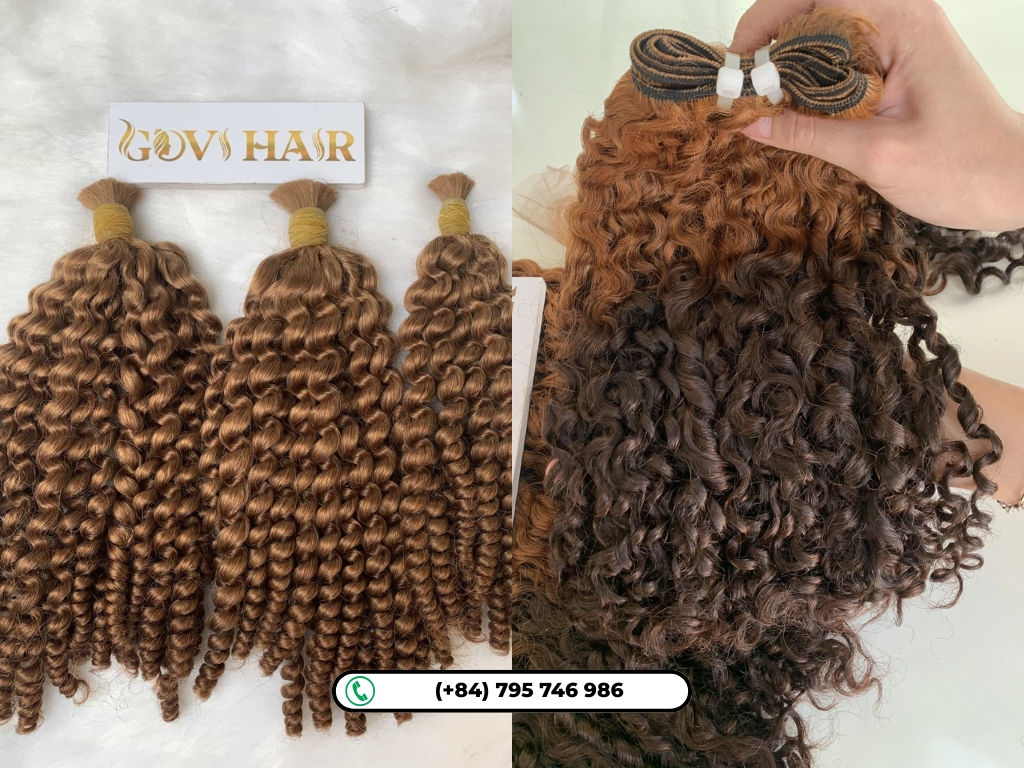
100% Vietnamese Human Hair (Raw & Virgin Hair): We guarantee authentic Vietnamese hair, unprocessed with harsh chemicals, ensuring exceptional softness, durability, and excellent dyeing/styling capability.
Premium Materials: Our Raw Hair (collected from a single donor) can be bleached to #613 blonde, lasting 3-5 years. Our Virgin Hair (collected from multiple donors) is perfect for dyeing darker shades and lasts 2-3 years.
Wide Range of Products: We offer a variety of curl patterns and lengths (8-32 inches), ensuring you find the perfect match, whether you need a dramatic kinky curly vs deep wave look or soft curls.
>>Explore more: How Many Different Types of Curly Weave Hair?
Common Questions About Kinky and Curly Hair (FAQs)
1. What is the main structural difference between kinky and curly hair?
The main structural difference lies in the shape of the hair strand. Kinky hair structure (also known as coily, Type 4) forms very tight ‘Z’-shaped or highly coiled curls, resulting in high density. Conversely, curly hair (Type 3) has larger, more defined ‘S’-shaped coils. Recognizing kinky vs curly hair based on the curl tightness is crucial.
2. Does kinky hair shrink more than curly hair?
Yes, kinky hair experiences significantly more shrinkage than curly hair. Kinky hair can contract up to 75% of its true length when wet. This noticeable kinky curly hair difference is due to the extremely tight, coiling structure of the hair strand.
3. Can curly hair be mistaken for kinky hair?
Misidentification can sometimes happen, especially between curly hair and kinky hair, though they belong to different curly hair pattern types. To distinguish them, observe the tightness and shape of the coil: curly hair has clear ‘S’-shaped spirals, while kinky hair is more coily and features a sharp ‘Z’-shaped pattern. Understanding what is kinky hair helps avoid this confusion.
4. What are the best methods for detangling kinky vs curly hair?
For kinky vs curly hair, detangling should always be done when the hair is wet and coated with conditioner or cream. Kinky hair demands higher moisture, so detangle slowly using fingers or a wide-tooth comb. For curly hair, this process is usually part of the curly hair wash day routine and can be done with a specialized detangling brush to prevent curl damage.
5. Which hair type requires higher porosity products?
Kinky hair typically has higher porosity due to its complex coiled structure, which leaves the cuticles prone to opening, causing rapid moisture loss. Therefore, kinky hair needs heavier products (butters, oil, cream) for effective sealing. Curly hair usually benefits from lighter products. Choosing the best products for kinky hair is key to maintaining moisture and definition.
Final Thoughts
Successfully styling and maintaining textured hair begins with fully understanding the core kinky vs curly hair differences. By recognizing the unique needs of the tightly coiled structure versus the softer ‘S’ pattern, you are now equipped to choose the right products and care routine to keep your hair extensions or natural hair looking flawless and defined for years. Understanding the true kinky curly hair difference means never having to struggle with frizz or dryness again.
Ready to find your perfect texture match? Explore Govihair‘s wide selection of Kinky and Curly Human Hair Extensions today!
- WhatsApp: (+84)795 746 986
- Email: [email protected]
- Instagram: govihair_vietnamhair_factory
- Tik Tok: govihairvietnam_official
- Facebook: Govihairvietnamesehairfactory


 Ms. Rosie