


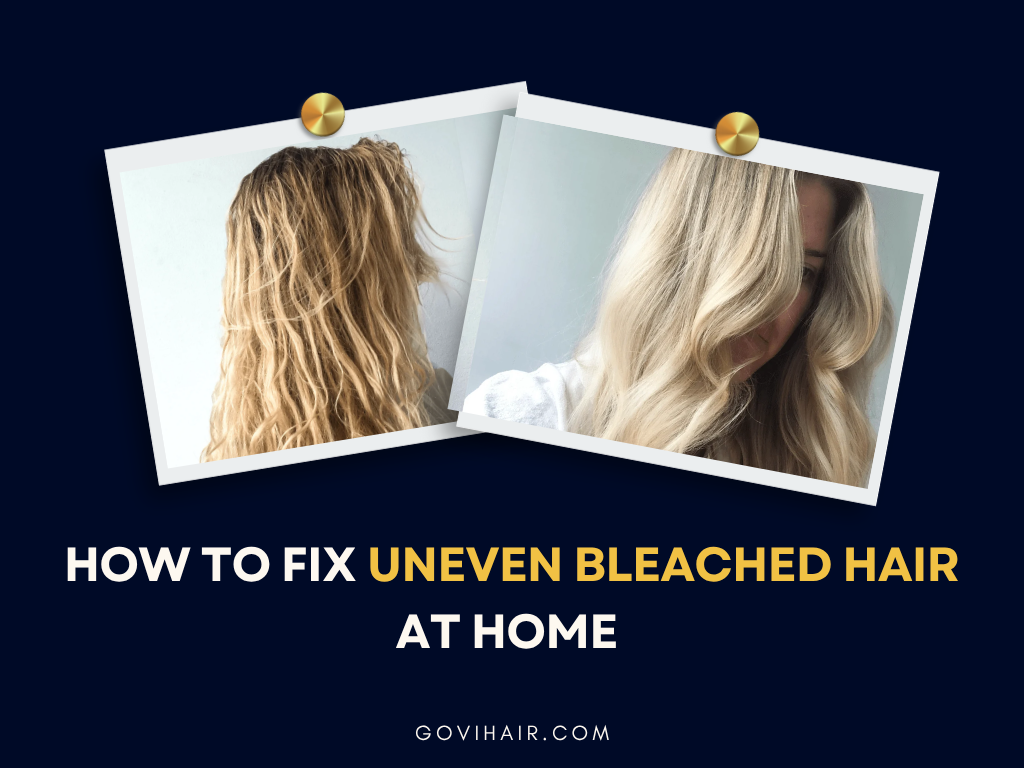
Tried how to fix uneven bleached hair and ended up with orange streaks, patchy spots, or patchy light and dark areas? You’re not alone, and you don’t need a pricey salon visit to fix it. Uneven bleached hair can feel like a disaster, but with the right techniques, you can restore balance, tone, and confidence right at home. In this expert-backed guide, you’ll discover the best ways to fix uneven bleached hair, from strategic toning and the spot bleaching technique to smart damage control and seamless coverage with premium GoviHair hair extensions.
Ready to take back control of your hair? Let’s fix it.
Why Did You End Up with Uneven Bleached Hair?
So, you tried to go blonde, but instead of a smooth, even tone, you’re left with uneven bleached hair full of streaks, patches, and unwanted brass. Don’t worry, it’s a common issue, and it usually comes down to one or more of these sneaky culprits:
Uneven Application
This is the most common cause. If bleach isn’t applied evenly from roots to ends, or if some areas are missed entirely, your hair will lift at different levels. Sometimes people focus more on the top layers or the front, leaving the back or underneath less processed. Applying bleach in too-large sections can also lead to patchiness since the product doesn’t saturate the strands properly.
Inconsistent Processing Times
Timing is everything when it comes to bleach. Leaving it on one section for 45 minutes and another for only 20 can result in dramatic differences in tone and brightness. This usually happens when you’re working alone or rushing through the process. By the time you finish applying the bleach to one side, the other side may already be over-processed.
Different Hair Porosity
Your hair’s porosity, or how well it absorbs and holds moisture (and chemicals), plays a big role in how it reacts to bleach. Hair that’s previously colored, chemically treated, or heat-damaged tends to be more porous. That means it might lighten faster, or grab the bleach unevenly, compared to healthy, untreated hair. The result? Uneven tones, brassy spots, or blotchy color.

Wrong Developer Strength or Poor Mixing
Using the wrong developer volume (like 10 vs. 30 vol) can seriously affect your results. A higher-volume developer lifts more but can be too harsh for fragile hair. Mixing different strengths or not blending your bleach mixture thoroughly can also cause unpredictable lifting, leading to unevenly bleached hair.
Skipping Sectioning or Rushing Technique
Bleaching isn’t a race. If you skip clean, organized sectioning or try to bleach your whole head in under 10 minutes, you’re setting yourself up for patchy results. Thin, even sections are essential for thorough application. Rushing or being imprecise with your brush strokes can lead to missed spots and overlapping, which causes both under- and over-processing.
Understanding what caused your uneven bleached hair is the first step in fixing it the right way. Once you know whether it’s an application error, a porosity problem, or a timing issue, you can choose the best path forward, whether that’s toning, re-bleaching, dyeing darker, or blending it out with flawless hair extensions.
When Is the Right Time to Fix Uneven Bleached Hair?
We get it, staring at uneven bleached hair can be stressful, and your first instinct might be to fix it right now. But hold up. Bleaching is one of the most intense chemical processes you can put your hair through, and rushing into another round can cause more harm than good.
Before grabbing the bleach bowl or dye bottle again, here’s what you need to consider:
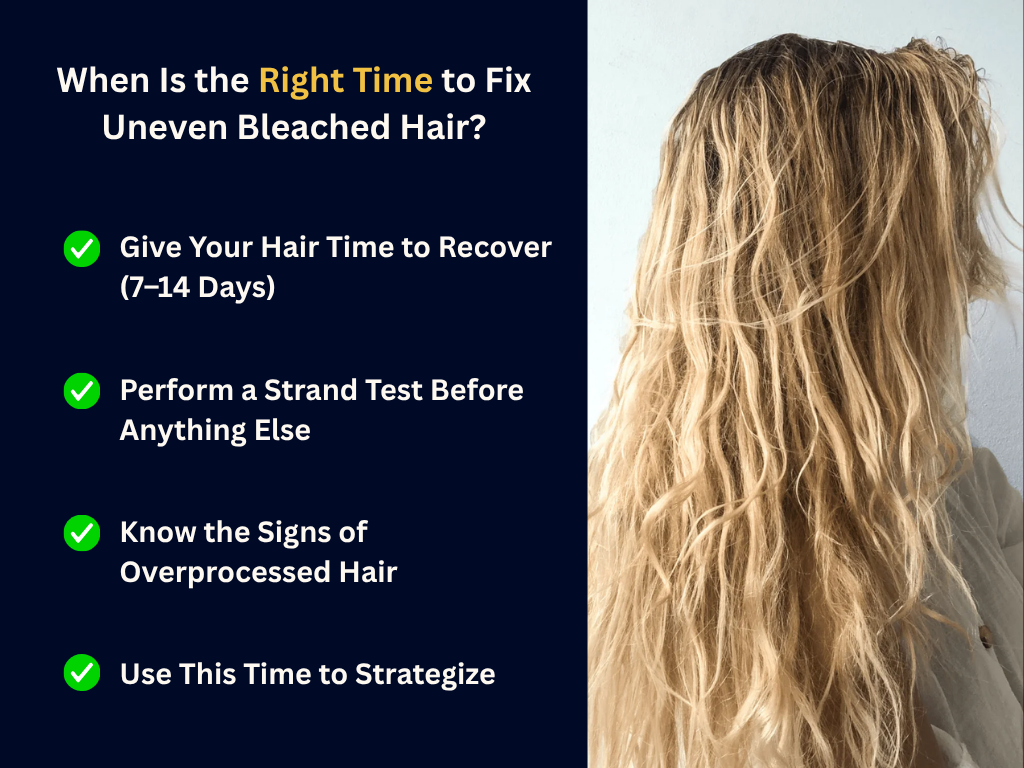
Give Your Hair Time to Recover (7–14 Days)
After bleaching, your hair cuticle is left open, dry, and vulnerable. If you jump into re-bleaching or toning too soon, you risk major breakage, mushy texture, or extreme dryness. The general rule of thumb:
Wait at least 7–14 days after your initial bleaching session before doing any corrective treatment. The more damaged your hair feels, the closer you should stick to the longer end of that range.
Perform a Strand Test Before Anything Else
This is a crucial step people often skip. Take a small section of hair and test how it reacts to toner, dye, or bleach. This helps you:
- See how your hair will respond to more chemicals.
- Avoid damaging your entire head if your hair isn’t ready.
- Get a better idea of what your final color might look like.
If the strand looks good and doesn’t feel overly dry or stretchy after processing, you’re probably in the clear to move forward.
Know the Signs of Overprocessed Hair
If your hair feels:
- Stretchy like elastic when wet
- Mushy or gummy in texture
- Brittle or snaps easily when brushed
Then it’s a red flag. That means your hair is already compromised. In this case, stop all coloring or bleaching and switch to recovery mode. Focus on:
- Deep conditioning masks (moisture-rich formulas)
- Weekly protein treatments to strengthen hair strands
- Avoiding heat styling during recovery
Once your hair feels stronger and healthier, you can reassess how to fix uneven bleached hair safely, without risking further damage.
Use This Time to Strategize
While you’re giving your hair time to rest, take a closer look at what really needs fixing. Is it just a bit brassy that could be toned down? Or are there major patches that need color balancing or blending? Not every fix requires bleach, some can be resolved with toning, semi-permanent color, or even blending with hair extensions for a seamless look without the damage.
You might be asking, will toner fix uneven bleached hair? It can help tone down brassiness and even out mild patchiness, but it’s not always the complete fix for severe unevenness.
Pro Tip: Use sulfate-free, color-safe shampoo and hydrating leave-in products during this waiting period. It’ll help maintain your hair’s moisture and prep it for your next steps.
How to Fix Uneven Bleached Hair After Bleaching
If you’re struggling with uneven hair color correction, there are options like dyeing darker or using extensions to help camouflage or correct the unevenness.
Dye the Hair to a Darker, Even Shade
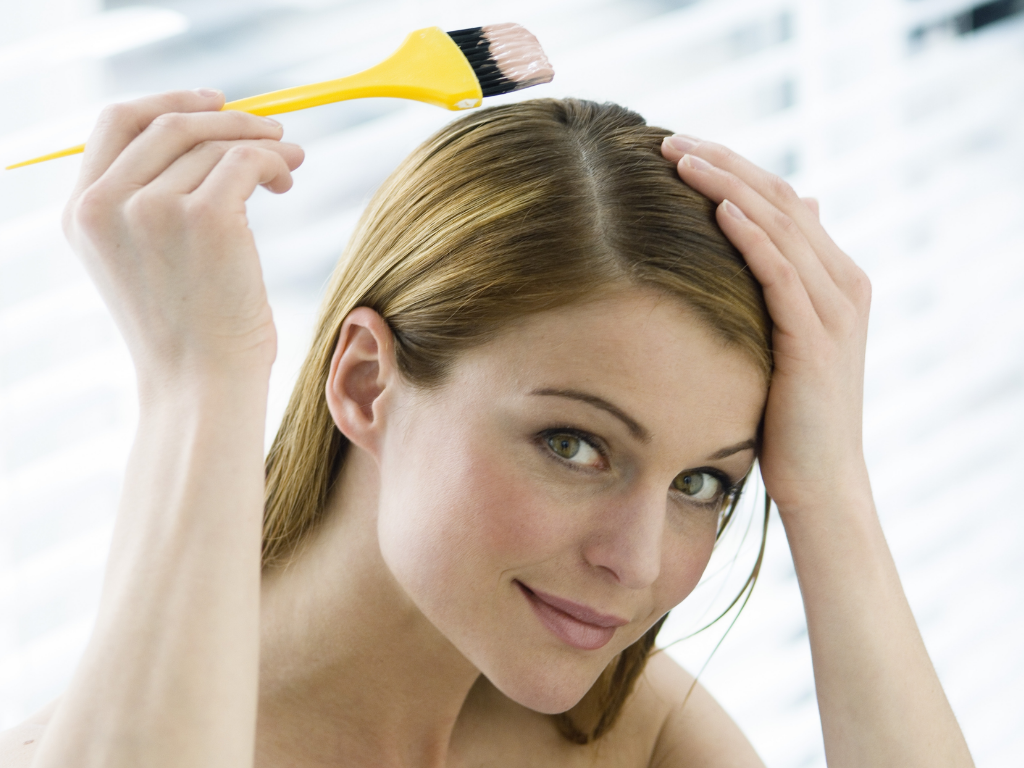
If you’re wondering how to fix uneven bleached hair without bleaching again, dyeing it a shade or two darker is one of the simplest and safest solutions to tone and neutralize brassiness while restoring overall harmony.
Why This Works
Dyeing your hair a shade or two darker helps:
- Even out multiple tones from patchy bleaching
- Neutralize brassy or orange undertones
- Create a smoother, more consistent finish without additional damage
By adding pigment back into the hair, you’re essentially covering up the uneven lifting, almost like color-correcting with makeup.
Pros of Dyeing It Darker
- Quick Color Correction: Dyeing your hair darker can immediately even out patchy or brassy tones caused by uneven bleaching.
- Less Damaging Than Re-Bleaching: Applying a darker dye is gentler on hair, especially when using ammonia-free or semi-permanent formulas.
- Neutralizes Brassiness: Ash or cool-toned dyes effectively tone down unwanted orange or yellow hues.
- Beginner-Friendly: Dark dye is easier to apply at home than bleach or toner, making it a practical option for non-professionals.
- Flexible Options: Semi-permanent dye offers a temporary fix; permanent dye delivers longer-lasting coverage.
Cons of Dyeing It Darker
- Limits Future Lightening: Permanent dye can deposit pigments that are harder to lift later, making future bleaching more challenging.
- Doesn’t Fix Uneven Bleach: While it masks the problem, it doesn’t correct the uneven lightening underneath.
- Flat Color Result: One solid dark tone may eliminate natural dimension or highlights, leaving hair looking dull.
- Requires Ongoing Maintenance: Even darker shades can fade or grow out unevenly, requiring periodic touch-ups or toning.
Pro-tip: Before applying any color:
- Do a deep conditioning treatment 24–48 hours before coloring to hydrate your strands.
- Opt for ammonia-free or nourishing dye formulas to reduce stress on already-processed hair.
- Always perform a strand test to preview how the dye will take and ensure even results.
Re-Bleach All of Your Hair
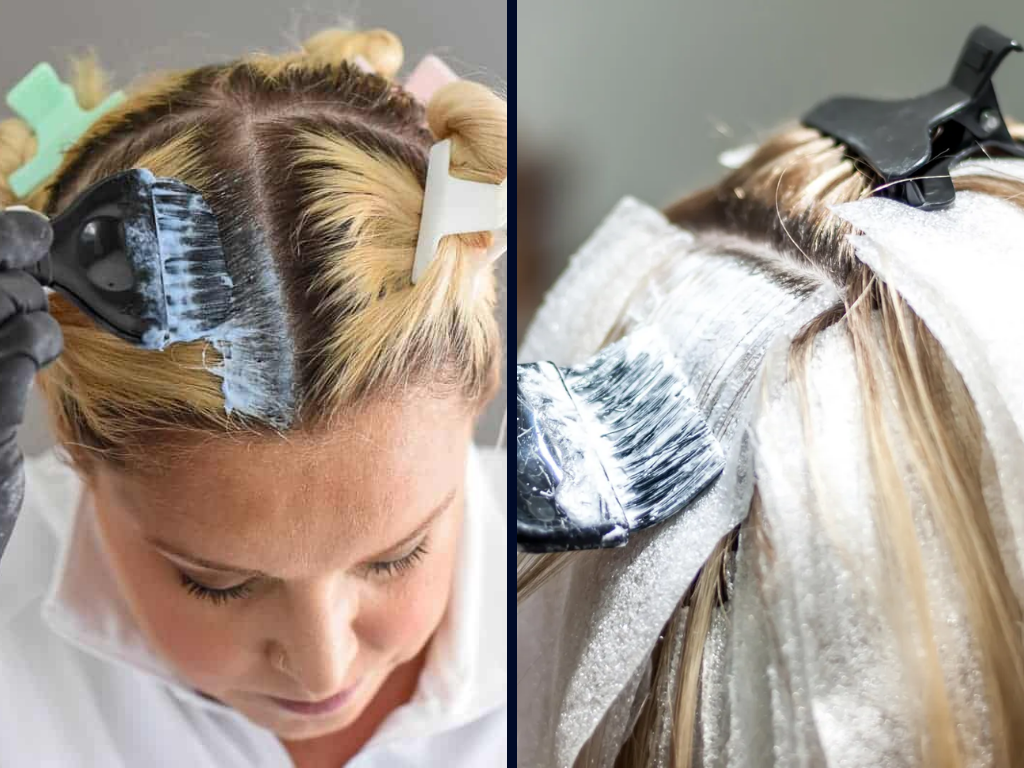
If your uneven bleached hair has large, dark patches or an extremely blotchy result overall, a full re-bleach might be the only way to achieve a more consistent tone. However, it’s the most aggressive option and comes with higher risks.
Why This Works
Starting over with a full re-bleach allows you to:
- Even out patchy color from root to tip
- Correct major lift inconsistencies caused by poor application or uneven timing
- Create a clean, uniform base for toning or coloring
When done properly, it can reset your hair color, but at a cost.
Pros of Re-Bleaching All Hair
- Complete Color Reset: Gives you the chance to fix widespread uneven bleached hair with a clean slate.
- Even Application Control: With careful sectioning and timing, you can lift all strands to the same level.
- Prepares Hair for Future Toning or Color: A consistent base improves results when applying toner or dye afterward. When toning uneven bleached hair, choosing the right toner color is crucial to avoid worsening the problem.
Cons of Re-Bleaching All Hair
- High Risk of Damage: Bleaching already-processed hair can lead to extreme dryness, breakage, or hair loss.
- Requires Precision and Skill: Uneven application or poor timing during re-bleaching can make the problem worse.
- Lengthy Recovery Time: Hair may need weeks or months of intensive care to recover after a second bleach.
- Not Ideal for Fragile or Over-Processed Hair: If your strands are already compromised, this method can cause irreversible damage.
Pro Tip: Always deep condition and perform a strand test before committing to a full re-bleach, even if you’re desperate to fix the color. Patience and caution are key.
>> Explore more: How to Coloring 613 Wigs To Stunning Blonde Wigs
Partially Re-Bleach Uneven or Darker Sections
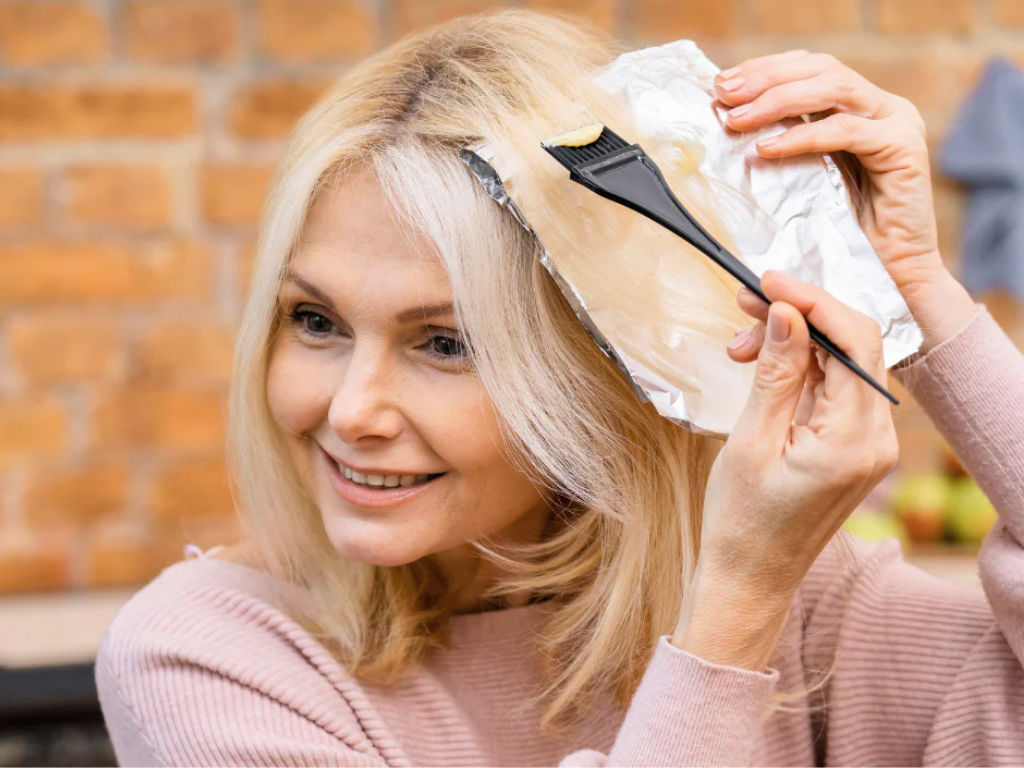
If your uneven bleached hair only has a few dark patches or areas that didn’t lift properly, doing a full bleach again isn’t always necessary. A targeted re-bleach can correct specific problem zones while minimizing overall damage.
Why This Works
Partial re-bleaching focuses only on the areas that remain too dark or brassy, allowing you to:
- Lighten missed or under-processed sections without exposing your whole head to more bleach
- Minimize damage by avoiding already-lightened areas
- Blend your tones more evenly for a consistent blonde or lighter look
Pros of Partially Re-Bleaching
- Targeted Correction: Helps fix uneven bleached hair only where it’s needed, reducing unnecessary chemical exposure.
- Less Damaging Than Full Re-Bleach: Because you’re only treating select strands, the rest of your hair stays protected.
- More Controlled Results: Smaller sections are easier to monitor and adjust, leading to more even lift and tone.
- Faster Recovery: With less overall damage, your hair rebounds more quickly after the process.
Cons of Partially Re-Bleaching
- Risk of Overlapping Bleach: Reapplying bleach to areas that are already light can cause breakage or banding.
- Uneven Processing Times: Darker areas may lift at different speeds.
- Not Ideal for Severely Patchy Hair: If most of your hair is uneven, this method may not be enough.
Pro-Tip: How to Do It Safely at Home
- Wait at least 10–14 days after your last bleach session to avoid compounding damage
- Use a low-volume developer (10 or 20) to gently lift without frying your hair
- Work in small, clean sections, and apply bleach only to darker areas
- Avoid overlapping light areas, protect them with conditioner or foil
- Rinse as soon as desired lightness is achieved, then apply toner if needed for uniform tone
- Always do a strand test first and follow with a protein or moisture treatment
Done right, partial re-bleaching can bring balance back to your color without sacrificing the integrity of your hair.
Use Hair Extensions to Cover and Blend
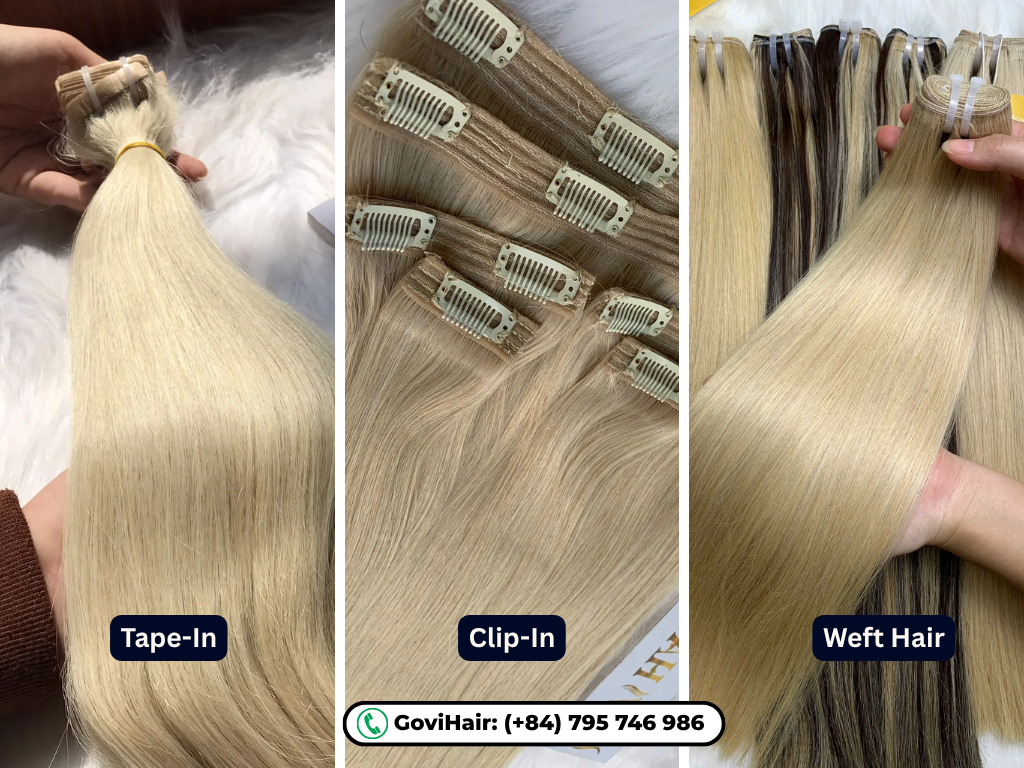
If you’re still unsure how to fix uneven bleached hair without more chemicals, hair extensions might be your best bet.
Why This Works
Hair extensions can:
- Instantly add length, volume, and color
- Conceal blotchy or uneven bleach spots
- Create the illusion of a more consistent hair tone
They’re an effective visual fix when corrective coloring isn’t possible.
Pros of Using Hair Extensions
- Instant Transformation: Extensions provide an immediate fix by hiding uneven bleached hair and adding overall polish.
- No Chemical Damage: This method avoids further stress on already-processed strands.
- Customizable Options: Available in a wide range of colors, lengths, and textures to suit your needs.
- Low Commitment: Clip-ins offer a temporary solution, while tape-ins or sew-ins can last longer without long-term consequences.
- Style Flexibility: Allows you to experiment with different looks while giving your natural hair time to recover.
Cons of Using Hair Extensions
- Color Matching Challenges: Choosing the wrong extension shade can highlight the unevenness instead of concealing it.
- May Not Work for Very Short Hair: If your hair is too short or extremely uneven, blending extensions can be tricky.
- Requires Proper Maintenance: Extensions need regular care to avoid tangling, slipping, or buildup.
Note: GoviHair’s 100% human hair extensions are specifically designed to blend seamlessly with lightened or highlighted hair — ideal for covering up any bleach mishaps while keeping your hair healthy.
Use a Color-Depositing Conditioner or Mask
If your hair lifted unevenly but isn’t severely damaged, a color-depositing conditioner can help blend tones gradually over time.
Why This Works
Color-depositing masks or conditioners contain pigments that temporarily tint your hair. They help:
- Even out brassy or patchy blonde tones
- Add depth or richness to washed-out areas
- Minimize the contrast between uneven sections without further bleaching
They’re gentler than toners or dyes and ideal for weekly use.
Pros of Color-Depositing Conditioners
- Gentle Color Adjustments: These products are non-damaging and suitable for compromised hair.
- Buildable Results: You can deepen or balance tones gradually over multiple uses.
- Hydration Boost: Most formulas double as deep conditioners, improving texture and shine.
- Low Commitment: The color washes out in a few shampoos, giving you flexibility.
- Easy to Maintain at Home: No special tools or skills required.
Cons of Color-Depositing Conditioners
- Temporary Effects: Results fade quickly and require frequent reapplication.
- Limited Tone Correction: May not fully fix severely uneven bleached hair or large contrast areas.
- Can Stain Hair or Hands: Some highly pigmented products may stain porous strands or skin.
- May Build Up Unevenly: Overuse in already-light areas can cause dullness or color imbalance.
> Read more: How to Bleach Your Hair at Home? A Simple Step-by-Step Guide
FAQs
1. Why does hair turn uneven after bleaching?
Uneven bleached hair usually happens because different sections of hair absorb bleach at different speeds. This can be caused by previous hair color, uneven product application, heat exposure, or varying hair porosity.
2. Can uneven bleached hair be fixed at home?
Yes, mild to moderate uneven bleaching can often be fixed at home using toners, purple or blue shampoos, targeted re-bleaching, or color-correcting treatments. Severe damage may still require a professional.
3. How do I fix patchy bleach spots at home?
For small patchy areas, apply bleach only to the darker sections, using a lower-volume developer (10–20 volume). Avoid overlapping already-lightened hair to prevent breakage.
4. How can I fix orange or brassy sections after bleaching?
Orange tones can be neutralized with blue-based toner or blue shampoo, while yellow tones respond best to purple toner or purple shampoo. Choose the correct toner based on the underlying pigment.
5. Can toner fix uneven bleached hair?
Yes. Toner is one of the easiest and safest ways to blend uneven blonde shades. While it won’t lighten dark areas, it helps balance tone differences and reduce harsh contrast.
Conclusion: How to Fix Uneven Bleached Hair – Patchy Today, Perfect Tomorrow
Learning how to fix uneven bleached hair at home is absolutely doable, it just takes a smart approach, patience, and the right tools. Here’s a quick recap of your best options:
- Dye it darker: A fast, effective way to even out patchy tones and bring back richness and shine.
- Partial or full re-bleach: Higher risk, but sometimes the only fix for major unevenness.
- Hair extensions: The safest, most instant solution, perfect when your hair needs a break from bleach.
No matter which path you take, remember to treat your hair gently. Stick to sulfate-free shampoos, deep condition weekly, and avoid heat styling as much as possible during recovery. And when you’re ready for flawless, head-turning results, without the damage, GoviHair premium human hair extensions and wigs are here to help you reclaim your confidence with ease.
Get in touch:
- WhatsApp: (+84)795 746 986
- Email: [email protected]
- Instagram: govihair_vietnamhair_factory/
- Tik Tok: govihairvietnam_official
- Website: https://govihair.com/


 Ms. Rosie