

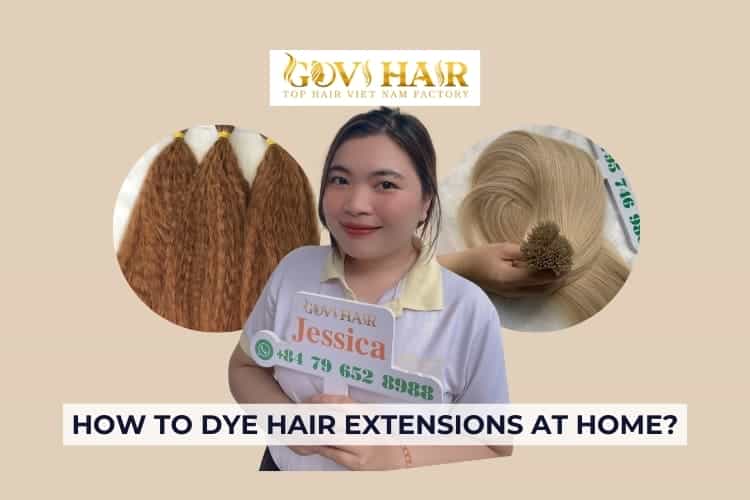
Knowing the right process of dying hair extensions will help your extension color be more durable. In order to know how to dye hair extensions at home, please refer to this article. Govihair will guide you through some steps in dying hair extensions and some tips to maintain color.
Which Hair Extensions Are Best For Dyeing?
When it comes to dyeing hair extensions, those made from human hair are generally the best option. Human hair extensions allow for greater versatility in terms of coloring compared to synthetic extensions. Among human hair extensions, Remy and Virgin hair are particularly well-suited for dyeing. Here’s why:
Remy Hair
Remy hair is known for its high quality, as the cuticles are preserved and aligned in the same direction. This ensures a more natural look and makes the hair more receptive to color treatments. Remy hair extensions can be dyed and styled just like natural hair, providing a seamless blend with your own hair.

Virgin Hair
Virgin hair is unprocessed hair that has never been chemically treated, dyed, or permed. Because of its pure and untreated nature, virgin hair is an excellent choice for dyeing. It offers a clean slate, allowing you to achieve a wide range of colors without interference from previous treatments.
>> Read More: What’s The Difference Between Raw Hair vs Virgin Hair?
Human Hair Blends
Some extensions may be a blend of human and synthetic fibers. While these are generally less expensive, they may not respond as well to dyeing compared to pure human hair extensions. If dyeing is a priority, it’s advisable to choose extensions made from 100% human hair.
Steps for dyeing a hair extension
Dyeing hair extensions involves a careful process to achieve the desired color while preserving the quality of the extensions. Here are general steps for dyeing human hair extensions:
Preparation Before Dyeing
Choose the right hair: Always use 100% human hair extensions. Synthetic hair cannot be dyed with regular hair dye.
Tools you’ll need:
Hair dye (preferably ammonia-free).
Gloves, comb, mixing bowl.
Old towel or newspaper to cover the surface.
Wash the hair extensions with mild shampoo. Do not use conditioner before dyeing.
Detangle the Extensions
Use a wide-tooth comb to gently detangle the hair extensions. Start from the end and work your way up to minimize breakage.
Mix the Dye
Follow the instructions on the hair dye packaging to mix the dye and developer (if required) in a mixing bowl. Ensure the mixture is well-blended.
Section the Hair
Divide the hair extensions into manageable sections using hair clips. This helps ensure thorough and even application of the dye.
Apply the Dye
Using a dye brush, apply the mixture evenly to each section of the hair extensions. Start from the top and work your way down to the ends. Comb through the hair with a wide-tooth comb to distribute the dye.
Wrap in Foil (Optional)
If you want to intensify the color or if the dye requires it, you can wrap each dyed section in aluminum foil. This helps to retain heat, aiding in the dyeing process.
Allow Processing Time
Follow the recommended processing time provided by the dye manufacturer. This typically ranges from 20 to 45 minutes, depending on the brand and desired results.
Rinse the Extensions
Rinse the extensions thoroughly with lukewarm water until the water runs clear. Do not use hot water, as it can damage the hair.
Shampoo and Condition
Rinse the extensions thoroughly with cool water until the water runs clear. Do not use hot water, as it can damage the hair.
Air Dry
Allow the extensions to air dry. Avoid using excessive heat from blow dryers or styling tools immediately after dyeing to prevent damage.

How to pick your hair extension color
Choosing the right hair extension color is crucial to achieving a seamless and natural look. Here are steps to help you pick the right color for your hair extensions:
Match to Your Current Hair Color
The most straightforward approach is to match the hair extensions to your current hair color. Choose a shade that closely resembles the color of your natural hair for a cohesive and blended look.
Consider Your Ends
If your natural hair has variations in color, especially towards the ends, consider matching the extensions to the color of the ends rather than the roots for a more natural appearance.
Select a Highlight or Lowlight Shade
For added dimension, you can choose hair extensions with highlights or lowlights that complement your natural hair color. This can create a more textured and dynamic look.
Consult Color Charts
Many hair extension brands provide color charts that display the available shades. Compare these charts to your natural hair color to find the closest match.

Does hair extension dye color last long?
The longevity of hair extension dye color depends on several factors, including the type of dye used, the quality of the hair extensions, how well the dye adhered to the hair, and the care and maintenance routine followed. Here are some considerations:
Quality of Dye
The type and quality of the dye used play a significant role in how long the color lasts. Professional, salon-grade dyes often have better-staying power compared to lower-quality or temporary dyes.
Quality of Hair Extensions
High-quality human hair extensions, especially those labeled as Remy or Virgin hair, tend to hold color better than lower-quality extensions. The condition of the hair cuticle and its ability to retain color impacts the hair dye for extensions longevity.
Application Technique
Proper application of the dye is crucial. If the dye is evenly applied and thoroughly saturates the hair, the color is more likely to last longer. Inconsistent or uneven application can result in patchy color and quicker fading.
Hair Porosity
Porosity refers to the hair’s ability to absorb and retain moisture and color. Highly porous hair may absorb dye more readily but may also release it faster. If your natural hair or extensions are highly porous, the color might fade more quickly.

Things to Avoid When Dyeing Hair Extensions
Dyeing hair extensions at home can transform your look, but missteps can damage the hair or yield poor results. When mastering how to dye hair extensions, avoid these critical mistakes to ensure vibrant, healthy extensions:
- Using Box Dyes with Harsh Chemicals: Avoid box dyes containing excessive ammonia or metallic salts, as these can damage the hair’s cuticle and lead to brittle, uneven results. Opt for professional-grade, gentle dyes instead.
- Bleaching Too Frequently: Repeated bleaching weakens the hair structure, causing dryness, breakage, and damage. Limit bleaching sessions and condition thoroughly to maintain hair health.
- Choosing Drastically Different Colors: Avoid selecting a dye color that’s too far from the extensions’ original shade, as it may require excessive processing, leading to damage or unnatural results. Aim for gradual color changes.
- Handling Extensions Roughly: Aggressive tugging, pulling, or rubbing during dyeing can cause tangling and damage. Handle extensions gently to maintain color on hair extensions..
- Overusing Dye: Applying too much dye can oversaturate the hair, resulting in uneven color absorption and potential damage. Use just enough for full, even coverage.
- Mixing Incompatible Products: Avoid combining hair dye with products not designed to work together, as this can disrupt chemical reactions and produce undesirable results. Stick to compatible dye and developer pairs.
Tips to maintain color after dying
Maintaining the color of your hair, especially after dyeing, requires a consistent and thoughtful approach to care. Here are some tips to help you preserve and extend the life of your hair color:
Use Sulfate-Free Shampoo
Choose a sulfate-free shampoo specifically formulated for color-treated hair. Sulfates can strip away color and natural oils, leading to faster fading.
Wash with Cold Water
Wash your hair with cool or lukewarm water instead of hot water. Hot water can open the hair cuticle, allowing color molecules to escape more easily.
Limit Washing Frequency
Avoid washing your hair too frequently. Washing less often helps retain the natural oils that protect and nourish your hair, including the color-treated portions.
Deep Condition Regularly
Use a deep conditioning treatment regularly to keep your hair hydrated and healthy. Well-moisturized hair is less prone to color fading.
Protect Your Hair from the Sun
UV rays from the sun can contribute to color fading. Wear hats or use UV-protective products when exposed to sunlight for extended periods.
How to Dye Hair Extensions – Virgin Hair vs Raw Hair at Govihair
At Govihair, we provide two main types of human hair extensions: Virgin hair and Raw hair. Each has unique characteristics that affect how well it can be dyed. In this article, we’ll show you the differences and give you a step-by-step guide on how to dye hair extensions.
Dye Virgin Hair Extensions
Characteristics of Virgin Hair
- Virgin hair is collected from multiple donors.
- All cuticles run in the same direction, making the hair smooth and easy to style.
- However, Virgin hair may have undergone basic processing, so its ability to hold color and withstand bleaching is not as high as Raw hair.
How to Dye Virgin Hair
- Best suited for dark or medium tones such as brown, chestnut, dark green-black, or burgundy.
- Avoid strong bleaching, as it may damage the hair and prevent the color from turning out as expected.
- Dyeing should be limited to 1–2 times to keep the hair soft and long-lasting.
- After dyeing, always use conditioner or a deep mask to restore moisture.
Virgin hair is especially popular in the African market, where customers often prefer darker, richer shades.
Dye Raw Hair Extensions
Characteristics of Raw Hair
- Raw hair is 100% virgin, completely unprocessed, and chemical-free
- Collected from a single donor, ensuring consistency, strength, and intact cuticles.
- It is considered the highest-quality hair at Govihair.
How to Dye Raw Hair
- Can be dyed into any shade, including light blonde (#613), ash blonde, grey, and platinum.
- Excellent bleaching capability while keeping the strands smooth and shiny.
- After dyeing, the hair still remains strong, soft, and less prone to breakage.
- Perfect for salons that want to customize trendy colors for their clients.
Raw hair is the top choice for customers from Israel, Europe, and the U.S., especially those who want highlights or lighter shades.

Whether you choose Virgin hair or Raw hair, both can be dyed beautifully if you follow the right steps. Virgin hair is perfect for darker tones, while Raw hair allows endless creativity with lighter and trendy colors.
At Govihair, we guarantee the highest quality Virgin and Raw hair extensions, helping our customers worldwide create their dream hairstyles.
Chat with us:
-
- WhatsApp: (+84) 795 746 986
- Email: [email protected]
- Instagram: govihair_vietnamhair_factory
- TikTok: govihairvietnam_official
In conclusion, Govihair is a fantastic resource that offers you a wealth of helpful information if you’re looking for specific information about how to dye hair extensions . Remember to visit our website for additional incredible information about artificial hair that you can save for later.


 Ms. Rosie