

Choosing the right hair extensions starts with understanding the curly hair length chart, especially because curly textures can appear shorter due to shrinkage. In this guide, GoviHair breaks down exactly how curl patterns affect visible length, how to measure your curls correctly, and how to select the perfect extension length for a seamless, natural look. Whether you’re aiming for added volume, dramatic length, or a balanced everyday style, this ultimate guide will help you make confident, informed choices for your next set of curly extensions.
What Is a Curly Hair Length Chart?
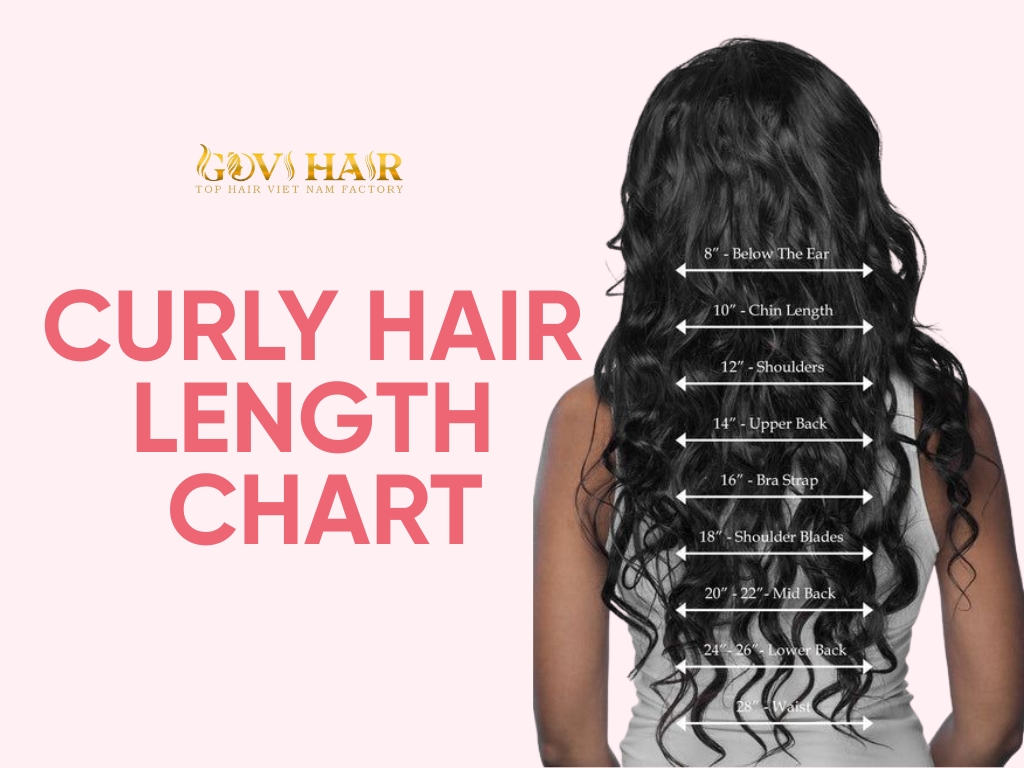
A curly hair length chart is an essential visual and measurement tool specifically designed for individuals with textured hair, particularly those looking to purchase hair extensions, wigs, or simply track their natural hair growth.
Because curls shrink significantly, sometimes up to 70% depending on texture, traditional straight-hair charts don’t apply. A hair length chart curly version is designed specifically to measure textured hair accurately and help you choose the right hair extensions, wigs, or styling goals.
The chart typically compares stretched length to visible length for different curl types. For example, a curl that measures 18 inches when stretched may look like only 12–14 inches when worn naturally. That’s why a kinky curly hair length chart shows much shorter visible lengths compared to looser curls, since tighter textures experience more shrinkage.
Similarly, an afro kinky curly hair length chart highlights even more shrinkage, especially for 4B-4C textures where curls form tiny, compact coils. These charts help you understand exactly how long your hair will look once installed.
How to Measure Curly Hair Length Correctly?
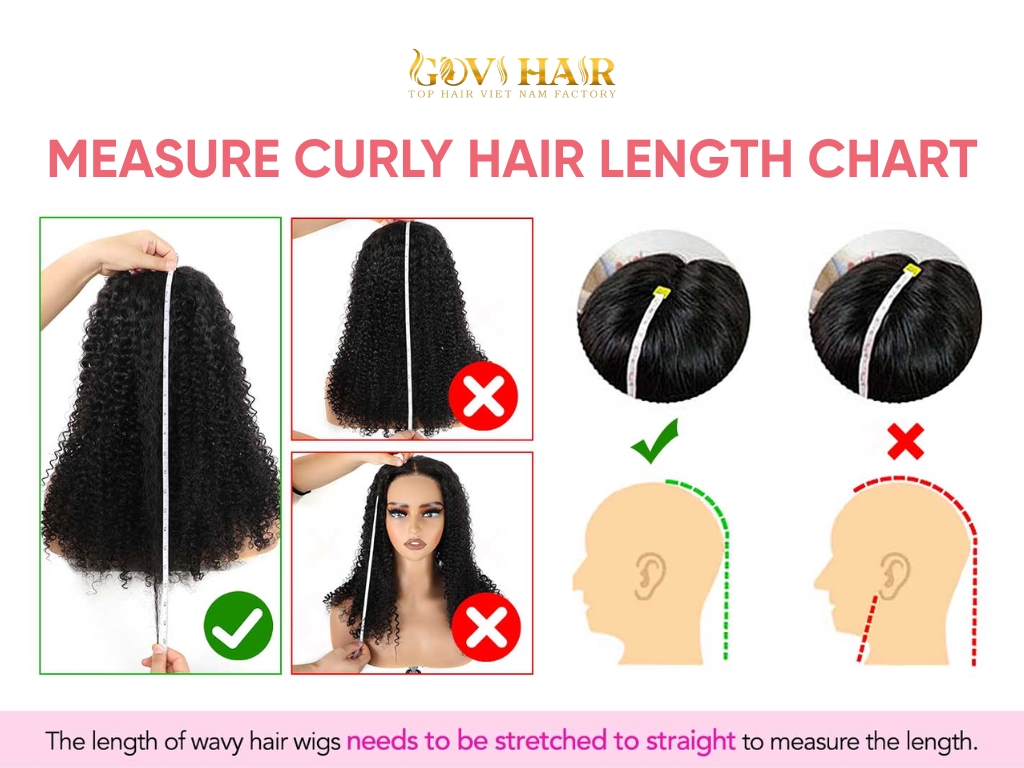
Here’s the exact, foolproof way to measure curly hair length correctly in 2025—no more buying 24-inch extensions that end up at your shoulders. This method works for your natural hair and is the gold standard when using any hair length chart curly, kinky curly hair length chart, afro kinky curly hair length chart, or deep curly hair length chart.
- Accounting for Shrinkage: The core purpose of a hair length chart curly is to show the significant disparity between the stretched length and the visible resting length of the hair:
- Stretched Length (True Length): All hair, including curly hair, is traditionally measured when pulled straight from the root to the tip. This measurement is the industry standard for selling hair extensions.
- Resting Length (Visible Length): This is the length of the hair when it is dry and in its natural, coiled state. Depending on the curl pattern—from loose waves to kinky curly hair length chart textures—the hair can shrink anywhere from 30% to over 70% of its true length. A curly hair chart shows both measurements side-by-side.
- Categorization by Curl Pattern: Curly hair charts are often divided into sections based on the widely accepted hair typing system (Type 2, 3, and 4), as shrinkage varies dramatically by type:
- Type 3 (Curly): This includes loose curls (3A) and tight corkscrews (3B/3C). Hair types that fall into the deep curly hair length chart category generally experience moderate to high shrinkage (around 30%–50%).
- Type 4 (Coily/Kinky): This includes tight coils (4A) and Z-pattern kinks (4B/4C). Hair types featured in an afro kinky curly hair length chart experience the highest degree of shrinkage, sometimes up to 75% of the hair’s actual length. For example, hair measured at 20 inches stretched might only hang at 8–10 inches when dry.
- Practical Applications: The chart serves several key practical functions, especially when buying extensions:
- Accurate Extension Selection: If a client with 4C hair wants their extensions to fall at the visible length of their chest (say, 14 inches), they must consult the chart and likely purchase an extension length of 24–28 inches to account for the high shrinkage rate. The chart prevents purchasing extensions that end up being too short once they dry and coil up.
- Styling Communication: It provides a universal visual language between clients and stylists, ensuring everyone understands the actual required length for a cut or style.
- Tracking Growth: For natural hair enthusiasts, the chart is used to track growth accurately by showing how much the hair grows in its stretched state over time.
Curly Hair Length Chart
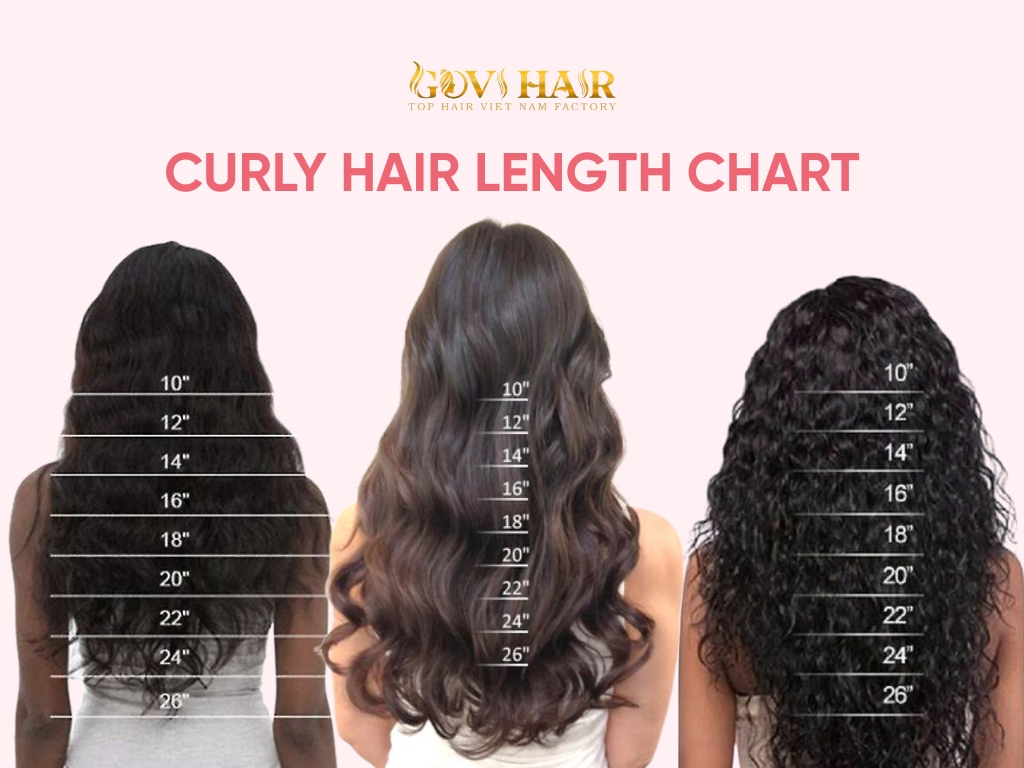
When dealing with textured hair, the measurements on a standard ruler are deceiving due to shrinkage. This curly hair length chart provides a general framework, but remember that the true visible length depends heavily on the specific curl pattern (Type 3 or Type 4, such as deep curly hair length chart textures or those on an afro kinky curly hair length chart).
The inches listed below refer to the hair’s stretched length, which is the length you must purchase in extensions.
Short Curly Hair (6–10 inches)
Hair in this range, when measured straight, typically falls near the ears or chin when fully dry and coiled. This length is common for chic, short cuts or as the starting point for kinky curly hair length chart styles, which will appear very close to the scalp.
Medium Curly Hair (12–16 inches)
Extensions or natural hair in this range will usually rest just above or at the shoulders when dry. This is a versatile length that provides good volume while still being highly manageable. For tighter curl patterns, 16 inches stretched may only visibly reach the neck.
Long Curly Hair (18–24 inches)
Hair measured at this length provides significant volume and will fall between the collarbone and the bra strap when dry, depending on the tightness of the coil. When shopping for extensions, particularly hair length chart curly products, 24 inches is the minimum required for longer looks, especially in highly coiled Type 4 textures.
Extra Long Curly Hair (26 inches and beyond)
This range is reserved for dramatic, voluminous length, with the hair falling below the bra strap or to the waist when coiled. This requires purchasing extensions that are 30 inches or more for the tightest textures on an afro kinky curly hair length chart to achieve a truly long look once dry.
Why Curly Hair Looks Shorter
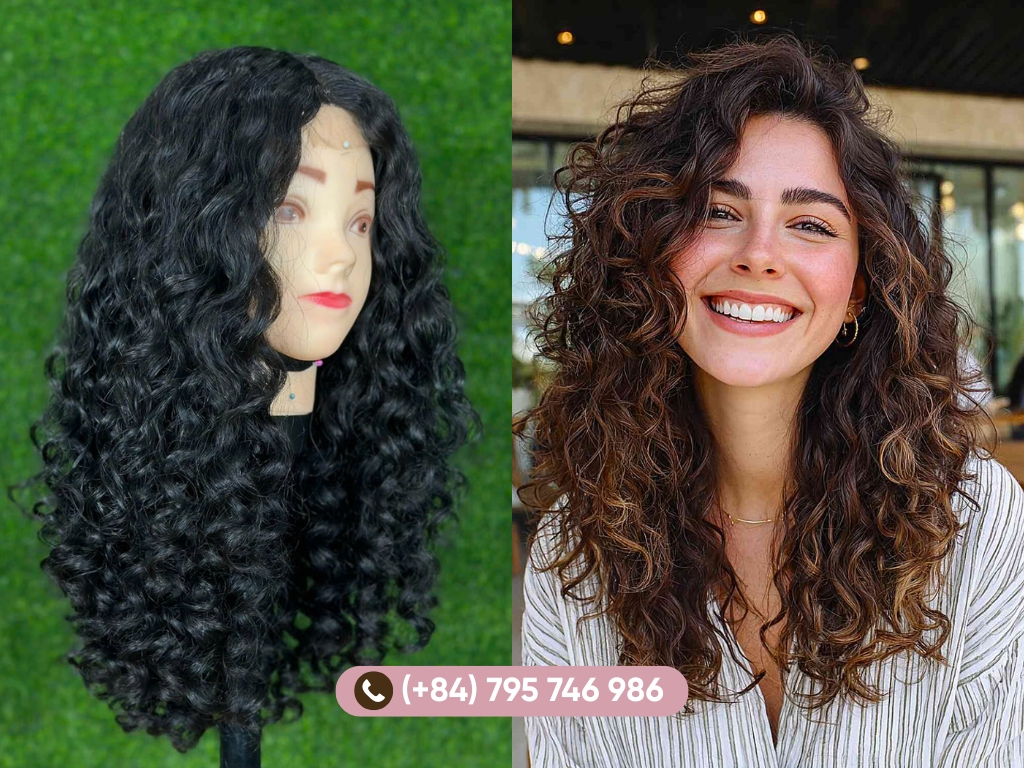
Curly hair almost always looks shorter than its actual length because of a natural phenomenon called shrinkage. This happens when curls coil, spring up, and fold into themselves, creating the appearance of shorter hair even though the true stretched length is much longer.
Curly strands grow in a spiral or zig-zag pattern rather than straight down, so the distance from root to tip becomes visually compact. The tighter the curl pattern, the more dramatic the shrinkage. That’s why people with loose waves may see only a small length difference, while those with coily, kinky, or afro-textured hair can experience shrinkage of 50–70% or more.
Moisture also plays a role. Curly hair absorbs humidity easily, which causes curls to contract even further, making them seem shorter than they actually are. This is why your hair may look longer when blown out or stretched but much shorter when air-dried.
This natural shrinkage is exactly why curly hair often looks different on the head compared to how it measures on a ruler, and why a dedicated curly hair length chart is so important when choosing extensions or tracking growth.
The Different Types of Curly Hair
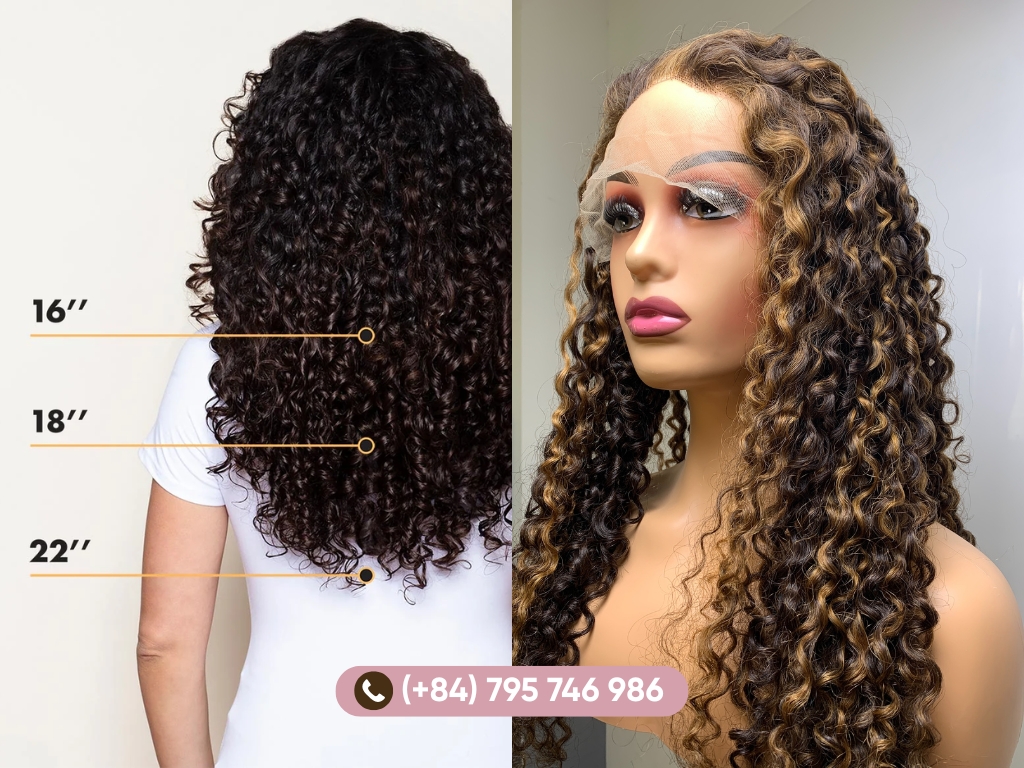
The texture and structure of hair are classified using the Andre Walker Hair Typing System, which separates textured hair into three main types: Type 2 (Wavy), Type 3 (Curly), and Type 4 (Coily/Kinky) with further subcategories (A, B, and C) based on the tightness of the wave or coil pattern. Understanding these types is essential for managing shrinkage, which is the key factor in using a curly hair length chart.
Type 2 Curl (2A–2C)
Type 2 hair is characterized by a soft, flowing “S” pattern and is generally classified as wavy. This hair type lies between straight and true curls.
- 2A (Fine, S-Wave): Hair is mostly straight at the root and forms a loose, subtle “S” shape down the length. It is the easiest to straighten but lacks volume.
- 2B (Medium, Defined S-Wave): Waves are more defined and start closer to the mid-shaft. The roots can be flatter, and the wave pattern is more apparent, leading to moderate shrinkage.
- 2C (Thick, Coarse S-Wave): Waves are tighter and mixed with occasional loose curls. This type is generally thicker, more resistant to styling, and experiences slightly higher shrinkage than 2A or 2B.
Type 3 Curl (3A–3C)
Type 3 hair forms distinct spirals, loops, or corkscrew shapes. It tends to be voluminous but is prone to frizz and requires significant moisture. This category represents hair on the deep curly hair length chart.
- 3A (Large, Loose Curls): Curls are large, loose spirals, often the size of a sidewalk chalk stick. They have a good amount of shine and the lowest shrinkage rate among Type 3s.
- 3B (Medium, Bouncy Curls): Curls are tighter, springier, and typically the size of a marker or Sharpie. This hair type has more volume at the root and experiences noticeable shrinkage.
- 3C (Tight Corkscrews): Curls are tightly packed corkscrews, the size of a pencil. This hair is dense, high volume, and experiences significant shrinkage, often making the hair appear much shorter than its actual stretched length.
Type 4 Curl (4A–4C)
Type 4 hair is defined by its tight, fine, highly textured coil patterns and is associated with the highest level of shrinkage (up to 75%). This hair type is what is represented on an afro kinky curly hair length chart.
- 4A (S-Pattern Coils): Coils are very tightly defined, springy, and form a clear “S” pattern when stretched. The hair is generally dense and retains moisture better than 4B or 4C.
- 4B (Z-Pattern Kinks): The hair bends in sharp, angular “Z” shapes rather than coiling in smooth spirals. The curl pattern is less defined and can be fragile. Shrinkage is extreme.
- 4C (Tightly Kinked): This is the tightest and most fragile coil pattern. The coils are dense, often indistinguishable without stretching, and experience the highest degree of shrinkage. Length measurements on a kinky curly hair length chart are often the most misleading for this hair type.
How to Choose the Best Curly Hair Extension Length for Your Style
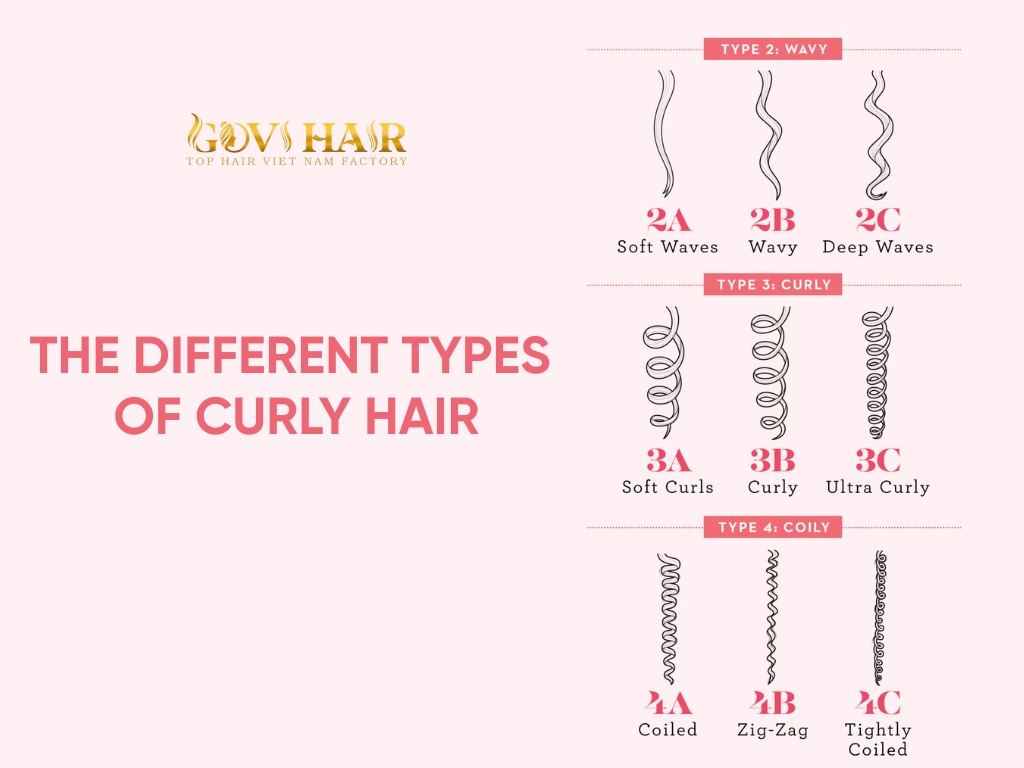
Unlike straight hair, curly hair length chart measurements refer to the hair’s stretched length, which will appear much shorter once installed and dry. To select the perfect length, you must accurately factor in your curl pattern, the desired final look, and the natural length of your own hair.
Here is a step-by-step guide to selecting the optimal extension length for your style:
- Identify Your Curl Pattern and Shrinkage Rate: Your specific curl pattern (Type 3 or Type 4) is the single most important factor, as it determines how many inches you must add to your purchase:
- Type 3 Curls (Deep Curls): These are looser spirals (3A–3C). Shrinkage is moderate, typically 30% to 50%. If you want a finished length of 16 inches, you may need to purchase 20–24 inches of extensions.
- Type 4 Curls (Kinky/Coily): These are tight coils (4A–4C), represented on the afro kinky curly hair length chart. Shrinkage is extreme, often 50% to 75%. If you desire a shoulder-length look (10–12 inches visible), you may need to purchase extensions that measure 20 inches stretched.
- Determine Your Desired Visible Length: Use a measuring tape to find the exact point on your body where you want the dry, coiled extensions to fall. This is the Visible Length you are aiming for:
- Short Style (Chin/Neck): Aim for a visible length of 8–10 inches. You will likely purchase extensions measuring 14–18 inches stretched.
- Shoulder Length/Bra Strap: Aim for a visible length of 14–18 inches. You will likely purchase extensions measuring 20–26 inches stretched.
- Waist Length (Dramatic): Aim for a visible length of 22+ inches. You will need to purchase extensions of 30 inches or more, especially if you have a tight kinky curly hair length chart texture.
- Factor in the Blend with Your Natural Hair: The extension length should complement your natural hair to avoid an obvious transition:
- Adding Volume Only: If you are primarily adding volume or thickness and want the finished style to match your natural hair length, buy extensions that are exactly the same stretched length as your natural hair.
- Adding Length: If you are adding length, the extensions should be at least 4 inches longer than your natural hair’s resting length to ensure a seamless blend and room for styling/cutting.
- Consider Styling Preference: Your preferred daily style affects the final required length:
- Wash and Go: If you plan on wearing the extensions in a fully coiled, natural state, always purchase longer (often 4–6 inches more than you think you need) to account for maximum shrinkage.
- Braid-Out/Twist-Out: If you plan to wear the extensions mostly in stretched styles (twist-outs or braid-outs), you will experience less shrinkage, so you can purchase slightly shorter extensions than you would for a pure wash-and-go.
How to Maintain and Care for Curly Hair & Extensions
To care for your curls, always start with hydration. Curly strands naturally lose moisture faster than straight hair because their spiral shape makes it difficult for natural oils to travel from root to tip. Use sulfate-free shampoos and rich, nourishing conditioners that restore softness and slip. When washing extensions, avoid rubbing or twisting the hair; instead, gently squeeze the shampoo and conditioner through the curls to prevent disruption of the curl pattern.
Detangling is another essential step. Always work on damp hair and use a wide-tooth comb or your fingers. Begin detangling from the ends and move upward to avoid breakage. Curly extensions—especially kinky curly and afro kinky textures—can tangle more easily, so patience is key. Applying a leave-in conditioner or curl cream will give the hair more slip and reduce friction.
Styling curly hair and extensions requires lightweight moisture and curl-enhancing products. Gels, mousse, and curl creams help define curls without weighing them down. For deep curly or loose curly textures, a lightweight curl mousse works beautifully. For tighter curls like kinky and afro kinky, thicker creams or butters provide the moisture needed to maintain definition.
Drying your curls properly makes a big difference. Air-drying is always best for maintaining curl structure, but if you need quicker results, use a diffuser attachment on low heat. High heat can cause frizz or loosen the curl pattern over time. For overnight care, use a satin bonnet, silk pillowcase, or pineapple method to preserve the curl shape and prevent tangling.
Moisture lock-in is essential for healthy curls. Curly hair extensions don’t receive natural oils from the scalp, so apply lightweight oils or serums to the ends to maintain shine and softness. Avoid heavy oils that can weigh curls down unless you’re caring for afro kinky textures, which may benefit from richer moisture.
Finally, protect your curls during styling. Avoid excessive brushing, minimize heat tools, and refresh curls between washes with a water-and-conditioner spray. Whether you wear deep curly, kinky curly, or afro kinky extensions, maintaining a balance between hydration and gentle handling will keep your curls soft, defined, and beautiful for much longer.
Where to Buy Best Curly Hair?
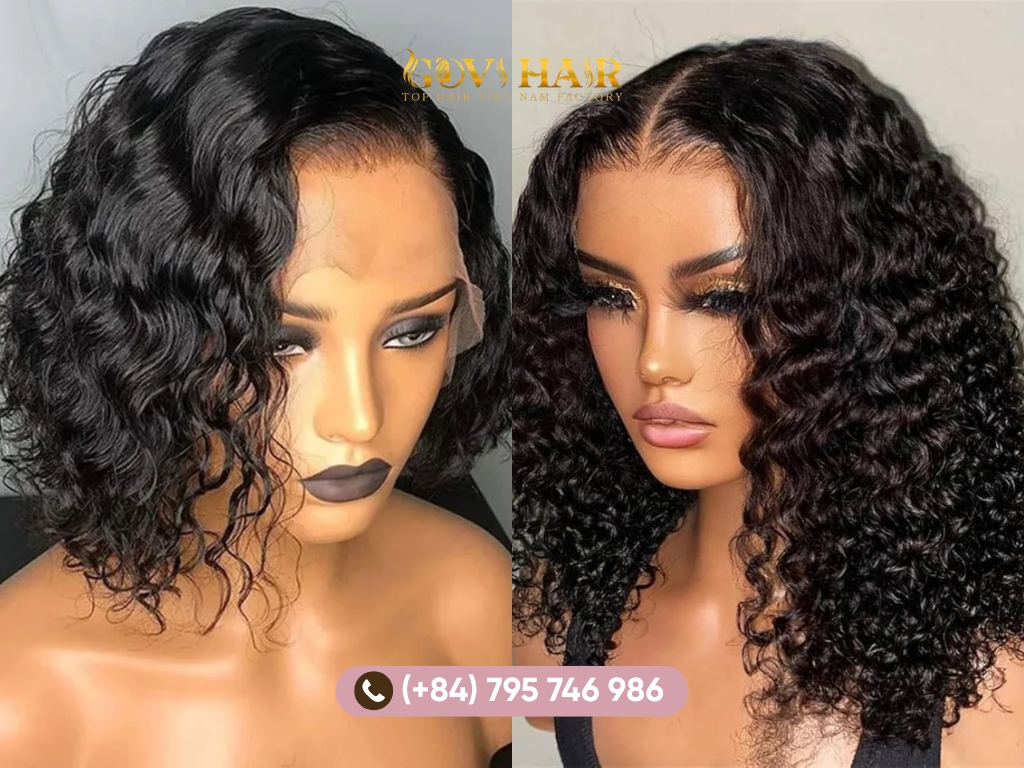
If you’re searching for where to buy the best curly hair, GoviHair is one of the most trusted destinations thanks to their long-standing reputation and high-quality Vietnamese human hair wigs.
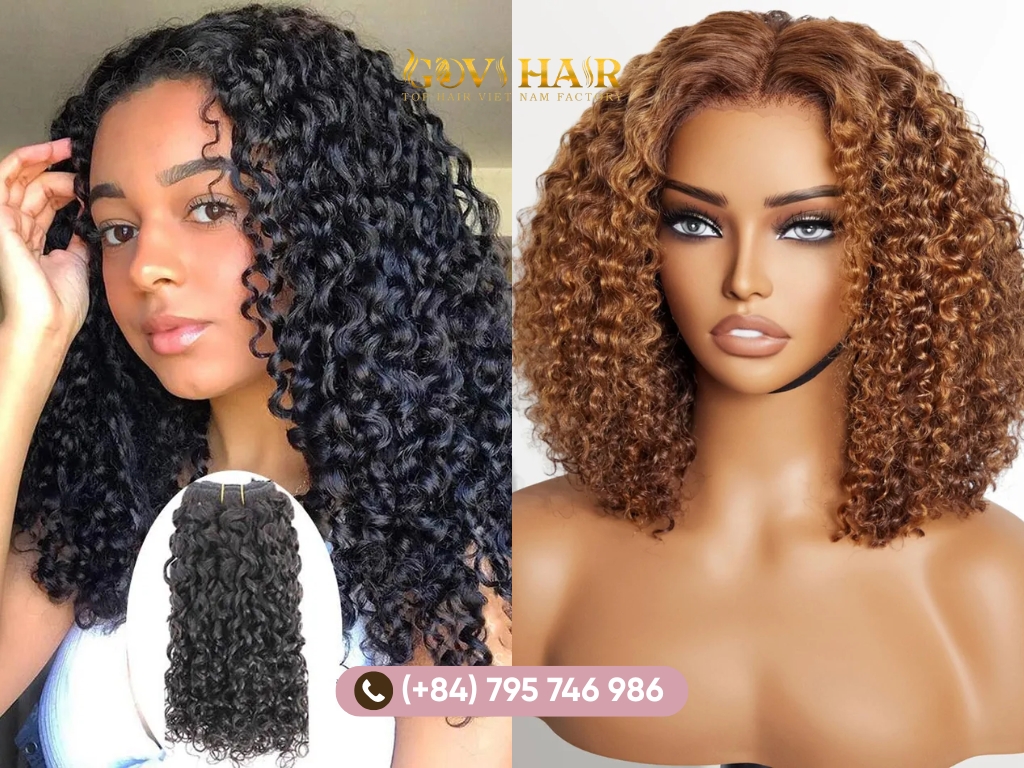
As a supplier with more than two decades in the global market, GoviHair is known for offering 100% raw Vietnamese hair that is soft, durable, and naturally beautiful. Their curly hair extensions stand out because the strands are cuticle-aligned, minimally processed, and able to hold curl patterns exceptionally well. This allows the hair to mimic real curls whether you prefer loose curly, deep curly, kinky curly, or afro-kinky textures.
Shopping at GoviHair gives you access to an extensive range of lengths, from moderate 14-inch curls to dramatic 32-inch spirals. Because curly textures shrink visually, choosing from their stretched-length options helps you achieve the exact style you want. Whether you need weft extensions for sew-ins, clip-ins for quick volume, tape-ins for a seamless look, or bulk hair for braiding and wig-making, GoviHair provides a variety of formats to match different styling preferences.
Another reason GoviHair is a top choice is the reliability and consistency of their quality. Their raw hair takes color well, holds hydration, and blends easily with natural curls, especially for women with textured or coily hair. This makes their products ideal whether you’re going for naturally voluminous curls or long, cascading spirals.
GoviHair ships internationally and offers direct customer support, allowing buyers to request custom textures, colors, and lengths. With their reputation, product range, and premium hair quality, GoviHair remains one of the best places to buy curly hair for long-lasting, natural-looking results.
Contact with us:
- WhatsApp: (+84)795 746 986
- Email: [email protected]
- Instagram: govihair_vietnamhair_factory/
- Tik Tok: govihairvietnam_official
- Website: https://govihair.com/
Conclusion
Understanding the curly hair length chart is the key to choosing hair extensions that look natural, blend effortlessly, and match your styling goals. Once you know how curl patterns influence visible length, measuring and selecting the right extensions becomes simple and stress-free. With the right texture, length, and volume, you can transform your curls into the look you’ve always envisioned. Use this ultimate guide as your go-to reference, and enjoy hair extensions that complement your unique curl pattern every time.
FAQs
How does curl type affect the length I choose?
Looser curls like deep curly appear longer than tighter curls like kinky curly or afro-kinky, so tighter textures may require selecting a longer stretched length.
What length is best for big, voluminous curly looks?
Lengths between 18 and 24 inches create the most dramatic, voluminous curly styles.
Do curly hair extensions stretch over time?
Yes, curly extensions may loosen or stretch slightly with wear, washing, and styling, especially with heat or heavy products.


 Ms. Rosie