

Boiling a wig is a trending and surprisingly effective method to bring old, dry, or tangled wigs back to life. Wigs are more than just a fashion statement—they’re an investment. But like any good investment, they need maintenance. Whether you’re dealing with synthetic strands or a high-quality human hair wig, boiling may be the key to reviving its original bounce, softness, and shine.
In this blog from GoviHair, you’ll learn exactly how to boil a wig (both synthetic and human hair), what to expect before and after, and how to do it safely.
Boiling a Wig: What Does Boiling Water Do and Why People Do It
Boiling a wig acts as a heat treatment that helps relax tangled or stiff fibers in a wig. For synthetic wigs, the heat resets the fibers to smooth out kinks or revive a tired shape. For human hair wigs, it works similarly to a deep-conditioning steam, helping products penetrate strands better while softening and detangling them.
Benefits of Boiling a Wig
Boiling a wig may sound unconventional, but it’s a proven technique to restore life, softness, and manageability to both human hair and synthetic wigs. When done correctly, this method can transform an old, tangled, or dry wig into a refreshed, wearable style, without the cost of a new unit.
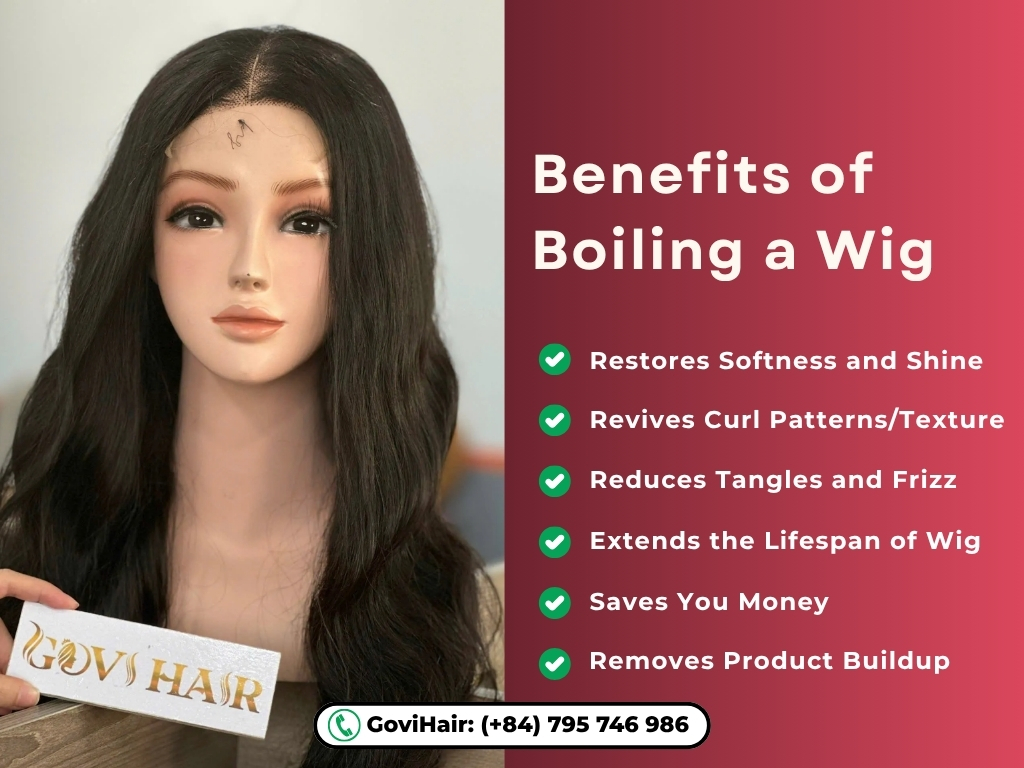
Restores Softness and Shine
Over time, wigs can lose their luster due to heat styling, product buildup, or daily wear. Boiling allows moisture and conditioning agents to deeply penetrate the strands, helping to soften rough textures and restore natural-looking shine. Users often report increased softness after boiling.
Revives curl patterns, texture, and enhances curl definition for synthetic or human hair wigs
If your wig originally had waves or curls that have fallen flat, boiling can help bring them back. When combined with a curl-enhancing conditioner or setting method, boiling reactivates the fibers to hold shape better, especially for synthetic wigs.
Reduces Tangles and Frizz
Boiling a wig can loosen stubborn tangles and minimize frizz. It makes the hair more pliable and easier to detangle, reducing breakage and improving the overall appearance and feel.
Extends the Lifespan of Your Wig
Instead of discarding a wig that looks worn out, boiling it can give you several more wears. This is especially helpful for those who rotate between multiple wigs and want to preserve each one for longer.
Saves You Money
Buying a new wig every time your current one starts to decline can quickly get expensive. Boiling is a cost-effective way to refresh your wig and delay replacements, helping you stretch your hair budget further while still looking polished and put together.
Removes Product Buildup
Wigs accumulate residue from hairsprays, oils, leave-ins, and styling creams. Boiling helps break down and release this buildup, especially when paired with clarifying or fabric softening agents (for synthetic wigs), leaving the strands cleaner and lighter.
Pro Tip: Always test a small section before boiling the entire wig, and avoid boiling bonded or glued lace systems that may loosen with heat.
>> Explore more: Best Wig Manufacturers In USA In 2025
Boiling a Wig: Synthetic vs Human Hair
Before you dip your wig in boiling water, it’s important to understand the difference between synthetic and human hair wigs and how each responds to heat.
Key Differences in Materials
- Synthetic wigs are made of plastic fibers that can melt if overheated, so temperature control is crucial. Monitoring temperature also protects fiber integrity.
- Human hair wigs are more resilient but still need care to prevent damage like dryness or shedding.

What Happens When You Boil a Synthetic Wig?
Boiling a synthetic wig can be an effective way to restore its appearance, when done correctly.
What It Helps With:
- Resets the fiber shape to restore curls or straighten frizzed areas.
- Softens stiff strands that feel crunchy or overworked.
- Tames flyaways and frizz, making the wig smoother and easier to style.
- Adds movement and flexibility, refreshing an otherwise lifeless wig. This improved wig elasticity makes styling easier and more durable.
What Can Go Wrong:
- Too much heat can melt or deform the plastic fibers.
- Overboiling may cause stringiness or permanent loss of structure.
- Loss of style memory, especially in heat-set curls or waves.
Pro Tip: Boil gently and briefly, ideally no more than 2–3 minutes, and always monitor the wig during the process to avoid irreversible damage. This precaution minimizes heat damage risk.
What Happens When You Boil a Human Hair Wig?
Boiling a human hair wig is less common than with synthetic wigs but can be used to deep-clean, soften, or refresh the hair—if done with care. Human hair reacts differently to heat and water, so understanding its effects is essential to avoid damage.
What It Helps With
- Deep Cleans and Sanitizes: Boiling water can kill bacteria and remove buildup, making the wig cleaner and fresher.
- Softens and Hydrates the Hair: Heat opens the hair cuticle, allowing moisture to penetrate, which can soften dry or coarse strands.
- Restores Natural Shine: By removing product residue and impurities, boiling helps bring back the hair’s healthy luster.
- Revives Curl Patterns: Boiling followed by proper setting on rollers can refresh curls or waves by loosening old styles and allowing restyling.
What Can Go Wrong
- Cuticle Damage: Excessive heat or prolonged boiling can lift or damage the cuticle, causing dryness, frizz, and tangling.
- Texture Changes: Rapid heat exposure may shrink or alter hair texture, sometimes making it feel rough or uneven.
- Loss of Style and Volume: Boiling can flatten or loosen pre-set styles unless the hair is carefully reset during drying.
Pro Tip: Use hot water just below boiling and limit exposure to 1–2 minutes. Always follow with deep conditioning and style the wig while damp to maintain shape and softness.
How to Boil a Human Hair Wig: Full Step-by-Step
Boiling a human hair wig is a technique used to deeply cleanse, soften, and revive hair strands. However, since human hair is more delicate than synthetic fibers, it’s important to follow the process with care to avoid heat damage or texture loss.
What You’ll Need for Boiling A Wig
- Human hair wig (pre-washed and thoroughly detangled)
- Large pot (enough to fully submerge the wig)
- Filtered or distilled water (to avoid mineral buildup)
- Light conditioner or natural hair oil (like argan or coconut oil)
- Heat-safe tongs or rubber gloves
- Clean towel
- Wig stand or mannequin head for drying

Step-by-Step for Boiling A Wig
- Step 1: Prep the Wig: Wash the wig beforehand with a sulfate-free shampoo and rinse thoroughly. Gently detangle using a wide-tooth comb or wig brush to avoid matting during boiling.
- Step 2: Boil the Water: Fill a large pot with enough water to fully cover the wig. Bring the water to a full boil, then remove from heat and let it sit for 1–2 minutes to slightly cool (ideal temp: ~180°F / 82°C).
Step 3: Add Conditioner or Oil: Add 2–3 drops of lightweight conditioner or a few drops of nourishing hair oil to the hot water. Stir gently—this helps restore moisture and adds softness during the boiling process. - Step 4: Immerse the Wig: Slowly lower the wig into the water using heat-safe tongs or gloves. Submerge fully and gently swirl for no more than 3–5 minutes, keeping movement gentle to avoid tangling.
- Step 5: Lift and Cool Down: Carefully lift the wig out of the pot with tongs or gloves and place it on a clean towel. Let it cool slightly before rinsing.
- Step 6: Rinse and Condition: Rinse the wig under cool running water to remove any residue. Follow with a deep conditioner, focusing on mid-lengths and ends. Let sit for 5–10 minutes before a final rinse.
- Step 7: Dry Naturally: Gently blot the wig with a towel, do not rub. Place the wig on a wig stand or mannequin head and allow it to air dry naturally in a cool, shaded area. Avoid using heat tools until it’s fully dry.
>> Explore more: 20 Inch Wig Length: What It Looks Like and How to Style It
How Long To Boil A Wig
For human hair wigs, the optimal boiling time is no more than 3 to 5 minutes. This short window is enough to help soften the strands, restore moisture, and improve manageability, without risking damage to the hair fibers or weft construction.
Staying within this time range protects the wig from becoming overly dry or brittle while still giving it a deep restorative treatment. When done right, a quick boil can breathe new life into an old or worn-out wig, making it feel fresh, soft, and easier to style again.
Pro Tips:
- Never boil a wig with tangles, it can worsen knots.
- Avoid boiling colored or bleached wigs too often to preserve dye integrity.
- Always perform a patch test on a small section if you’re unsure how the wig will react.
- Proper boiling can rejuvenate your human hair wig, making it softer, shinier, and easier to style, while extending its overall lifespan. Many users notice a striking difference when comparing the results of boiling a wig before and after, the texture often improves dramatically, especially for wigs that have become stiff or lifeless over time.
How to Boil a Synthetic Wig: Full Step-by-Step
Boiling a synthetic wig is a popular DIY technique to revive its texture, reduce frizz, and reset the fiber shape. Since synthetic wigs are made of heat-sensitive plastic fibers, it’s crucial to monitor temperature and time closely to avoid melting or permanent damage.
What You’ll Need for Boiling A Wig
- Synthetic wig (cleaned and detangled)
- Large pot (big enough to submerge the wig)
- Filtered or distilled water (to avoid mineral buildup)
- Fabric softener or wig-friendly detangling solution (optional, for extra softness)
- Heat-safe tongs or rubber gloves
- Clean towel
- Wig stand or mannequin head for drying
Step-by-Step for Boiling A Wig
- Step 1: Prep the Wig: Gently brush or comb the wig to remove tangles. Make sure it’s free of product buildup, wash with a wig-safe shampoo if needed and rinse thoroughly.
- Step 2: Boil the Water: Fill a large pot with enough water to cover the wig. Bring it to a boil, then turn off the heat. Let it sit for 30 seconds to 1 minute, you want very hot water, not actively boiling, to avoid fiber damage.
- Step 3: Add Softener (Optional): Add a teaspoon of fabric softener or wig-friendly conditioner to the water. Stir well to disperse. Boiling synthetic wig with fabric softener can help loosen stiff fibers and reduce static, though results may vary depending on the wig’s quality and construction.
- Step 4: Immerse the Wig: Using heat-safe tongs, slowly lower the synthetic wig into the water. Let it soak for 2–4 minutes, gently swirling it to help the fibers reset. Be gentle, synthetic strands can tangle if agitated too much.
- Step 5: Remove and Cool: Lift the wig out using tongs and place it flat on a clean towel. Let it cool completely before handling.
- Step 6: Rinse Gently (Optional): If you used fabric softener, you can rinse the wig under cool water to remove excess residue. Skip this step if you prefer to leave the softener in.
- Step 7: Dry Naturally: Gently press the wig with a towel to remove water. Place it on a wig stand or mannequin head to air dry completely. Do not use a blow dryer or apply heat styling tools, this may melt the fibers.
How Long To Boil A Wig
Synthetic wigs are made from heat-sensitive fibers, so boiling must be done with extreme care. The ideal approach is to boil the water, then remove it from heat and let it cool for 1–2 minutes before submerging the wig.
Pro Tips:
- Never boil a heat-sensitive synthetic wig at full rolling boil.
- Use only fabric softeners that are mild and residue-free.
- Let the wig dry in the desired shape, this helps “reset” its style.
- Ideal for wigs with frizz, stiff curls, or loss of movement.
With proper care, boiling can give your synthetic wig a second life, reviving bounce, softening texture, and extending its wearability without the cost of replacement.
>> View more: How Long Is 24 Inch Wig Length? Real Look and Styling Guide
Where to Buy High-Quality Wigs That Last?
If your current wig is beyond repair, or you’re simply ready for a fresh new look, investing in a high-quality unit makes all the difference. At GoviHair, we offer premium 100% human hair wigs and natural-looking synthetic wigs that are built to last and easy to maintain.
Our lace wigs, bundles, and closures are crafted for durability, softness, and everyday wear. Whether you’re looking to restore your current wig or upgrade to something new, GoviHair has the perfect fit.
Chat with us:
- WhatsApp: (+84)795 746 986
- Email: [email protected]
- Instagram: govihair_vietnamhair_factory
- Tik Tok: govihairvietnam_official
- Website: https://govihair.com/
Conclusion: Boiling a Wig to Revive It – Smart, Simple, Effective
Boiling wig to revive it is one of the simplest and most cost-effective ways to restore softness, shape, and shine, especially when your wig feels stiff, frizzy, or lifeless. With the right method, boiling can bring both synthetic and human hair wigs back from the brink, making them look and feel refreshed without a salon visit.
Just remember: the key is gentle heat, careful timing, and proper post-care. Whether you’re dealing with dryness, tangles, or lost curls, a quick boil might be all it takes to make your favorite wig wearable again.


 Ms. Rosie