



Wholesale Hair Vendors
Top 15 Wholesale Hair Extension Vendors in 2026 — Ranked by Extension Type & Quality
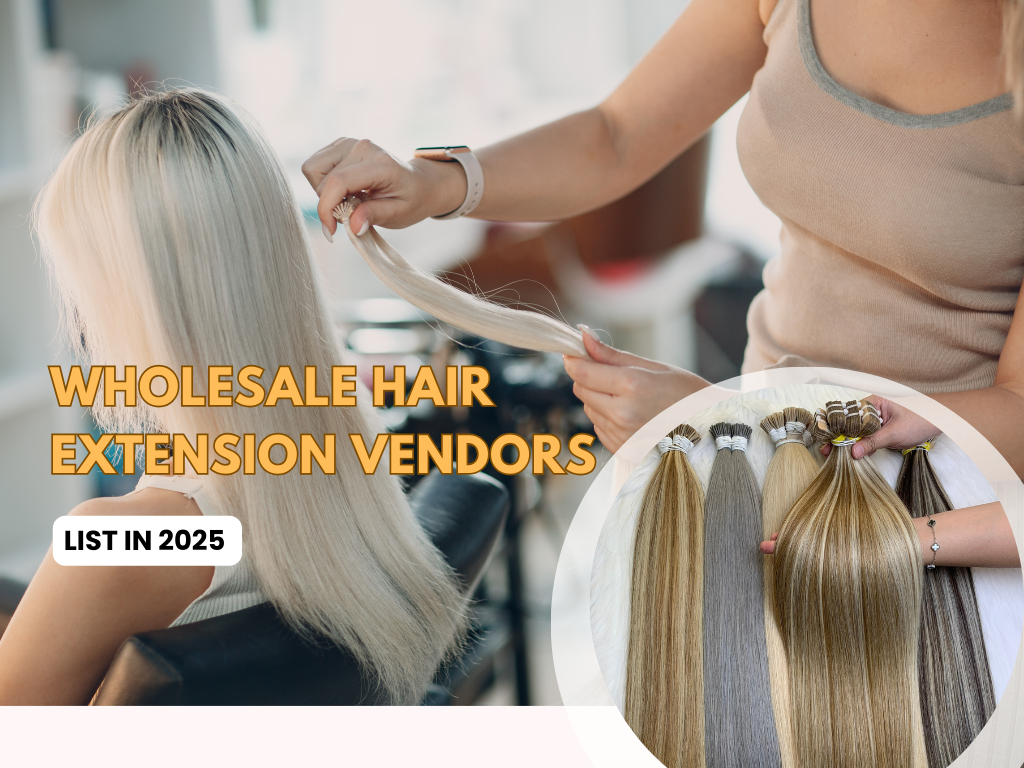
Feb
Quick answer: The strongest wholesale hair extension vendors in 2026, grouped by what they do best:
- Vietnam — factory-direct, full range: Govihair, ApoHair, Macsara, YogHair
- USA — hand-tied, tape-in & keratin: Covet & Mane, The Hair Shop, Glam Seamless, Bellami, Babe
- Europe — premium keratin & rings: Great Lengths, Hairdreams, Beauty Works
- Clip-in / e-commerce: Luxy
- Specialist origins: Kalugahair (Russia — Slavic luxury), KaBeiLu / KBL (China — colour & ready stock)
For factory-direct extensions at a low sample MOQ — with a 30% deposit and a pre-shipment video — a Vietnamese raw-hair factory is the lowest-risk entry point, and your real cost is the factory price plus shipping by weight (broken down below).
The hair extension market is the largest and most fragmented segment of the wholesale hair industry. The head term alone draws thousands of monthly searches, but buyers rarely want a random list — they want to know which vendor specializes in which extension type, what the true landed cost looks like, and how to test quality before wiring money on a bulk order. This guide answers all three: extension formats explained, textures available, raw/virgin/remy hair types and grades, packaging and pack sizes, best-selling formats by market, a 2026 cost reference, who you’re actually buying from, a step-by-step ordering guide with payment methods by region, 15 vendors ranked by specialty, a full comparison table, a vendor price comparison, and a colour-range comparison by origin.

Extension Types Explained — What Wholesale Buyers Need to Know
Before choosing a vendor, match the extension type to your market. Different salon demographics install differently, and vendors specialize differently — a factory that makes excellent machine weft is not automatically good at keratin tips.

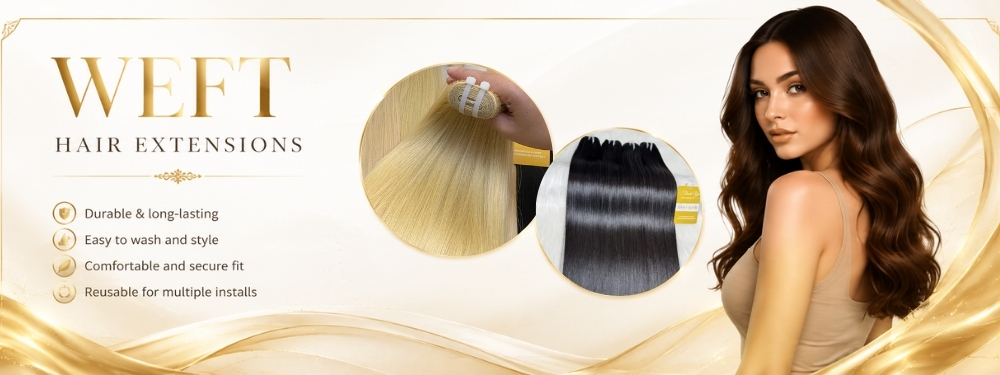
Weft Extensions (Machine, Hand-Tied, Flat, Genius)
- Machine weft — hair stitched onto a thread track by industrial machine; ~3–4mm track. The most widely produced format worldwide. Best for sew-in installs, bundles and weaves.
- Hand-tied weft — strands hand-knotted onto an ultra-thin base (~1–2mm), far thinner and more flexible than machine weft. The US premium-salon standard. Labor-intensive: one artisan produces only 3–4 wefts a day, which is why it carries a 30–50% premium.
- Flat weft — flat-stitch construction (~1.5mm), thinner than machine weft, cuttable to width when stitch density is high.
- Genius weft — woven so it can be cut at any point without shedding. On raw Vietnamese hair, Govihair positions genius weft as a cut-proof replacement for invisible tape — the same seamless look, no adhesive.
Best markets: sew-in weft dominates the US Black salon market and African markets; hand-tied and flat weft dominate the US and European premium salon market.
Tape-In Extensions
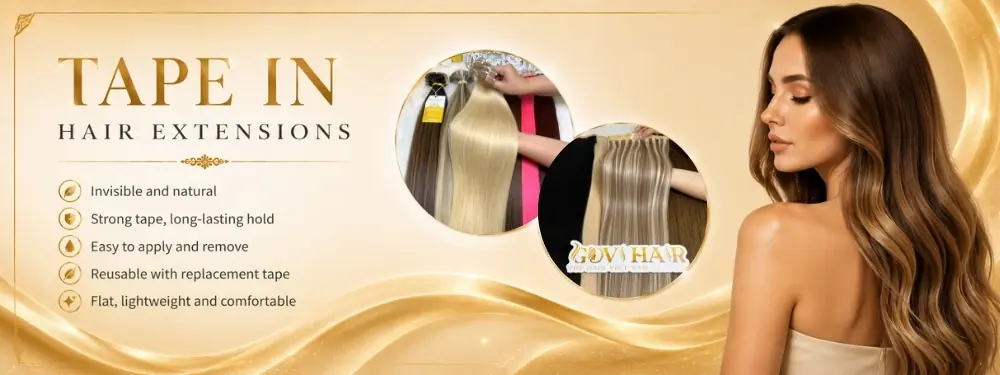
Adhesive-backed wefts applied in sandwich pairs. The most popular salon method among non-Black demographics in the US and Europe. Reusable (re-taped 3–5 times) and fast (about 90 minutes for a full head vs 4+ hours for a sew-in). Standard pack = 20 pieces (~50g thin / ~100g standard weight). Invisible tape-in uses a thinner, flatter tape and carries premium positioning.
Best markets: US (California, Manhattan), Europe (Germany, France, UK), Australia — mainstream salon demographics.
Keratin Tip Extensions (I-tip, U-tip, Flat-tip, V-tip, Nano/Micro Ring)
Individual strands bonded at the root — the longest-lasting method (3–6 months) and the highest service price point for salons.
- I-tip — cylindrical bond fitted with a micro bead/ring, no heat. Popular in the UK and Europe.
- U-tip — U-shaped keratin bond fused with heat. The US/European professional standard.
- Flat-tip — flattened bond that lies closer to the scalp, less visible at the root.
- V-tip / F-tip — thinner bond variants for fine-hair and hybrid work.
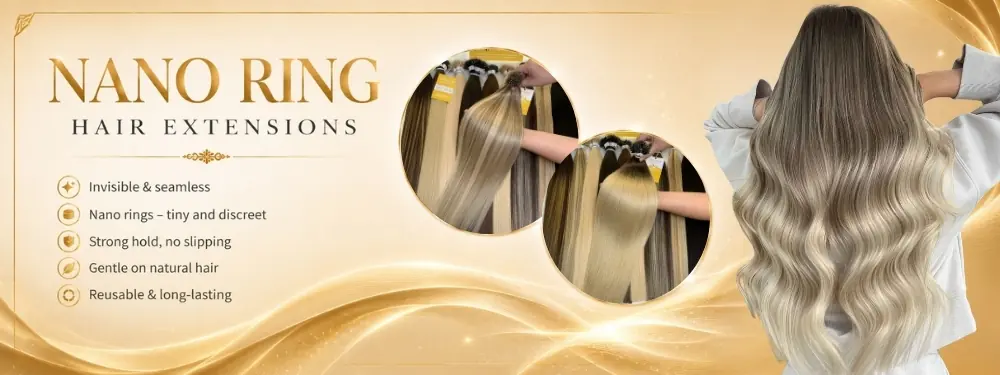
- Nano / micro ring — the lightest ring method, growing in the European premium market.
Best markets: US premium salons, UK, Germany, Australia.
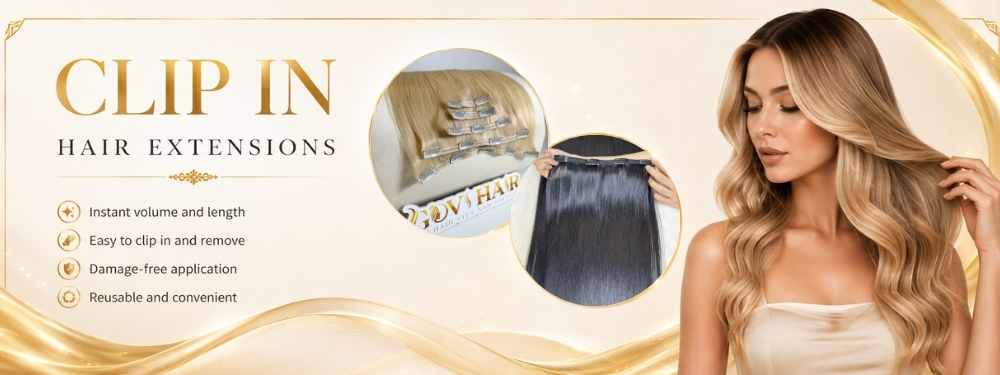
Clip-In Extensions
Pre-made wefts with pressure clips — temporary, no salon required. The highest-volume retail format. Standard set = 7–10 pieces, 120–200g. Seamless/invisible clip-in uses a silicone base for an undetectable finish.
Best markets: retail, direct-to-consumer, dropshipping, and salon retail.
Halo & Ponytail Extensions
Halo — a single wefted piece on a transparent wire that sits on the crown; 60-second application, no clips or heat. Ponytail wraps — instant length for updos. Both are growing retail/e-commerce formats in the US, Australia and Europe.
Feather Weft (strategic niche)
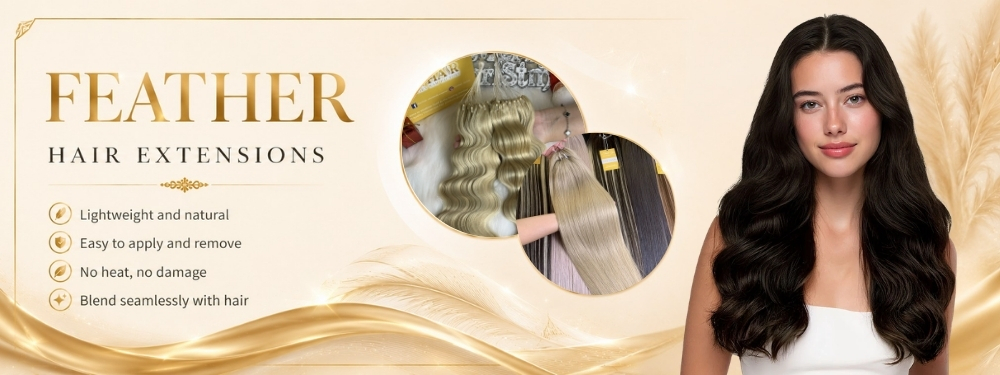
A featherlight weft used in the Western-Asian market — Govihair supplies feather weft to Israel and the H6 feather line to Saudi Arabia. Niche, but almost no competitor lists it, which makes it a differentiator for buyers serving that region.
Textures Available
Format is how the hair is attached; texture is the wave pattern of the hair itself. A full-catalog raw factory carries every texture in each format, so you can order a tape-in or a keratin tip in the exact curl your market installs. Govihair’s texture range:
| Texture family | Options | Notes |
|---|---|---|
| Straight | Straight, Bone Straight | Bone straight is the sew-in and weave staple, especially in the US and Africa |
| Wave | Natural Wave, Body Wave, Deep Wave | Natural Wave is the best-seller across most markets — a soft, resilient wave that holds after washing |
| Curly | Bouncy Curl, Pixie Curl, Burmese Curl | Defined curl patterns; strong in African and retail/clip-in markets |
Every texture is available on raw and virgin hair and across weft, tape-in, keratin and clip-in formats. Textured hair (bone straight, wavy or curly) adds roughly +$5–6/100g over plain straight.

Extension Type by Market
| Market | Primary method | Secondary | Least common |
|---|---|---|---|
| US Black salon | Sew-in weft | Frontal wigs, tape-in | Keratin tip |
| US mainstream | Tape-in | Hand-tied weft, keratin tip | Sew-in |
| UK / Europe | I-tip, keratin tip | Tape-in, hand-tied weft | Sew-in |
| Australia | Tape-in, nano ring | Clip-in, halo | Sew-in |
| Nigeria / Africa | Sew-in weft | Closures, wigs | Tape-in |
| Retail / e-commerce | Clip-in | Halo, ponytail | Keratin tip |
Raw, Virgin & Remy — the Hair Types and Grades Behind the Format
The construction (weft, tape, keratin) is only half of what you’re buying. The hair itself is classified two ways — by material type (how it was collected and what colours it can take) and by grade (how full it stays from root to tip). This is where generic “100% human hair” claims fall apart, and where a real factory can show you exactly what you’re getting.
The four hair material types
| Material type | Donors | Bleaching capability | Colours it takes | Typical market |
|---|---|---|---|---|
| Virgin | Multiple donors | Dyes darker only — will not lift light | Naturals & darks: #1–#4, #27, #30, #33, 99J, red | Africa |
| Raw Type 2 | 2–5 donors | Lifts to a neutral level (below ~#60) | Naturals to mid blondes | Africa |
| Raw Type 1 | Single donor | Lifts all the way to white (#12.0 / Pla) | Every shade incl #613, platinum, vivid, piano, rooted | US, Europe, Western Asia, Russia |
| Baby hair | Single donor, under 20″ | Lifts to any colour | Every shade — premium colour work | High-end colour / short lengths |
This is the concrete reason a raw factory can promise “bleaches to any colour”: Raw Type 1 single-donor hair lifts to platinum and holds vivid and rooted/balayage blends, while virgin multi-donor hair — what many “raw” sellers actually ship — only dyes darker. Before you order a blonde or a custom colour, ask a vendor which of these four they’re quoting; it decides whether the shade is even possible.
Grade — measured by tail density
Grade is the percentage of the bundle’s length that stays thick from root to tip, so a higher grade means fewer short, thin strands at the ends. Raw and Remy are measured on slightly different scales:
| Grade | Remy tail density | Raw tail density | What it means |
|---|---|---|---|
| Single drawn | under 65% | under 60% | Natural taper, most short strands kept |
| Double drawn | 65–75% | 60–70% | Fuller; some short strands removed |
| Super double | 75–85% | 70–80% | No strands shorter than ~35–40cm |
| Luxury / Super Premium | 85%+ | 80%+ | None shorter than ~40cm (short lengths), up to 50–60cm on long lengths |
Grade is the single biggest driver of both look and price: super double adds roughly +$15/100g and luxury +$20–30/100g over double drawn. When a quote just says “double drawn,” ask for the tail-density percentage — that number, not the label, tells you what you’re paying for.
Hair Extension Packaging & Pack Sizes — What’s in a Wholesale Order
Vendors price by the pack, by weight or by the strand, and “one pack” means something different for every format. Knowing the standard unit helps you order the right quantity for a full head and compare quotes accurately.
| Extension type | Sold as | Weight per unit | Pieces / strands per unit | Full-head quantity | Packaging |
|---|---|---|---|---|---|
| Machine / hand-tied / flat weft | Per weft or per 100g | ~100g / weft | 1 weft (~100cm open, folded) | 3–4 wefts (300–400g) | Folded, banded, poly bag + QC hangtag |
| Genius weft | Per weft or 100g | ~100g / weft | 1 continuous cut-anywhere weft | 3–4 wefts | Poly bag + hangtag |
| Tape-in | Per pack | ~50g (thin) / ~100g (standard) | 20 pieces (10 sandwich pairs), ~4cm wide | 40–60 pieces (2–3 packs) | Plastic tray / resealable box |
| Keratin tip (U/I/flat/V) | Per pack | ~80–100g | 100 strands (~0.8–1g each) | 150–200 strands | Aligned & banded at tip, box |
| Nano / micro ring | Per pack | ~50–80g | 100 strands (~0.5–0.8g each) | 200–300 strands | Box |
| Clip-in (full set) | Per set | 120–200g | 7–10 wefts with pressure clips | 1 set | Flat presentation box |
| Halo | Per piece | 100–150g | 1 wefted piece on a wire | 1 piece | Box |
| Ponytail | Per piece | 80–120g | 1 wrap piece | 1 piece | Box |
| Feather weft / H6 feather | Per weft or pack | ~50–100g | Featherlight weft | Varies by install | Poly bag + hangtag |
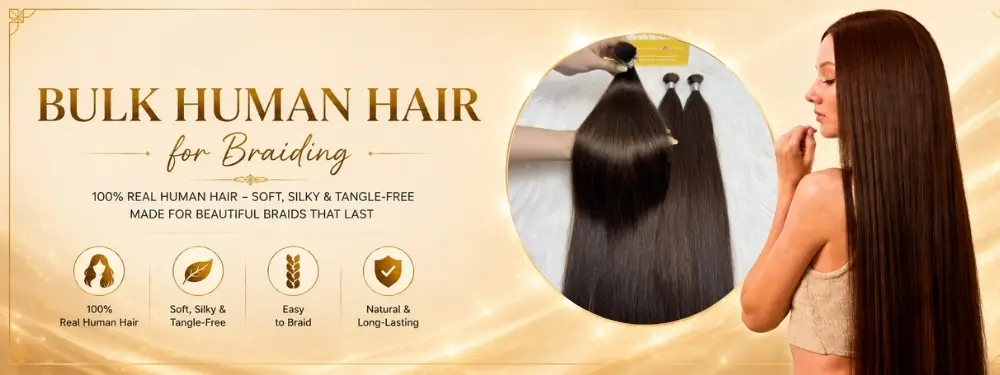
| Bulk (for braiding) | Per 100g | 100g | Loose hair, no weft | Varies | Banded, poly bag |
Every Govihair unit ships with a QC hangtag and a pre-shipment video before dispatch; bulk orders are cartoned by weight. OEM buyers can add custom packaging, brand tags and labels at qualifying volume.
Best-Selling Extension Types by Market (2026)
Extension demand concentrates in a handful of heavy-use markets, and each has a clear best-selling format. Match inventory to the market you sell into rather than stocking everything at once:
| Market | Best-selling format(s) | Why it leads |
|---|---|---|
| USA | Weft (sew-in & hand-tied) and keratin tip — the most diverse market; tape-in dominates mainstream salons | Multiple demographics and install styles side by side |
| UK | Weft, flat-tip and nano ring | Strong keratin/ring culture; nano ring favoured for fine hair |
| Germany | Genius weft | Seamless, cut-anywhere weft suits the German preference for an invisible, adhesive-free finish |
| Western Asia (Israel, Saudi, UAE) | Feather weft and H6 feather hair | The featherlight niche — light, flat and comfortable under regional styling |
| Australia | Tape-in (plus nano ring and halo) | Fast salon method; strong DTC/retail halo demand |
| France / Francophone | Keratin tip and tape-in | Premium salon channel, long-wear methods |
| Nordics / Canada | Clip-in and tape-in | Large DTC/e-commerce clip-in market |
| Africa (Nigeria, etc.) | Machine weft (sew-in) and bulk for braiding | Sew-in and braiding dominate |
| Brazil / Latin America | Machine weft and keratin tip | Weave and bonded methods both strong |
One advantage of a full-catalog factory is serving several of these markets from a single supplier: Govihair, for example, ships feather weft to Israel and the H6 feather line to Saudi Arabia, genius weft for the German market, and hand-tied weft, tape-in and keratin tip for the US, UK and European salon channels.
Wholesale Extension Pricing 2026 — and the True Landed Cost
Wholesale extension prices vary by construction and grade. The table below is a 2026 reference for virgin double-drawn hair at 18″–20″:
| Extension type | Grade | 18″–20″ wholesale price | Notes |
|---|---|---|---|
| Machine weft | Virgin double drawn | $38–$55 / 100g | Same as bundle pricing |
| Hand-tied weft | Virgin double drawn | $55–$75 / 50cm weft | 30–50% premium vs machine |
| Flat weft | Virgin double drawn | $45–$65 / 50cm | Above machine, below hand-tied |
| Genius weft | Virgin double drawn | $55–$75 / 50cm | Cut-proof premium |
| Tape-in | Virgin double drawn | $50–$70 / 20pc pack | ~50g standard weight |
| Keratin I-tip | Virgin double drawn | $50–$70 / 100 strands | ~100g |
| Keratin U-tip | Virgin double drawn | $55–$75 / 100 strands | Standard professional |
| Clip-in (full set) | Virgin double drawn | $75–$105 / 7–10pc set | 120–160g |
| Halo | Virgin double drawn | $55–$80 / single piece | Single halo unit |
Grade, colour and texture all add to the base price. Grade (tail density) and hair type are covered in detail above; in short, super double adds about +$15/100g and luxury +$20–30/100g over double drawn. Colour and texture stack on top: on a Vietnamese factory price like Govihair’s, dark colour adds roughly +$6/100g, light and blonde shades +$12–25/100g depending on how light, and textured hair (bone straight, wavy or curly) +$5–6/100g over straight. That makes a custom quote predictable before you even ask — base weft + grade + colour + texture. Always confirm which grade a quote refers to, because “double drawn” at one factory is not always “double drawn” at another.
The sticker price is not your real cost. Landed cost = factory price + international shipping (billed by weight) + any deposit terms. Shipping is where buyers get surprised. As a reference, Govihair’s all-in air-freight rates to the US in mid-2026 were roughly:
| Parcel weight | Indicative all-in air freight to US |
|---|---|
| 0.5 kg | ~$42 (FedEx) |
| 1 kg | ~$45 (UPS) |
| 1.5 kg | ~$61 |
| 2 kg | ~$62 |
| 2.5–3 kg | ~$78 |
| 3.5–4 kg | ~$94 |
| 4.5–5 kg | ~$110 |
These figures are indicative, all-in (they include surcharges, VAT and domestic pickup) and exclude peak-season surcharges and import duties; rates move with fuel and season, so confirm at order time. The takeaway for cost comparison: a factory-direct price that looks $15/pack cheaper can still win even after shipping, because shipping is fixed per parcel weight — the more you consolidate per shipment, the lower your per-unit landed cost.
Wholesale Weft Price Comparison by Vendor (2026)
To compare vendors on a like-for-like basis, the table below lines up natural-colour straight machine weft in USD per 100g at common lengths. Vietnamese factories cluster in a similar band; a Chinese colour house lands close to Vietnamese pricing rather than below it; and Russian Slavic hair sits in a separate premium tier.
| Length | Govihair / Luxshine (VN) | Macsara (VN) | AZ Hair (VN) | KBL (China)* | Kalugahair (Russia)** |
|---|---|---|---|---|---|
| 12″ | $31.5 | $38.2 | $29.9 | ~$22 | premium tier |
| 16″ | $43.3 | $47.1 | $37.9 | ~$35 | premium tier |
| 20″ | $59.3 | $66.3 | $56.0 | ~$50 | ~$310 |
| 24″ | $79.8 | $86.0 | $75.7 | ~$68 | ~$370 |
| 28″ | $102.6 | $102.2 | $85.6 | ~$77 (to 26″) | ~$430 |
Indicative 2026 figures in USD/100g for natural straight weft, from each vendor’s published or quoted price list — confirm current pricing before ordering, and compare like-for-like grade (a “double drawn” at one factory is not identical to another’s). Govihair/Luxshine = Luxshine Weave Straight (Govihair brand family); Macsara = Weft MSA++ (orders under 4.9 kg/month); AZ Hair = Double Drawn Weft Straight A++. *KBL China: natural roughly $22–$77/100g across 12″–26″, values interpolated. **Kalugahair Russia: Slavic premium, about $310–$430/100g at 20″–28″ — roughly 4–5× Vietnamese pricing — with shorter lengths priced per weft or per piece.
What the numbers say: the Vietnamese factories sit within a few dollars of each other, so price alone rarely decides a Vietnamese vendor — grade, colour range, consistency and service do. China is comparable on sticker price, not cheaper, once you account for relabelled raw and colour. Russia is a different tier entirely. And remember the earlier point: the sticker price is only part of the cost — add shipping by weight and deposit terms to get the true landed cost.
Factory, Direct Import, Local Vendor or Retail — Who You’re Actually Buying From
The word “vendor” hides four very different kinds of seller, and which one you’re dealing with decides your price, your minimum order and how much you can customise. Knowing the tier is the single most useful thing a wholesale buyer can learn — the same 20″ weft can cost $60 or $130 depending only on how many hands it passed through.
| Seller type | What it is | Price | MOQ | Lead time | Best for |
|---|---|---|---|---|---|
| Manufacturer / factory (e.g. Govihair, ApoHair, Macsara — Vietnam) | The company that actually sources and produces the hair; offers OEM and custom colour, length and packaging | Lowest (source price) | Yes — e.g. 500g / 1 pack | Production + shipping | Wholesale buyers & brands building a line |
| Factory-direct import (buying straight from the factory) | You order from the factory and import it yourself — no middleman margin | Same source price | Factory MOQ | ~1–3 weeks make + air freight | Lowest landed cost; buyers who can handle a deposit and shipping |
| In-country vendor / distributor | A business in your own country that already imported in bulk and resells domestically — usually stock colours only | Source price + ~20–50% margin | Low / none | Fast (domestic delivery) | Buyers who need speed, local support and no import hassle |
| Retail brand | Sells finished, branded product to consumers or in small quantities | Highest (brand markup) | None | Instant | End users, salons buying small, resellers of a known brand |
Where Govihair sits: Govihair is an actual Vietnamese manufacturer sold on a factory-direct import model — tiers 1 and 2, not a trading company that relabels imported hair. That combination gives you source pricing, transparent grade percentages, full OEM and a low sample MOQ. The trade-off against a local distributor is lead time and handling your own import (a 30% deposit, a pre-shipment video, and shipping billed by weight); for volume buyers, the per-unit saving usually outweighs the convenience of buying local. A quick test to tell a real factory from a reseller: ask them to state their grade percentages, show where the raw hair is sourced, and take a custom colour — traders relabelling imported hair usually can’t do all three.
How We Ranked These Vendors
Each vendor is assessed on extension-type specialization, hair quality (raw / virgin / processed), production capability for specific formats, MOQ accessibility, price versus market rate, and best-fit use case by buyer type. Vendors are grouped by where they genuinely excel, not by who paid for placement.
The 15 Best Wholesale Hair Extension Vendors in 2026
1. Govihair (Vietnam) — widest raw/virgin extension catalog
Extension specialty: full range — machine, hand-tied, flat and genius weft; standard and invisible tape-in; keratin tips (I/U/flat/V/F); nano ring; clip-in; halo; ponytail; feather weft (H6).
Hair quality: raw single-donor and virgin multi-donor Vietnamese hair. The same raw material behind their bundles goes into the extensions, so hand-tied wefts built on double-drawn or super-double raw Vietnamese hair hold up better than typical processed equivalents.
What they do best: hand-tied weft is the standout — individual knot work on raw hair produces a weft that sheds less and lies flatter. Invisible tape-in (and genius weft as its cut-proof alternative) for the US/European mainstream market is the second specialty.
MOQ: 500g machine weft · 1 weft for a hand-tied sample · 1 pack (20 pieces) tape-in · 100 strands keratin tip. Orders run on a 30% deposit with the balance staged, and a pre-shipment video/QC before dispatch.
Best for: buyers who want the full extension catalog from one factory at raw quality. Contact: WhatsApp +84 79 574 6986 · govihair.com

2. ApoHair (Vietnam) — volume consistency at scale
Specialty: full range with particular strength in tape-in and keratin tip at industrial scale (ISO 9001:2015, ~20 tons/month). Best for: high-volume buyers ordering 500+ packs/month and OEM brands building private-label lines. Quality: raw and virgin Vietnamese with documented QC for batch-to-batch consistency.
3. Macsara Hair (Vietnam) — specialty extension formats
Specialty: one of the widest ranges in Vietnam — Genius Weft, Silk Flat Weft, Invisible Seamless Clip-In and Slim Tape. Best for: buyers who want specialty constructions most vendors don’t stock. Quality: virgin Vietnamese; large facility, 40+ colors.
4. YogHair (Vietnam) — widest color catalog
Specialty: machine weft, tape-in and keratin tip with a 45+ color catalog — piano blends, balayage, ombre, burgundy, honey blonde. Best for: color-driven markets and influencer/e-commerce buyers who need multiple colors in one format from one supplier. Quality: virgin Vietnamese raw.

5. Covet & Mane (USA) — premium hand-tied weft for pros
Specialty: luxury hand-tied weft and keratin tip for certified stylists; called by Elle a top professional extension brand. Best for: US salon professionals building a high-ticket hand-tied service who want domestic support, colour-matching swatches and education. Quality: premium Remy, salon-grade.
6. The Hair Shop (USA — Los Angeles) — full pro range, US support
Specialty: salon-grade tape-in, hand-tied weft and keratin tip; “Skinny Wefts” and advanced colour-matching. Best for: US stylists who want a domestic vendor with reapplication-ready tape-in and in-person support. Quality: premium Remy.
7. Glam Seamless (USA) — tape-in and clip-in retail brand
Specialty: tape-in leader (double-drawn Remy) plus premium clip-in; part of Beauty Industry Group. Best for: retailers and salon resellers who want a recognised US brand with colour-match tools for consumer-facing sales. Quality: premium Remy.
8. Bellami Hair (USA) — recognised clip-in / tape-in brand
Specialty: premium clip-in and tape-in with strong brand recognition. Best for: retail buyers and salon resellers whose clients already know the brand. Quality: premium Remy, strong colour consistency.
9. Babe Hair Extensions (USA) — keratin I-tip & education
Specialty: keratin I-tip and flat-tip, tape-in and weft through the professional salon channel, with a full certification/education program. Best for: US stylists building an extension service who value training alongside product. Quality: 100% human Remy.
10. Great Lengths (Italy — global) — ultra-premium U-tip
Specialty: U-tip keratin bond, the most premium keratin brand globally, used by celebrity stylists. Best for: ultra-premium salons charging $1,500–$3,000 per keratin service. Quality: ethically certified Remy with rigorous supply-chain documentation. Not a volume-wholesale play — a positioning play.
11. Hairdreams (Austria — global) — nano/micro ring specialty
Specialty: nano ring and micro ring, plus tape-in for the premium European market; the MicroLines system for fine hair. Best for: European salon pros serving fine-hair clients who need volume without length. Quality: ethically sourced Remy.
12. Beauty Works (UK) — UK luxury, celebrity-driven
Specialty: tape-in, weft and clip-in luxury lines with heavy celebrity/salon marketing in the UK and Europe. Best for: UK/EU retailers and salons who want an established local premium brand. Quality: Remy human hair.
13. Luxy Hair (Canada — global) — clip-in for e-commerce
Specialty: direct-to-consumer clip-in, ponytails and fill-ins; part of Beauty Industry Group. Best for: e-commerce sellers who want a proven consumer clip-in brand model. Quality: Remy human hair, retail-grade.
14. Kalugahair (Russia) — luxury Slavic donor hair
Specialty: genius/micro-flat weft, invisible tape and keratin I/U-tip made from 100% Russian donor hair — no silicone, intact cuticle, root-to-end aligned. Best for: ultra-premium salons and brands serving price-insensitive clients who specifically want Slavic/European-textured hair. Hair quality: single-origin Russian, prized for its fine, soft texture. Pricing & MOQ: the luxury end of the market — weft roughly $310–$430/100g at 20″–28″, keratin tips about $1.2–$3.9 per strand, with a first-order minimum around $3,000 and a ~30% surcharge for virgin/curly. Colours are natural cool tones and blends only — no vivid/fashion shades. Ships DHL. In practice this is 4–5× Vietnamese factory pricing, so it fits a luxury niche rather than volume programs.
15. KaBeiLu / KBL (China) — widest colour catalog & ready stock
Specialty: machine weft, tape-in, clip-in and keratin tip with an enormous colour range and large ready-stock inventory, plus dropshipping and in-house dyeing/bleaching (including #613). One of China’s larger factories (established 2007, ~15,000 m², 50,000+ kg/month capacity). Best for: buyers who need fashion/vivid colours, piano and ombre blends, or fast stock and dropship fulfilment in one place. Hair quality: raw is sourced internationally and relabelled (Brazilian/Peruvian/Indian/SE-Asian branding), then processed — good for standard performance and colour work, less suited to buyers who want single-origin traceability. Pricing: natural roughly $22–$77/100g (12″–26″) and #613 about $42–$94/100g on their late-2025 list — broadly in line with Vietnamese pricing rather than cheaper, with colour range as the main draw.
Vendor Comparison Table
| Vendor | Base | Extension specialty | Hair quality | Price tier | MOQ | Best for |
|---|---|---|---|---|---|---|
| Govihair | Vietnam | Full range · hand-tied · tape-in | Raw + virgin | Factory-direct $ | 500g / 1 pack | All-market wholesale |
| ApoHair | Vietnam | Tape-in, keratin at scale | Raw + virgin | Factory-direct $ | Low | High-volume OEM |
| Macsara | Vietnam | Genius weft, slim tape | Virgin | Factory-direct $ | Low | Specialty formats |
| YogHair | Vietnam | Weft, tape-in, 45+ colors | Virgin | Factory-direct $ | Low | Color-driven markets |
| Covet & Mane | USA | Hand-tied, keratin tip | Premium Remy | Premium $$$ | Pro account | US premium stylists |
| The Hair Shop | USA | Tape-in, hand-tied, keratin | Premium Remy | Premium $$$ | N/A | US pro, local support |
| Glam Seamless | USA | Tape-in, clip-in | Premium Remy | Premium $$$ | Low | US retail resellers |
| Bellami | USA | Clip-in, tape-in | Premium Remy | Premium $$$ | Low | Brand resellers |
| Babe Hair | USA | Keratin I-tip, tape-in | Remy | Premium $$$ | Pro account | US salon channel |
| Great Lengths | Italy | Keratin U-tip | Certified Remy | Ultra-premium $$$$ | Pro account | Ultra-premium salons |
| Hairdreams | Austria | Nano / micro ring | Remy | Ultra-premium $$$$ | Pro account | EU fine-hair specialists |
| Beauty Works | UK | Tape-in, weft, clip-in | Remy | Premium $$$ | Low | UK/EU retail & salons |
| Luxy | Canada | Clip-in, ponytail | Remy | Mid $$ | Very low | DTC e-commerce |
| Kalugahair | Russia | Genius weft, tape, keratin tip | Russian donor (Slavic) | Ultra-luxury $$$$ | ~$3,000 | Slavic-hair luxury niche |
| KaBeiLu / KBL | China | Weft, tape, keratin · huge colour range | Relabelled + processed | Mid $$ | Low | Colour/stock & dropship |
Price tier is relative: $ = factory/entry, $$ = mid, $$$ = premium brand, $$$$ = ultra-premium. Factory-direct Vietnamese vendors price lowest per unit; US/European brands add distributor and brand margin in exchange for domestic delivery and support.
Russia vs China vs Vietnam — origin at a glance
The three biggest sourcing origins solve different problems. Russia (Slavic hair) is the natural-texture luxury end — fine, soft, single-origin, but 4–5× the price, high minimums, and no fashion colours, so it suits a small price-insensitive niche. China is the colour and stock leader — the widest vivid/piano/ombre palette, deep ready-stock and dropshipping — but raw is usually re-imported and relabelled, and pricing lands broadly in line with Vietnam rather than below it. Vietnam sits in between: consistent raw and virgin quality with transparent, percentage-defined grades, hair that bleaches to any colour including #613, European designer tones, and a low sample MOQ — the balance of quality, colour range and price for buyers who want raw at scale without a luxury price tag.
Hair Extension Colour Range by Origin (2026)
Colour is where hair extension vendors differ the most, and it splits cleanly by sourcing origin. Vietnamese raw-hair factories and Chinese suppliers carry the widest colour catalogs — from natural black through platinum #613 and vivid fashion shades — while Russian Slavic-hair suppliers stay in natural cool tones only. Govihair’s raw Type 1 hair bleaches to any colour, including platinum and rooted/balayage blends, and adds a European designer named palette (Norwegian Blonde, Viking Blonde, Silver, Grey, Mint) that most vendors sell only as numbered codes.
| Colour capability | Govihair (Vietnam, raw) | Vietnamese factories | China (e.g. KBL) | Russia (e.g. Kalugahair) |
|---|---|---|---|---|
| Natural black & brown | ✔ | ✔ | ✔ | ✔ |
| Ash / cool tones | ✔ (Silver, Grey, ash) | ✔ | ✔ | ✔ (natural cool only) |
| Light blonde #613 | ✔ | ✔ | ✔ | ✗ |
| Platinum / white (#60, #1001, Pla) | ✔ | ✔ | ✔ | ✗ |
| Vivid / fashion (red, pink, blue) | ✔ (raw bleachable) | ~ (varies by factory) | ✔ (widest palette) | ✗ |
| Rooted / piano / balayage | ✔✔ (extensive) | ✔ | ✔ | ~ (natural blends) |
| Named designer tones | ✔ Norwegian/Viking Blonde, Silver, Grey, Mint | ✗ (numbered codes) | ✗ | ✗ |
The takeaway: if your market needs colour range — platinum, blonde, or trend-driven rooted and balayage blends — a Vietnamese raw-hair factory or a Chinese colour house covers it; Russian hair does not. Govihair sits at the useful middle: raw quality that bleaches cleanly to any shade (its Luxshine line alone runs dozens of rooted, piano and platinum blends), plus a named European designer palette that gives salons a shade language beyond bare numbers. For platinum and #613, always confirm the vendor is using raw single-donor grade — processed hair cannot take the lift evenly.
How to Choose by Business Model
- Sew-in / weave salon (US Black market, Africa): Govihair or YogHair for machine weft at factory-direct pricing — Vietnamese double-drawn bone straight and body wave. No need for tape-in or keratin specialists.
- Tape-in / mainstream US salon: Govihair factory-direct for invisible and standard tape-in; The Hair Shop or Glam Seamless for domestic support and colour matching; Bellami for premium reselling. This market wants 20″–22″ double drawn in naturals plus growing blonde demand.
- Keratin tip / European salon: Govihair factory-direct for I/U/flat-tip; Great Lengths or Babe for premium brand positioning; Hairdreams for nano ring. This market cares about per-strand quality — specify double-drawn or super-double grade.
- Clip-in / e-commerce / dropship: Govihair for factory-direct sets; Luxy for a proven DTC clip-in model or KBL for ready-stock dropship; Bellami/Glam Seamless for premium brand positioning.
- OEM / private-label brand: ApoHair, Govihair or KBL — all accept OEM with custom packaging and tags at qualifying volume.
What to Order First — Starter Inventory by Market
- US mainstream salon (tape-in): 5 packs tape-in 20″ double drawn natural black + 2 packs 20″ #613 blonde (raw grade for blonde). ~$400–$500 from factory.
- US professional keratin tip: 2 packs U-tip 20″ + 1 pack I-tip 20″ double drawn natural black. Run a wear test — keratin quality only shows over 4–8 weeks.
- African / sew-in market: machine weft double drawn 18″–22″. Bundles and wefts are the same product.
- Clip-in e-commerce: 3 sets 20″ natural black + 2 sets 20″ #4 chocolate brown — these two colours cover ~80% of clip-in demand.
How to Verify Extension Quality Before a Bulk Order
- Weft: comb aggressively and count shed strands — under 20 on a firm comb is good, over 40 is unacceptable for wholesale.
- Tape-in: check for uniform adhesive across the full width; wear one piece 24 hours, then peel — it should release cleanly with no residue.
- Keratin tip: flex the bond cold — it should bend, not crack; heat-test one strand — the bond should melt cleanly, not smoke.
- Clip-in: clip and unclip 20 times — tension should stay firm; clips that loosen after 5 cycles will fail in retail.
- All formats: cuticle-slide test (intact cuticles give slight tip-to-root resistance) and burn test (raw human hair burns to crumbling grey-white ash, not hard black beads).
How to Place Your First Wholesale Order — Step by Step
Ordering factory-direct is simpler than it looks. Here’s the full path from first message to delivered goods, using the way a Vietnamese factory like Govihair runs a wholesale order:
- Define your market and format. Decide the extension type, texture, length range and colours your market actually installs (use the market and colour tables above). This is what makes a first order sell through instead of sitting in a box.
- Contact the vendor and request the wholesale price list. Message the factory (WhatsApp or email), say which products you want, and ask for the price by grade — single, double or super double drawn — so quotes are comparable. A vague “send me your prices” gets you the wrong sheet.
- Start with a sample order, not bulk. Use the low sample MOQ — at Govihair that’s 500g machine weft, one hand-tied weft, one 20-piece tape-in pack, or 100 keratin strands. Never commit to a bulk run on a supplier you haven’t handled.
- Test the sample. Run the checks from the section above — shed count, burn test, wear test, cuticle slide — and confirm the colour matches your market’s demand before you scale.
- Confirm the spec and get an invoice. Lock the order list: product, texture, length, colour, grade and quantity. The factory invoices by weight × length, so the more precise your list, the more accurate the quote.
- Pay the deposit. Wholesale orders run on a 30% deposit with the balance staged; production starts once the deposit clears. See the payment-by-region table below for the accepted methods where you are.
- Production and pre-shipment QC. The factory makes your order (roughly one to three weeks depending on volume and grade). Before the balance ships, ask for a pre-shipment video and QC photos — Govihair sends these as standard — so you approve the goods before they leave.
- Pay the balance and ship. Settle the remaining balance; the factory ships by air (FedEx, UPS or DHL), billed by parcel weight — see the landed-cost table above. Budget for customs and any import duty on arrival.
- Reorder and scale. Once quality is proven, consolidate future orders into fewer, larger shipments to cut your per-unit landed cost, and move up to volume price tiers, OEM packaging and custom brand tags as you grow.
A first sample-to-bulk cycle usually takes two to four weeks end to end. Keep every spec in writing, and treat the sample order as your quality insurance — it’s the cheapest risk you’ll ever buy.
Payment Methods by Region
How you pay a factory depends on where you are, and knowing the accepted methods up front saves a round of back-and-forth. A factory serving global buyers keeps a route open for each region:
| Region | How wholesale buyers usually pay |
|---|---|
| USA, Canada, all of Europe, Western Asia (Israel, UAE, Saudi, Kuwait) | Bank transfer (USD/EUR), Wise, Western Union / MoneyGram / Ria / Remitly, or a secure card payment link |
| Mexico | Western Union / MoneyGram, card payment link, or PayPal (orders under ~$1,000) |
| West Africa (Nigeria, Ghana) | Local collection agent, mobile payment, or crypto (e.g. Bitcoin via a P2P exchange) |
| Francophone & Southern Africa (Cameroon, Côte d’Ivoire, Kenya, South Africa, Zambia) | Local collection agent |
| Israel | Bank transfer, Western Union, or Bitcoin |
| Russia | Local bank agent |
Methods and fees vary by country and change over time, so confirm the current option and any transfer fee before sending a deposit. As a rule, bank transfer and Wise are cheapest for large orders; card links are the fastest but carry the highest fee.
Frequently Asked Questions
What is a wholesale hair extension vendor? A supplier that sells extensions in bulk at factory or distributor pricing to salons, extension brands and retailers. Factory-direct vendors (Vietnamese factories) give the lowest per-unit price; US/European distributors give faster domestic delivery at higher cost.
Which extension type has the highest wholesale demand in the US? Tape-in leads among US mainstream (non-Black) demographics; sew-in weft leads in the US Black salon market; hand-tied weft is the fastest-growing premium format; keratin tip carries the highest per-strand salon revenue.
What is the difference between machine weft and hand-tied weft? Machine weft is stitched onto a 3–4mm track — durable and high-volume. Hand-tied weft is individually knotted onto a 1–2mm base — thinner, more flexible, 30–50% more expensive, and the standard for US premium salons.
What MOQ do wholesale extension vendors require? Vietnamese factories typically ask 500g for machine weft, one weft for a hand-tied sample, one 20-piece pack for tape-in, and 100 strands for keratin tips — with lower sample quantities before bulk.
What texture sells best? Natural Wave is the best-selling texture across most markets — a soft, resilient wave that holds after washing. Bone straight leads sew-in and weave markets (US, Africa), and defined curls (bouncy, pixie, Burmese) sell strongly in African and retail/clip-in channels.
How is each hair extension type packaged? Weft sells per weft or 100g (3–4 wefts for a full head); tape-in comes in packs of 20 pieces (~50g), 2–3 packs for a full head; keratin tips in packs of 100 strands (~100g), 150–200 for a full head; clip-in as a 7–10-piece set (120–200g); halo and ponytail as single pieces. Each unit ships with a QC hangtag.
What is the best-selling hair extension type in each country? Broadly: the USA is the most diverse, led by weft and keratin tip with tape-in strong in mainstream salons; the UK favours weft, flat-tip and nano ring; Germany leans to genius weft; Western Asia (Israel, Saudi, UAE) buys feather weft and H6 feather; and Australia is a tape-in market. Match your first order to the format that leads your target country.
What’s the difference between a hair extension factory, a vendor and a retailer? A factory (manufacturer) makes the hair and sells at source price with a MOQ and full OEM — buying factory-direct import is the cheapest route. An in-country vendor or distributor has already imported in bulk and resells domestically, adding roughly 20–50% for speed and local support. A retailer sells finished, branded product to consumers at the highest per-unit price with no minimum. Govihair is a factory sold factory-direct, not a reseller.
What’s the difference between raw, virgin and remy hair? Remy means the cuticles are kept aligned root-to-tip (a construction standard), graded by tail density — single, double, super double, luxury. Virgin is multi-donor hair that dyes darker but won’t lift to light. Raw Type 1 is single-donor hair that bleaches all the way to platinum and takes any colour, which is why Govihair uses it for blonde, vivid and rooted work. Ask which one a quote refers to before ordering a light shade.
Which hair extension vendor has the widest colour range? Vietnamese raw-hair factories and Chinese colour houses have the widest catalogs — natural black through platinum #613 and vivid fashion shades. Russian (Slavic) suppliers offer natural cool tones only, with no platinum or vivid. Govihair’s raw Type 1 bleaches to any colour and adds named European designer tones (Norwegian/Viking Blonde, Silver, Grey, Mint) that competitors sell only as numbered codes.
Can I order colored extensions (blonde, piano) wholesale? Yes. Govihair offers pre-colored tape-in and keratin tip; YogHair has the widest colour catalog. For platinum (#613), always specify raw single-donor grade — processed hair cannot take the lift.
How do I place a first wholesale hair extension order? Define your market and format, then ask the factory for a price list by grade; order a sample at the low MOQ (e.g. Govihair’s 500g weft, one hand-tied weft, one tape-in pack or 100 keratin strands) and test it; confirm the spec and get an invoice; pay a 30% deposit; approve the pre-shipment video; then pay the balance and have it shipped by weight. A first sample-to-bulk cycle takes about two to four weeks.
How do international buyers pay a Vietnamese hair factory? US, Canadian, European and Western-Asian buyers pay by bank transfer (USD/EUR), Wise, Western Union / MoneyGram / Ria / Remitly, or a card payment link; Mexico can also use PayPal on orders under ~$1,000; West-African buyers often use a local agent, mobile payment or crypto; Israel accepts Bitcoin. Bank transfer and Wise are usually cheapest for large orders. Confirm the method and fee before sending a deposit.
How much do hair extensions really cost wholesale? Budget the factory price plus shipping by weight plus deposit terms. Factory-direct Vietnamese tape-in runs about $50–$75/pack; a US local distributor runs $90–$150+ for the same grade, and shipping adds roughly $42–$110 per parcel to the US by weight. At 20 packs/month the factory-direct route typically saves $800–$1,500 monthly.